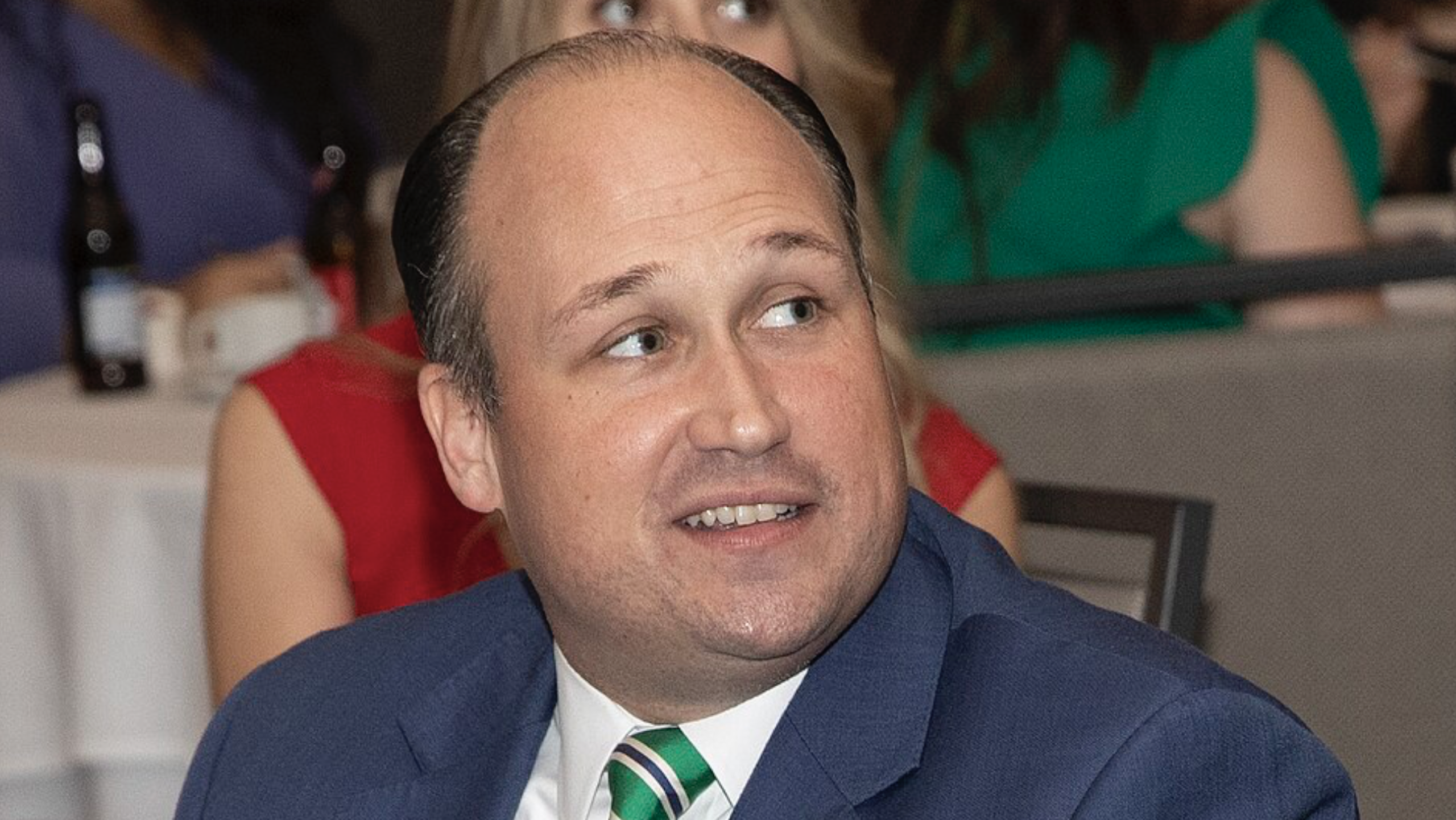

WASHINGTON — Rep. Nick Langworthy (R-NY) voted against a 45-day extension of a key federal surveillance program on April 30, linking his opposition to a separate federal mandate requiring driver monitoring technology in new vehicles.
“I voted NO on turning your car into a surveillance tool,” Langworthy wrote on X. “As a husband and father I care deeply about safety, but not at the expense of freedom. We should be wary of giving AI the power to monitor and shut down your car. Big Brother has no place spying on you behind the wheel.”
What the Vote Was
The April 30 House vote was on a clean 45-day extension of Section 702 of the Foreign Intelligence Surveillance Act, which passed 261-111 and was sent to President Trump’s desk for signature. The Senate had passed the same measure earlier Thursday by unanimous consent.
Section 702 allows U.S. intelligence agencies to collect communications of foreign nationals located abroad without a warrant — and can incidentally capture communications of Americans who interact with those foreign targets. Twenty-six House Republicans and 94 House Democrats voted against the extension, citing Fourth Amendment concerns.
The 45-day stopgap came after the Senate rejected a three-year House-passed FISA extension the day prior. That bill had included modest oversight reforms but no warrant requirement, and was effectively killed in the Senate after House conservatives attached an unrelated provision banning a central bank digital currency. “The Senate keeps rejecting the House’s legislation,” said Rep. Keith Self (R-TX) after the vote.
“A short term infringement of the Constitution is still an infringement of the Constitution,” Rep. Thomas Massie (R-KY) said on the House floor ahead of the vote. Section 702 is now set to expire June 12, absent further congressional action.
The Car Surveillance Mandate Connection
Langworthy’s no vote came amid a parallel Republican push to repeal a federal mandate requiring impaired driving detection technology in all new passenger vehicles. The mandate stems from Section 24220 of the Infrastructure Investment and Jobs Act, signed by President Biden in November 2021, which directed the National Highway Traffic Safety Administration to establish a federal safety standard for “advanced drunk and impaired driving prevention technology” in new cars.
Rep. Chip Roy (R-TX) had sought to attach an amendment to the FISA legislation that would have repealed the car mandate, calling it “a direct threat to our Fourth Amendment rights” and “a blatantly invasive Biden-era policy that enables round-the-clock monitoring of Americans in their own cars,” according to his office. That amendment did not make it into the final April 30 vote.
In January, an amendment by Reps. Massie and Scott Perry (R-PA) to defund the car surveillance mandate failed 164-268 on the House floor — Roy’s FISA-attached effort was his second attempt to block it in 2026, according to Rep. Massie’s office.
The State of the Car Mandate
The car monitoring law remains on the books but is not yet in effect. NHTSA missed its November 2024 deadline to finalize a rule and reported in March 2026 that no current technology meets the accuracy standard the law requires. “Currently, detection technology around the legal limit continues to have an error rate that would be unacceptably high,” the agency said, adding that even a 99.9 percent accuracy rate “could result in millions to tens of millions of instances each year where the technology would incorrectly prevent or limit drivers from operating their vehicles,” according to the NHTSA March 2026 Report to Congress.
The Broader FISA Standoff
The FISA fight has exposed persistent divisions within the Republican conference over surveillance powers. Privacy-minded members have demanded a warrant requirement before federal agents can query Americans’ communications collected under Section 702. Speaker Mike Johnson and intelligence officials have resisted, arguing a warrant requirement would undermine the program.
“Two-thirds of the president’s daily national security briefing comes from intelligence collected by that statute. We cannot allow it to go dark,” Johnson said Wednesday. Senate Majority Leader John Thune described the 45-day extension as an opportunity for further negotiations. “Hopefully the House will be able to agree to this, and then we’ll get to work in earnest and try to find something that actually enables us to do a long-term extension,” Thune said.

 By
By

 By
By