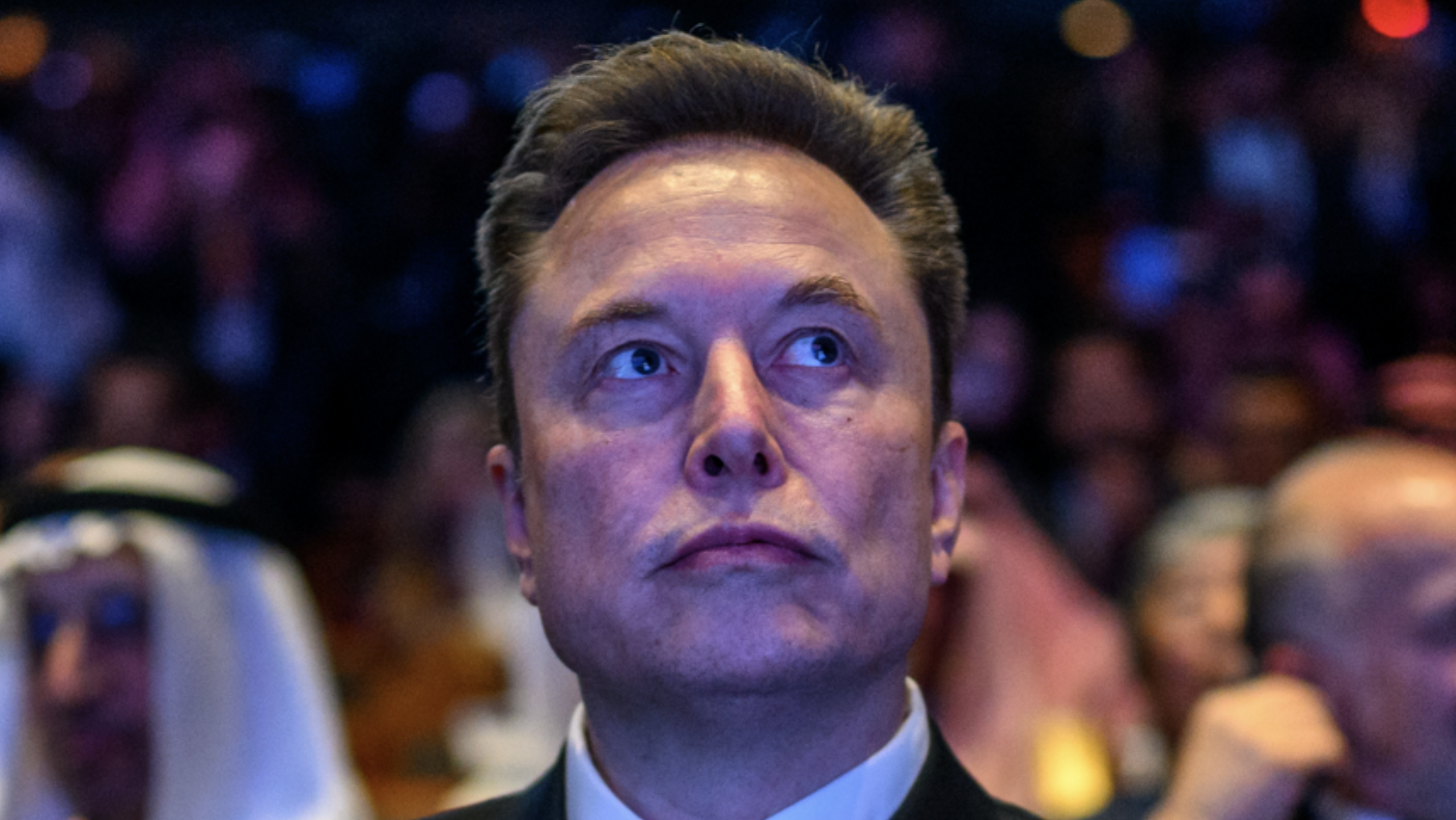

Elon Musk, the CEO of Tesla, SpaceX, and xAI, has proposed universal high income checks issued by the federal government as the most effective response to widespread unemployment expected from advancing artificial intelligence and robotics. In a post on X dated April 16, 2026, Musk outlined his vision for addressing job displacement in an era of rapid technological change, emphasizing abundance over scarcity.
Musk wrote, “Universal HIGH INCOME via checks issued by the Federal government is the best way to deal with unemployment caused by AI. AI/robotics will produce goods & services far in excess of the increase in the money supply, so there will not be inflation.” The statement reflects growing concerns among tech leaders about AI’s impact on the workforce.
The proposal frames universal high income, or UHI, as a more ambitious evolution of universal basic income concepts. While traditional universal basic income programs focus on covering essentials like housing, food, and utilities, Musk’s version envisions payments sufficient for affluent lifestyles amid plummeting costs driven by technology.
A reply to Musk’s post raised questions about scarcity and luxury goods in an abundant future. The responder noted, “Let’s say abundance is high, that’s fine. But money doesn’t just buy necessities. It buys luxuries. And if everybody has a billion dollars, nobody really does. If money means nothing, what determines who gets the penthouse suite? I think poverty and starvation can go away, but how do we deal with the very real necessity of scarcity in day to day life for everything that can’t be mass manufactured by robots?”
Musk responded directly, expanding on his outlook. “Actually, AI/Robotics will mean everyone can have a penthouse if they want. The output of goods & services will be several orders of magnitude higher than today’s economy. Read the Iain Banks Culture books for the best imagining of how it will be. That said, what is the future you want? Amazing abundance seems the best to me.”
As a pioneer in electric vehicles, space exploration, and artificial intelligence through xAI, Musk has frequently addressed the transformative potential of these technologies. His April 16 post arrives amid broader industry discussions about AI’s role in reshaping labor markets, with forecasts indicating significant job shifts in the coming years.
Boston Consulting Group projected this month that 10% to 15% of US jobs could be eliminated over the next five years, potentially affecting 17 million to 25 million people.
Musk’s comments build on his earlier predictions about technological abundance. In a podcast appearance earlier this year on “Moonshots with Peter Diamandis,” he suggested that saving for retirement could become unnecessary within the next decade or two. “Don’t worry about squirreling money away for retirement in 10 or 20 years,” Musk said. “It won’t matter.”
He described a scenario where advances in AI, energy, and robotics generate such high productivity that resources become plentiful enough to support universal high income distributions. This vision aligns with his emphasis on AI and robotics dramatically expanding economic output.
Peter Diamandis, a prominent voice on exponential technologies, has echoed similar ideas about the transition from universal basic income to universal high income. In a March post on Substack, Diamandis explained that AI and robotics would collapse costs in major living categories. “When AI and robotics collapse the cost of living’s five major categories by more than half, a $3,000/month check that barely covers basics today becomes a genuinely prosperous life,” he wrote.
Diamandis added, “The check doesn’t get bigger. The world gets cheaper. That is when UBI becomes UHI.” Such perspectives highlight how deflationary pressures from technology could make generous income supports viable without traditional inflationary risks.
Not all experts fully align with Musk’s framing. Karl Widerquist, a philosophy professor at Georgetown University-Qatar and author on universal basic income topics, acknowledged that Musk is correct about the potential for payments to cover more than basics as automation progresses. Widerquist noted that the relative cost of basic income in terms of GDP has declined due to automation, computerization, and AI.
However, Widerquist pointed to low wages and stagnating salaries as more immediate issues than unemployment alone. He cautioned that while Musk’s inflation prediction could materialize, historical patterns show that economic growth benefits have often concentrated among the wealthiest, with poverty persisting.
James Ransom, a research fellow at University College London, emphasized the value of reskilling over income supports alone. “If we can afford generous universal high income, we can afford to retrain and reskill — and the evidence suggests that’s what most people actually need,” Ransom said. His research indicates productivity gains for many workers, provided they receive upskilling opportunities.
Ransom added that for those facing job loss, effective retraining helps maintain agency and self-worth in ways that basic income alone may not achieve. These views underscore ongoing debates about balancing technological disruption with workforce adaptation.
Musk’s statements come as many Americans continue to navigate economic pressures, including paycheck-to-paycheck living amid recent inflation and interest rate challenges. Surveys consistently show concerns about affordability in housing, education, healthcare, and retirement.
In the tech and innovation sectors, Musk’s influence stems from his leadership across multiple frontier companies. His advocacy for universal high income reflects a broader optimism among some AI developers that abundance, rather than limitation, will define the coming decades if policy adapts accordingly. The conversation he sparked on April 16 continues to fuel discussions on preparing societies for an AI-transformed economy.

 By
By

 By
By