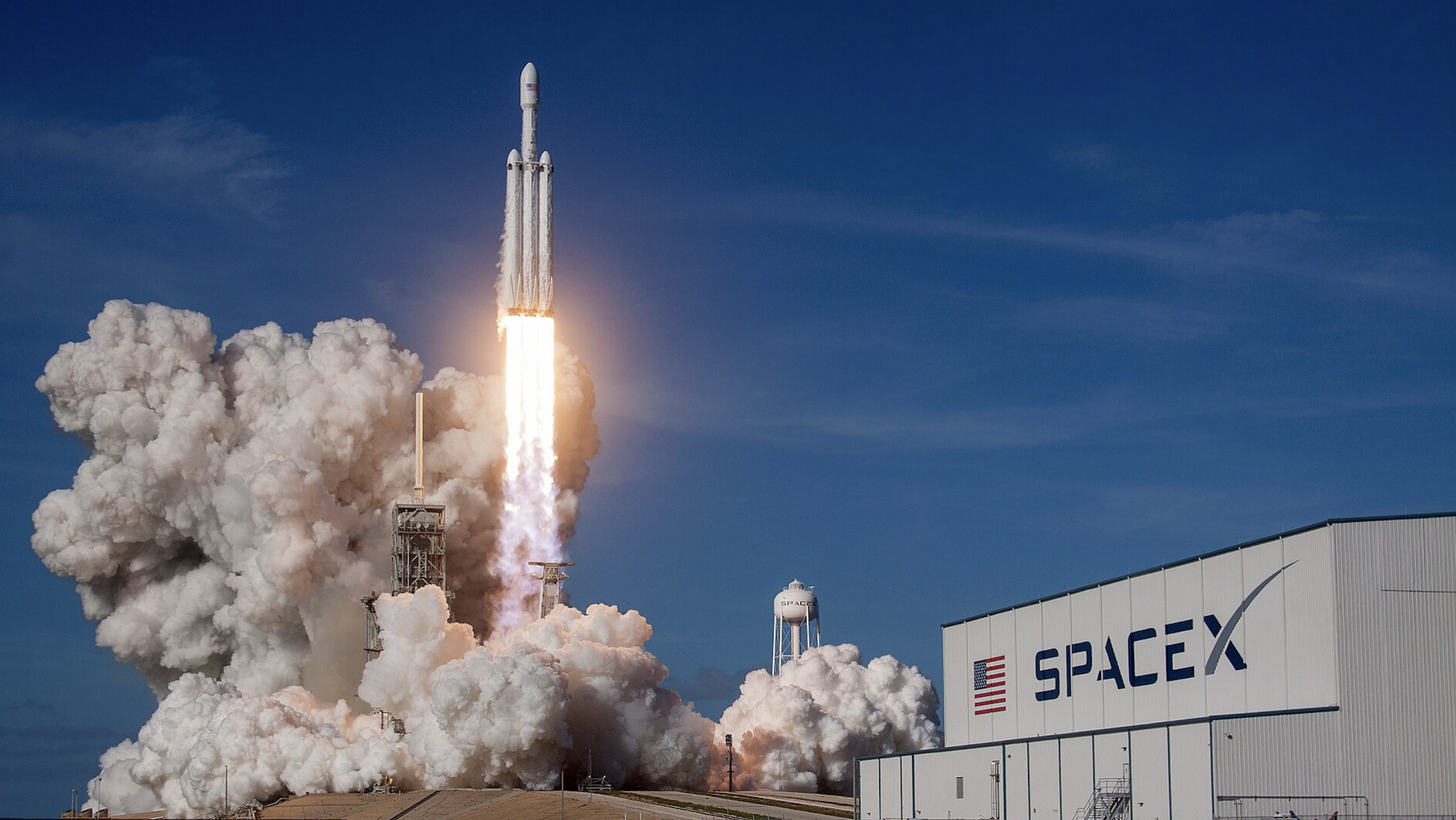

SpaceX has spent more than $15 billion developing its next-generation Starship rocket, according to a confidential IPO registration reviewed by Reuters, marking a massive escalation in the company’s push toward a fully reusable launch system that could reshape access to space and underpin its future business model in satellites, deep-space missions, and emerging orbital computing networks.
The filing places Starship at the center of SpaceX’s long-term strategy as the company moves toward a potential public valuation of $1.75 trillion. The system is described as essential for deploying larger batches of Starlink satellites, supporting human missions to the Moon and Mars, and eventually enabling thousands of artificial intelligence computing satellites intended as an alternative to energy-intensive terrestrial data centers.
The reported $15 billion development cost, which has not previously been disclosed, is far above the roughly $400 million SpaceX spent developing the Falcon 9 rocket, which remains the world’s most frequently flown launch vehicle and the backbone of SpaceX’s commercial launch and satellite deployment business. That contrast underscores the scale and ambition behind the Starship program compared with earlier systems.
“We have continued to invest significantly in further increasing our lead by pursuing full and rapid reusability at scale, including investing over $15 billion in our next-generation rocket, Starship,” SpaceX said in its confidential IPO registration, highlighting the company’s focus on reusability as a defining technological goal.
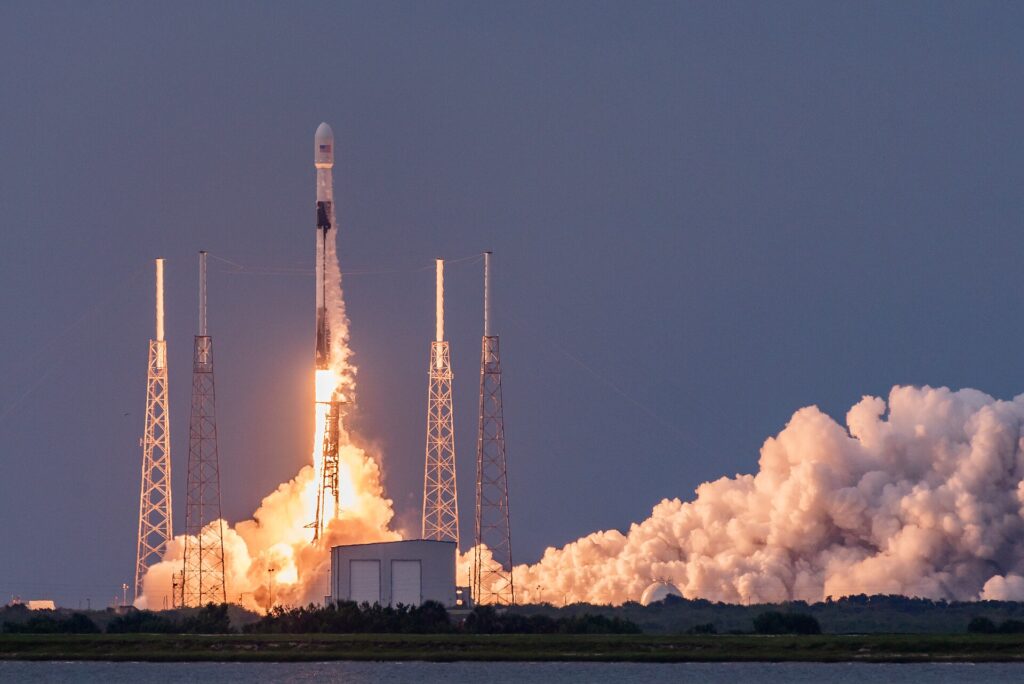
A major part of Starship’s economic case is tied to Starlink expansion. The filing indicates SpaceX aims to begin launching its next-generation V3 satellites in the second half of 2026, likely aboard Starship, which has a payload bay designed to carry up to 60 satellites per launch. That is a significant jump from the roughly two dozen satellites typically deployed on Falcon 9 missions, reflecting how tightly Starship is linked to the scaling economics of SpaceX’s broadband network.
Development spending has also increasingly shifted toward Starship. The company devoted $3 billion to research and development in its space segment in 2025, with the entirety of that spending directed toward the Starship program. That figure represents a sharp increase from $1.8 billion in the previous year, underscoring the program’s accelerating pace and centrality within the company’s engineering efforts.
Since 2023, SpaceX has conducted 11 Starship test flights, producing both dramatic failures and notable technical milestones. Among the achievements was the successful recovery of the Super Heavy booster using large mechanical arms, a maneuver intended to advance rapid reusability and reduce launch turnaround time.
Despite these advances, SpaceX acknowledged in its filing that significant technical and operational challenges remain before Starship can reach Elon Musk’s long-term goal of “thousands of launches per year.” Such a launch cadence would be necessary, the company says, to support the deployment of approximately 100 gigawatts of solar-powered AI satellites annually, a scale equivalent to roughly a quarter of U.S. annual energy consumption.
“They’re getting really close,” said Chris Quilty, president of Quilty Space, a space and satellite industry research firm. “But what we still don’t know, and won’t know for a while is, can they do it repeatedly?”
Operational constraints extend beyond the rocket itself. A single Starship launch requires the equivalent of 244 tanker trucks of natural gas, according to a Federal Aviation Administration analysis cited in the filing, while roughly one million gallons of water are needed to suppress acoustic forces during liftoff. These requirements present substantial infrastructure challenges for high-frequency operations.
“There is not enough water in the water system to support the launch of Starship” at such a scale, Quilty said, highlighting the logistical constraints that could limit launch cadence even if the vehicle itself proves successful.
Another key technical hurdle is in-orbit refueling, a process in which Starships would dock and transfer propellant in space to enable deep-space missions. The maneuver has not yet been demonstrated and would require multiple coordinated launches and precise orbital operations. “In-orbit refueling is complex, and we have not yet demonstrated or attempted it,” SpaceX said in its filing.
Former SpaceX Vice President of Flight Reliability Hans Koenigsmann described in-orbit refueling as potentially the final major challenge. “That’s probably the last big challenge,” he said. “If that happens, then I think from then on it should be more or less, success.” The company also noted the difficulty of managing cryogenic propellants like liquid oxygen in space, where extreme temperature control is required to prevent losses.
Development has been concentrated at Starbase in South Texas, where SpaceX has built a large-scale manufacturing and testing complex intended to produce rockets at a cadence closer to commercial aviation than traditional aerospace production. The approach, however, introduces risk, as rapid design changes require continuous adjustments to manufacturing systems.
“When you build up your production before you actually have the product, you obviously run the risk that if you change your mind… every change on the rocket has a change on the factory now too,” Koenigsmann said, describing Starship as “a totally different animal” compared with Falcon 9.
SpaceX is now preparing for the next Starship test flight following a multi-month pause, with the upcoming mission set to debut the V3 prototype. “Version 3 is basically a clean-sheet design of the ship,” said Charlie Cox, Director of Starship Engineering, in a company video.
The V3 configuration includes multiple upgrades intended to support orbital operations, extended duration missions in space, and eventual crewed lunar landings. NASA has committed at least $3 billion under its Artemis program to support development of a human-rated lunar lander based on Starship. “That Version 3 is what HLS is going to be based on,” said Kent Chojnacki, Deputy Manager of NASA’s Human Landing System program. “A lot’s gonna be dependent on this first flight.”
The scale of SpaceX’s investment comes as founder Elon Musk, currently listed as the world’s richest individual with a net worth of $793.1 billion, continues to position Starship as the technological foundation for future growth across space transportation, satellite internet, and interplanetary exploration.


 By
By



 By
By