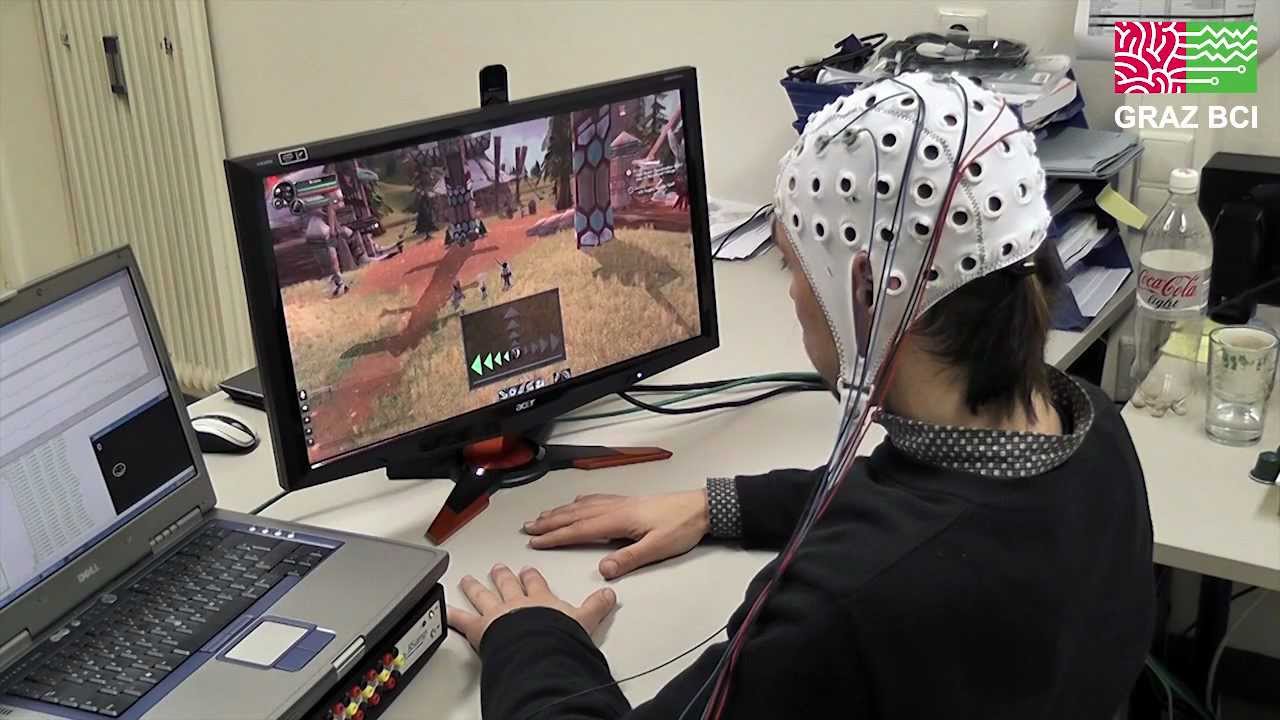

Brain-computer interfaces (BCIs) are no longer just experimental hardware locked in research labs. In recent years, they’ve begun crossing into interactive media—most notably gaming—where they’re redefining what it means to input a command. Instead of buttons, players use electrical signals from their own brains to engage with systems designed to respond to thought alone.
Signal, Noise, and Interpretation
Most BCIs rely on EEG—electroencephalography—to detect neural signals. These signals are weak and prone to noise, but with appropriate filtering and machine learning classifiers, they can be mapped to high-level mental states like attention, cognitive load, or relaxation. Companies like Emotiv have developed consumer-grade headsets that use these signals to control in-game functions, from menu selection to object manipulation. The real challenge lies in accuracy—translating noisy data into something usable without frustrating lag or false positives.
Games Built for Thought
BCI-compatible games typically avoid rapid input or precision movement. Instead, they favor slower, symbolic gameplay. Common mechanics include triggering changes based on mental focus, or shifting game states depending on how relaxed or engaged the player is. These systems aren’t meant to replace a mouse or controller—they’re designed to create entirely new categories of interaction, particularly for players who can’t rely on traditional input methods.
Latency, Error, and Interface Design
Latency remains a bottleneck for BCI systems. Even optimized EEG interfaces often introduce delays of 300–500ms between signal detection and game response. Classification accuracy ranges between 70% and 90% depending on calibration and task complexity. For this reason, developers working with BCI input often design around slowness—building games that reward sustained attention rather than reflexes. Hybrid systems that combine brain input with standard peripherals are also in active development.
Privacy and Data Ethics
Unlike most gaming hardware, BCIs involve biological signal collection. Even at low resolution, EEG data can hint at user stress, fatigue, mood, or even recognition of visual stimuli. This raises real questions around storage and use. A study published in Frontiers in Human Neuroscience explored the ethical implications of multiplayer BCI systems—emphasizing the need for informed consent, secure handling of neural data, and clear limitations on what kinds of brain signals are tracked or retained.
The Future Is Layered, Not Replaced
BCIs aren’t expected to replace controllers. They’re more likely to add layers—adjusting difficulty based on focus, triggering subtle game world shifts in response to frustration or calm, or enabling interaction where none was previously possible. As classification models improve and signal processing gets faster, brain-based input will evolve from a novelty into a legitimate option for a subset of experiences. Not for everyone, not for every game—but meaningful where it works.


 By
By



 By
By