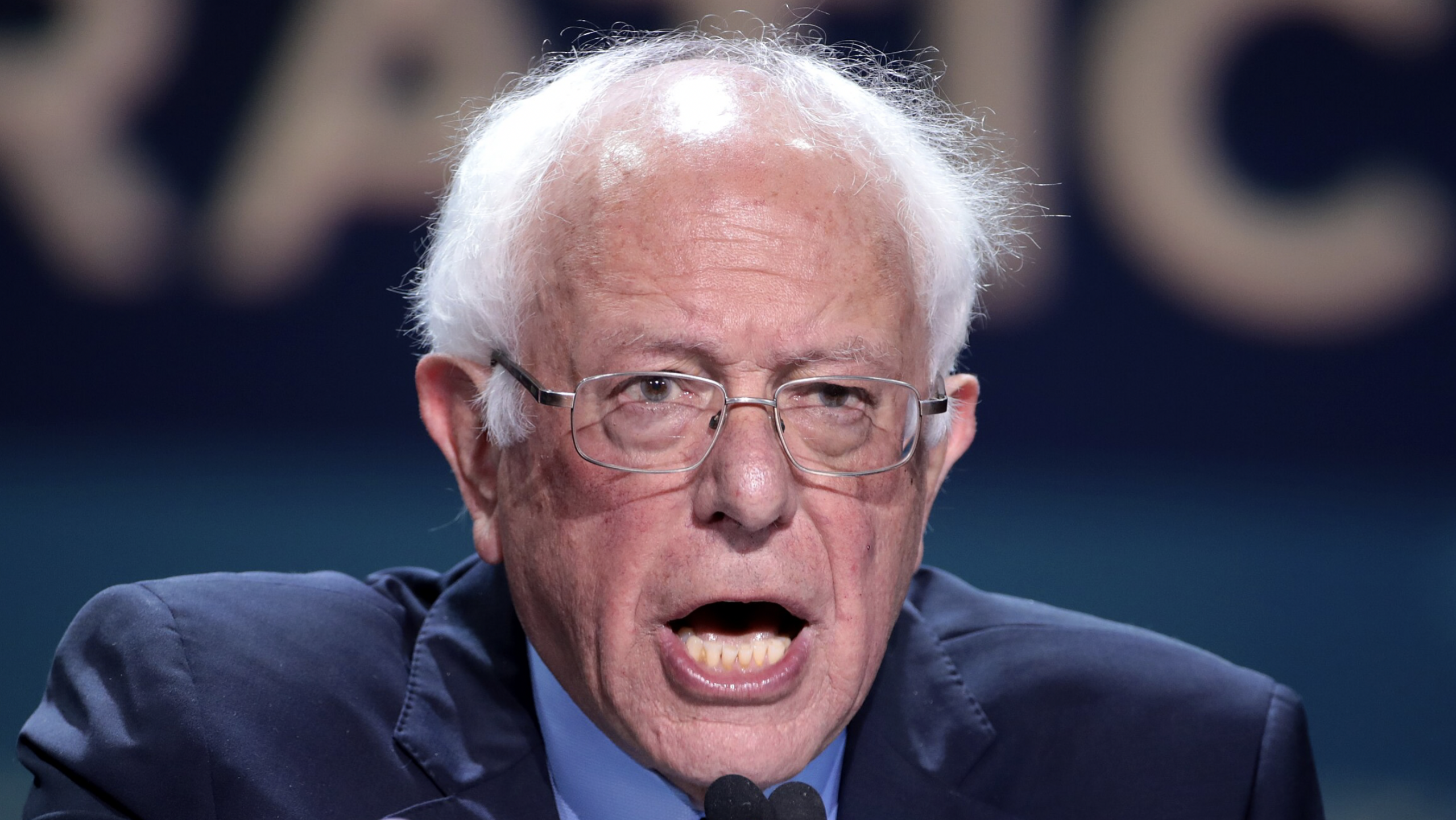

Sen. Bernie Sanders (I-Vt.) used a sweeping op-ed published in The New York Times on June 1, 2026 to challenge the fundamental premise of how artificial intelligence is currently being developed, owned, and monetized in the United States — framing the rise of AI not as a technological achievement by a visionary class of entrepreneurs, but as the exploitation of a collective resource by a small group of extraordinarily powerful billionaires who answer to no one.
The piece, titled “The Public Should Own Half of the Big A.I. Companies,” represents the senator’s most comprehensive public statement to date on the subject and arrives alongside his announcement that he will introduce the American A.I. Sovereign Wealth Fund Act — a bill that would give the federal government a 50 percent equity stake in the country’s leading AI firms.
“Who Will Own and Control That Future?”
At the heart of Sanders’ argument is a question he says American society has not yet been forced to answer: who gets to decide what artificial intelligence becomes, and who benefits when it succeeds? The senator drew a sharp contrast between two possible futures — one in which AI improves the lives of working families by addressing poverty, extending life expectancy and helping solve climate change, and one in which its gains are captured by a handful of executives and investors who already rank among the wealthiest people on earth.
“The question is not whether A.I. will change the world,” Sanders wrote. “The question is: Who will own and control that future? Who will benefit from it, and who will be hurt by it?”
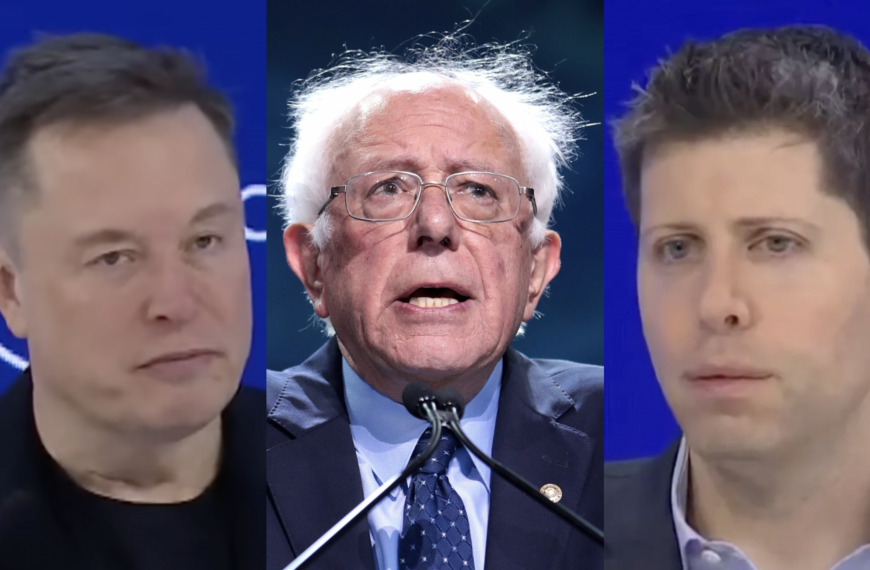
That framing, he argued, is not abstract. The senator named OpenAI chief Sam Altman, Elon Musk — who leads xAI — and Anthropic CEO Dario Amodei by name, describing them as “moguls whose companies are positioned to dominate the industry” and accusing the broader tech investment class of treating AI as “the next great wealth-extracting machine.”
AI Was Built on Stolen Work
Sanders dedicated a significant portion of the op-ed to the argument that AI systems did not emerge from the genius of any single company or individual. The data, language, code, and creativity that power generative AI tools, he argued, came from books, songs, journalism, scientific papers, videos, conversations, and artwork spanning generations — none of it created by the people who built the models or who profit from them.
“For the most part, tech oligarchs have fed this knowledge into their A.I. models without permission, without acknowledgment, without compensation,” Sanders wrote, calling the practice an effective theft of creative and intellectual labor from “writers, artists, musicians, journalists, teachers, scientists and ordinary citizens” by “some of the wealthiest people in the world.”
The senator made a point of using OpenAI’s own chief executive as a witness against the industry. Altman, he noted, has publicly acknowledged that AI models were trained on humanity’s “collective experience, knowledge” and “learnings.” Sanders argued that this admission makes the case for public ownership self-evident — if the industry’s own leaders concede that AI was built on collective human knowledge, then the wealth it generates should flow back to that collective.
The Legislative Response
To address what he describes as an unprecedented transfer of public value into private hands, Sanders announced plans to introduce the American A.I. Sovereign Wealth Fund Act. The bill would impose a one-time 50 percent stock levy — not a tax on profits but a transfer of equity — on OpenAI, Anthropic, xAI, and other major AI companies. The resulting government-held shares would form the foundation of a sovereign wealth fund administered on behalf of the American public.
Sanders said the fund would serve two purposes: giving citizens a direct democratic role in shaping how AI is developed and deployed, through federal voting rights and board representation at the targeted companies; and ensuring that the projected trillions of dollars generated by the AI sector are used to improve living standards across the country rather than flowing primarily to shareholders, executives and venture capitalists.
He pointed to Norway’s sovereign wealth fund — now worth more than $2 trillion and built from oil revenues — as a model for how a nation can translate control of a shared resource into broad-based prosperity. Alaska’s Permanent Fund, which has paid annual dividends to state residents for decades, and the widespread use of public pension funds to hold corporate equity were cited as domestic precedents.
Notably, Sanders also highlighted that AI companies themselves have floated similar ideas. OpenAI has proposed a “public wealth fund” to give every citizen a stake in AI growth. Anthropic has called for “national sovereign wealth funds with stakes in A.I.” Musk has endorsed direct government income payments as a response to AI-driven unemployment. The wealth fund proposal is part of a broader legislative push by Sanders in 2026. In March, he and Rep. Alexandria Ocasio-Cortez (D-N.Y.) introduced the AI Data Center Moratorium Act, which would impose an immediate federal halt on new AI data center construction until the government establishes safety, labor, and environmental safeguards.
A Question of Democratic Control
Throughout the op-ed, Sanders returned repeatedly to the theme of democratic accountability — the idea that decisions of this magnitude should not be made in private by a narrow class of wealthy technologists with no electoral mandate and no legal obligation to consider public welfare.
“The future of A.I. and the fate of humanity must not be decided behind closed doors in Silicon Valley,” Sanders wrote. “It must not be dictated by billionaires seeking to maximize their power and profit. It must be decided by workers, parents, teachers, artists, scientists, communities and the American people.”
Sanders has been consistent in this framing. In an April 2026 op-ed published through his Senate office, he wrote that the American people “don’t trust the AI oligarchs” and that the public understands the AI revolution is being led by billionaires “not to improve life for working families but to expand their own wealth and power.”
The senator acknowledged that the legislation he is preparing will need to grapple with the complex reality of companies for which AI is only part of a broader business. More specific implementation details, he said, would be included in the formal bill when it is unveiled in the coming weeks. But on the core principle, he was unambiguous: when a public resource generates wealth, the public should share in that wealth — and artificial intelligence, built from the accumulated knowledge and creativity of all of humanity, qualifies.

 By
By


 By
By