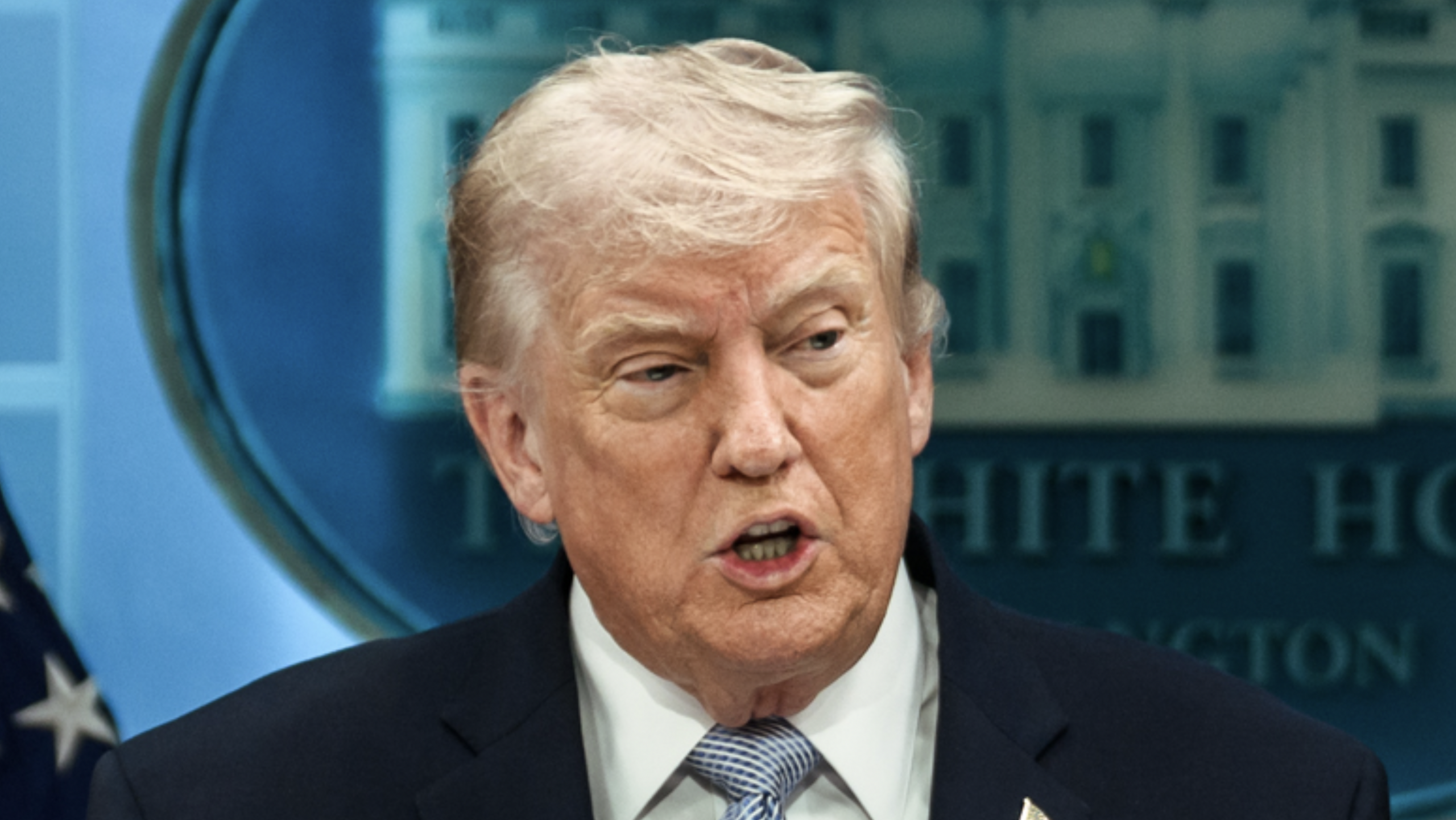

President Donald Trump signed a sweeping executive order on Tuesday directing federal agencies to establish a voluntary framework under which artificial intelligence developers would give the government up to 30 days of early access to their most powerful systems before broader release — a move the White House characterized as essential to protecting American national security while preserving the country’s dominance in the global AI race.
The order, titled “Promoting Advanced Artificial Intelligence Innovation and Security” and signed at the White House on June 2, 2026, represents one of the most detailed government directives yet on the intersection of advanced AI and cybersecurity. It tasks the Departments of Treasury, Homeland Security, and the newly renamed Department of War — formerly the Department of Defense — along with the National Security Agency and the Cybersecurity and Infrastructure Security Agency, with building out new infrastructure to assess, monitor, and defend against AI-enabled threats, while simultaneously expanding the AI capabilities available to government at every level.
The order states that “advanced AI capabilities make our Nation stronger, but also introduce new national security considerations that require coordinated action across executive departments and agencies,” and pledges that the administration “will continue to work closely with industry to ensure that the best and most secure technology is deployed rapidly to confront any and all threats to our country.”
A Delayed Order, Finally Signed
The executive order had been scheduled for signing in late May, and the White House had invited tech CEOs to attend a signing ceremony, holding a press briefing with senior officials on the morning of the planned announcement. Trump pulled the order at the last minute, later telling reporters that the order could have hindered American companies’ competitiveness with Chinese companies. The revised order signed Tuesday appeared to address those concerns head-on, with the White House making explicit that nothing in the order authorizes the creation of any mandatory governmental licensing, preclearance, or permitting requirement for the development or release of new AI models.
The “Covered Frontier Model” Framework
At the heart of the order is a new classification: the “covered frontier model.” Within 60 days, the NSA Director — in consultation with the National Cyber Director, the Assistant to the President for Science and Technology, and the Director of CISA — must develop and maintain a classified benchmarking process to assess the advanced cyber capabilities of AI models and determine which systems cross the threshold for that designation. Crucially, those classified assessments will be shared with AI developers and researchers as appropriate.
Once a model is designated a covered frontier model, the voluntary framework would allow developers to provide the federal government with access to those systems for up to 30 days before they plan to release them to other trusted partners. The framework would also enable developers to collaborate with the government in selecting which trusted partners receive early access, with an explicit focus on promoting secure innovation and strengthening the cybersecurity of critical infrastructure.
Hardening American Systems in 30 and 60 Days
The order lays out an aggressive timeline for upgrading the nation’s defenses. Within 30 days, the Secretary of Homeland Security, through CISA, must release Binding Operational Directives to expedite and prioritize the cyber defense of civilian federal government information systems, establish or expand federal programs that enhance AI-enabled defensive tools, and facilitate access to cybersecurity tools — including covered frontier models — for agencies, state and local authorities, and operators of critical infrastructure. The order specifically names rural hospitals, community banks, and local utilities as intended beneficiaries of that access.
Also within 30 days, the Secretary of the Treasury — in coordination with the NSA and CISA — must stand up an AI cybersecurity clearinghouse in voluntary collaboration with the AI industry and critical infrastructure operators. The clearinghouse will coordinate and streamline the scanning for software vulnerabilities, validate discovered vulnerabilities, and prioritize the distribution of patches.
Hiring, Workforce, and Funding
Beyond the structural changes, the order contains workforce and funding directives aimed at building the human capital necessary to sustain these efforts. Within 30 days, the Director of the Office of Management and Budget must determine whether any existing federal grant programs have funding available to direct toward applicants developing advanced AI vulnerability detection. Within 60 days, the Director of the Office of Personnel Management must expand hiring and placement pathways for Information Cybersecurity Specialists within the United States Tech Force, the government’s technology hiring initiative.
Cracking Down on AI-Enabled Crime
Section 4 of the order directs the Attorney General to prioritize federal criminal enforcement against anyone who uses AI to illegally access or damage computer systems without authorization, or who employs AI agents to unlawfully access data subsequently used for criminal purposes. The order specifically names statutes covering identity fraud, computer fraud and abuse, and wire fraud as the primary legal tools for that enforcement push. The directive extends to both public and private information technology systems.
“America First” AI and the Broader Context
The order frames its policy goals explicitly around an “America First” approach, stating that the administration will “lead an America First cybersecurity effort that enhances both our national security and our global AI dominance.” The language positions the order as a direct extension of the administration’s broader technology agenda, which has included a series of executive actions on AI since Trump’s return to office in January 2025 — among them orders on AI education for American youth, exporting the American AI technology stack, and a December 2025 order aimed at ensuring a national policy framework for artificial intelligence.
The White House has listed “Lead the World in AI” as one of its top stated priorities, and the June 2 order follows earlier cybersecurity action taken in June 2025, when Trump signed a separate executive order sustaining and amending select cybersecurity directives from the Obama and Biden administrations. That earlier order had focused on border gateway security, post-quantum cryptography, and the software supply chain. Tuesday’s order goes considerably further, embedding AI capabilities directly into the federal government’s core defensive posture.
What the Order Does Not Do
Despite the scope of its directives, the order is careful to draw explicit boundaries around what it cannot and does not authorize. Section 3(c) states plainly that nothing in the order “shall be construed to authorize the creation of a mandatory governmental licensing, preclearance, or permitting requirement for the development, publication, release, or distribution of new AI models, including frontier models.” The voluntary nature of the early-access framework is emphasized throughout — a design choice that reflects both the administration’s stated commitment to innovation-friendly governance and the concerns Trump himself raised when he pulled an earlier version of the order in May over fears it could disadvantage American AI companies against their Chinese competitors.
The order’s publication costs are to be borne by the Department of War — a line that itself signals one of the quieter but notable shifts of the current administration: the formal renaming of what was the Department of Defense. For now, the clock is ticking: the first wave of 30-day deadlines arrives in early July, with the NSA, CISA, the Treasury Department, and OMB all expected to produce frameworks, directives, and assessments that will begin to define, in practice, what American AI security looks like in the years ahead.

 By
By
 By
By
 By
By