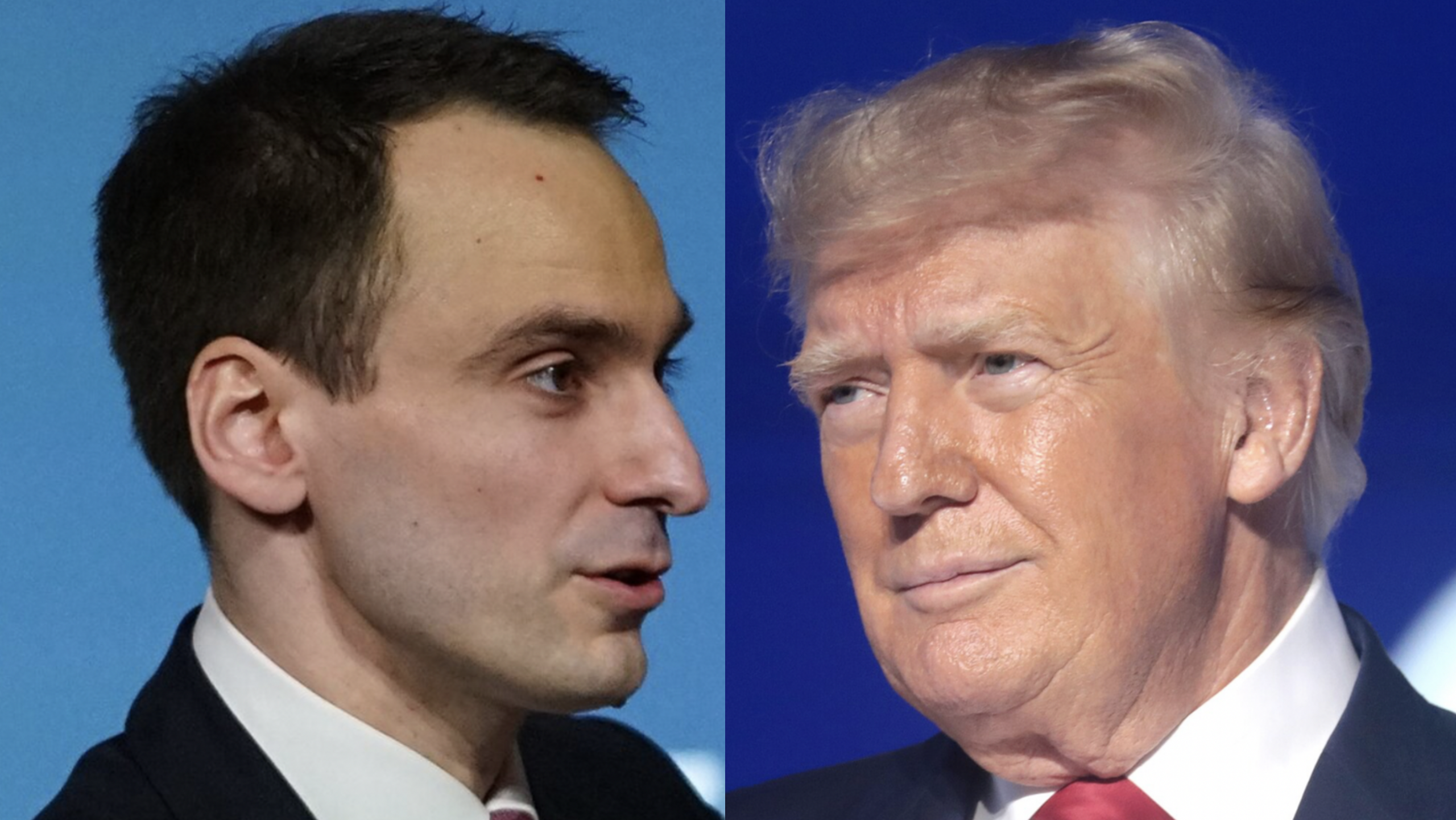

President Donald Trump on Tuesday signed a sweeping executive order directing the full weight of America’s advanced artificial intelligence capabilities toward hardening the nation’s cyber defenses — and the White House’s top science official wasted no time calling it a turning point. Michael Kratsios, Director of the White House Office of Science and Technology Policy (OSTP) and the president’s science advisor, took to X on June 2, 2026, to publicly react to the signing, framing the order as both a national security milestone and a validation of American technological dominance.
“Today @POTUS signed an EO that keeps America leading in AI while putting frontier AI capabilities to work strengthening our cyber defenses,” Kratsios wrote. “AI systems are now the most powerful tools we have ever had to harden our cyber infrastructure and stay ahead of adversaries. It is a real blessing that these capabilities are being developed by American industry, and not by those who would use them against us.”
The Executive Order: What It Does
The executive order, titled Promoting Advanced Artificial Intelligence Innovation and Security and signed at the White House on June 2, 2026, lays out a broad framework for deploying advanced AI across government and private sector systems to confront cyber threats. The order states that it is the policy of the United States “to promote AI innovation and security by working collaboratively with the private sector to modernize government and private sector information systems and harden them against external threats; to protect American ingenuity and intellectual property from exploitation and theft by adversaries; and to cultivate America’s advanced AI-enabled capabilities.”
The order opens with a direct shot at the previous administration, stating that the Trump White House “has unleashed tremendous technological growth and economic investment in AI by slashing the bureaucratic constraints that the prior administration placed on America’s AI developers and researchers.” It further declares that the United States “continues to lead the world in Artificial Intelligence because of the enormous talent and innovation of our AI industry, and because we refuse to stifle this innovation with overly burdensome regulation.”
A 30-Day Clock Across Multiple Agencies
Much of the executive order is built around tight, 30-day deadlines that set a rapid implementation timeline across several cabinet departments and federal agencies. Within 30 days of the signing, the Committee on National Security Systems is directed to prioritize the cyber defense of National Security Systems. Simultaneously, the Secretary of the Department of War is instructed to prioritize the cyber defense of department information systems.
Also within that 30-day window, the Secretary of Homeland Security, acting through the Director of the Cybersecurity and Infrastructure Security Agency (CISA), is directed to release Binding Operational Directives to “expedite and prioritize the cyber defense of civilian Federal Government information systems.” Those directives must also establish or expand federal programs featuring AI-enabled defensive tools, and must facilitate access to cybersecurity tools and services — including, where appropriate, “covered frontier models” — for agencies, state and local authorities, and operators of critical infrastructure. The order specifically names rural hospitals, community banks, and local utilities as priority recipients.
An AI Cybersecurity Clearinghouse
One of the more structurally significant elements of the order is the creation of an AI cybersecurity clearinghouse. Within 30 days, the Secretary of the Treasury, working alongside the National Cyber Director, the Director of NSA, and the Director of CISA, is directed to form the body in voluntary collaboration with the AI industry and critical infrastructure operators. The clearinghouse is designed to coordinate and deconflict the scanning of software vulnerabilities, discover and validate those vulnerabilities, and prioritize remediation and distribution of vulnerability patches across the government and private sector ecosystem.
Defining and Deploying ‘Covered Frontier Models’
Within 60 days of the order’s signing, senior national security and technology officials — including the Secretary of the Treasury, the Director of the NSA, and the Director of CISA — are directed to develop a classified benchmarking process to assess the advanced cyber capabilities of AI models and determine the threshold at which a model should be designated a “covered frontier model” for the purposes of the order. That determination will be made by the Director of the NSA, in consultation with the National Cyber Director and the Assistant to the President for Science and Technology.
The order also calls for the design of a voluntary framework with AI developers, through which companies can engage the federal government to determine whether their models meet the “covered frontier model” designation. Under the framework, developers could provide the government with access to such models — subject to confidentiality, cybersecurity, and intellectual property protections — for up to 30 days before releasing them to trusted partners. The order is explicit that nothing in this section authorizes the creation of any mandatory government licensing, preclearance, or permitting requirement for AI models, including frontier models.
Criminal Enforcement and the Use of AI in Crimes
The order also takes direct aim at criminal actors who exploit AI for cyberattacks. It directs the Attorney General to prioritize enforcement of federal criminal statutes — including those governing fraud and computer crimes — against anyone who utilizes AI to illegally access or damage computer systems without authorization, or who uses AI to further any other crime during such access. The directive covers breaches of both public and private IT systems, as well as the use of AI agents to unlawfully access data subsequently used for criminal or unlawful purposes.
Growing the Federal AI Workforce
On the personnel side, the order directs the Director of the Office of Personnel Management to expand the United States Tech Force Information Cybersecurity Specialist hiring and placement pathways within 60 days. The directive signals the administration’s intent to ensure that the federal government has the human capital necessary to operate and oversee the AI-powered systems the order is designed to deploy.
Kratsios and the Broader Trump AI Agenda
Tuesday’s executive order represents a continuation of a policy push that Kratsios has been central to since his Senate confirmation as OSTP Director — a post in which he also serves as assistant to the president for science and technology — in a bipartisan 74-25 vote. As the thirteenth Director of the White House OSTP, Kratsios oversees the development and execution of the nation’s science and technology policy agenda.
Kratsios has previously argued that the United States holds a commanding position across the full AI technology stack. “We have the best cloud companies, we have the best chips, we have the best models, we have the best applications and all those together create the AI stack,” Kratsios said during a Consumer Technology Association fireside chat in 2025. Tuesday’s executive order is squarely aimed at ensuring that stack is not just commercially dominant, but defensively decisive.
What Comes Next
The order sets in motion a coordinated, multi-agency response that will unfold over the next 30 to 60 days, with agencies including CISA, NSA, Treasury, the Department of War, the Office of Personnel Management, and OMB all carrying specific implementation responsibilities. With Kratsios framing the moment as a “real blessing” and calling AI systems “the most powerful tools we have ever had to harden our cyber infrastructure,” the administration is making clear that it views the convergence of artificial intelligence and national cybersecurity not as a future concern — but as an immediate operational priority that demands action now.

 By
By

 By
By
 By
By