
The U.S. Navy is deploying advanced artificial intelligence capabilities to accelerate the detection of Iranian naval mines in the Strait of Hormuz, a critical global shipping route for oil and other commodities. A contract awarded last week to San Francisco-based Domino Data Lab, valued at up to $100 million, supports this effort by enhancing software that powers underwater drones. This initiative comes amid ongoing tensions, including a U.S. naval blockade of Iranian ports established in mid-April 2026, which has restricted maritime traffic to and from Iran.
President Donald Trump has stated that the Navy is actively working to clear Iranian mines from the strait. Despite a tenuous ceasefire in the weeks-long conflict between the U.S. and Iran, the threat of underwater explosives continues to disrupt shipping and pose risks to the global economy. Mine sweeping operations in such contested waters could extend for months without technological acceleration.
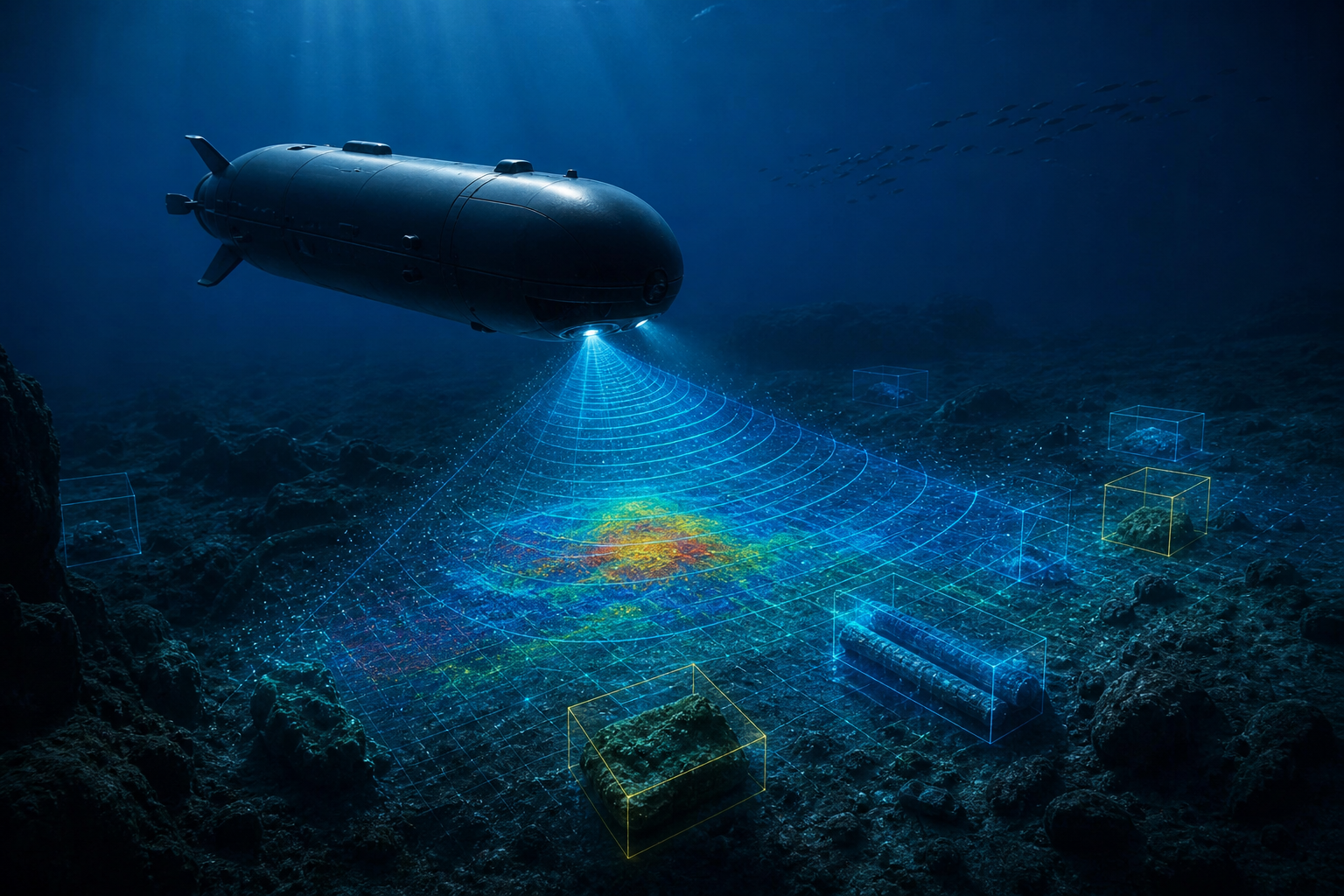
The contract expands Domino Data Lab’s role as the AI foundation for the Navy’s Project AMMO, or Accelerated Machine Learning for Maritime Operations. This program aims to make underwater mine detection faster, more accurate, and less reliant on human sailors by integrating data from various sensors on unmanned underwater vehicles, known as UUVs.
Thomas Robinson, Domino’s chief operating officer, described the shift in an interview. “Mine-hunting used to be a job for ships. It’s becoming a job for AI. The Navy is paying for the platform that lets it train, govern, and field that AI at a speed required for contested waters that block global trade and imperil sailors.”
Domino’s software integrates inputs from side-scan sonar and visual imaging systems. It enables the Navy to monitor the performance of different AI detection models in real time, identify shortcomings, and rapidly deploy improvements. Previously, updating AI models on UUVs to recognize new or unseen mine types could take up to six months. The new platform reduces this timeline to just days.
This speed is particularly relevant in the current environment. Robinson illustrated the advantage with a hypothetical: if UUVs trained on Russian mines in the Baltic Sea needed redeployment to detect Iranian variants in the Strait of Hormuz, the Navy could adapt in a week rather than a year.
Iran maintains a large arsenal of naval mines, estimated by the Defense Intelligence Agency at more than 5,000. These include moored mines suspended below the surface by chains and anchors, bottom mines resting on the seafloor that use magnetic, acoustic, pressure, and seismic sensors, and limpet mines attached directly to ship hulls by divers. The shallow waters at the strait’s narrowest point, around 200 feet deep, combined with tight shipping lanes and Iran’s long southern coastline, facilitate mine deployment from small boats.
Clearing these mines presents significant challenges. The seafloor is cluttered with debris, shipwrecks, and other objects that complicate sonar surveys. Traditional minesweeping or remote vehicle operations are time-consuming and hazardous, especially under potential threat. Even modern tankers with double hulls and watertight compartments are vulnerable to mission-kill damage that impairs operations without necessarily sinking the vessel.
The U.S. has conducted strikes on Iranian minelayers, including attacks on 16 vessels earlier in the period, forcing Iran toward smaller boats for laying operations. The ongoing U.S. blockade, in place since April 13, 2026, has turned away dozens of commercial ships and trapped Iranian oil exports, adding pressure while mine threats persist.
Project AMMO and the Domino platform represent a broader push toward commercial AI integration in defense applications. By allowing rapid model training and deployment on edge devices aboard UUVs, the technology reduces risks to personnel and supports more agile responses in dynamic maritime environments. This capability could help establish and expand safe transit channels through potential minefields, aiding efforts to restore reliable shipping in the region.
As operations continue under the blockade and ceasefire conditions, the Navy’s investment in AI-driven mine detection underscores the growing role of machine learning in modern naval warfare. The software not only processes sensor data efficiently but also creates a governed environment for continuous improvement, potentially setting precedents for future autonomous systems in undersea domains.


 By
By



 By
By