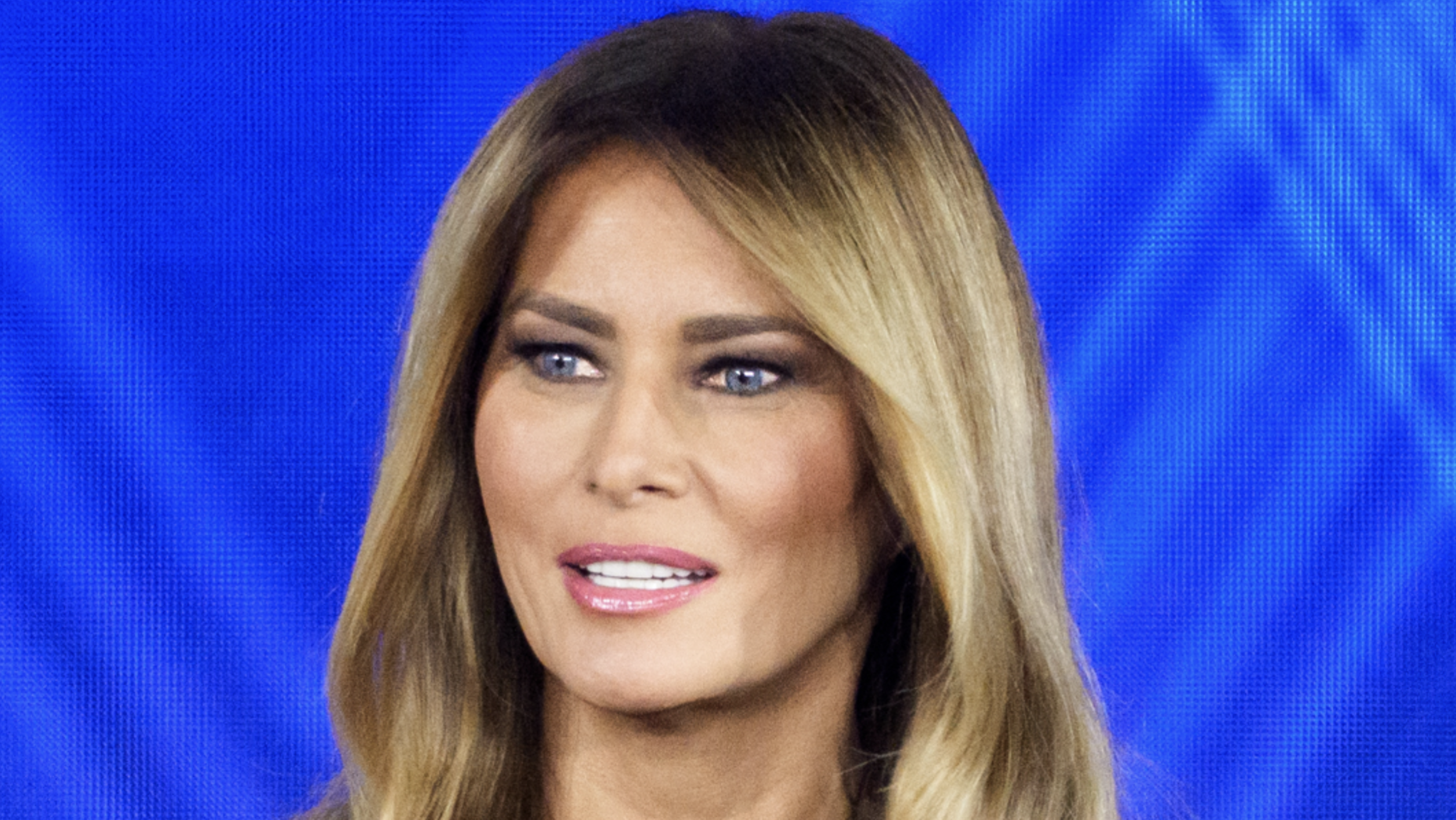

First Lady Melania Trump used a White House-hosted educational program to highlight the growing role of artificial intelligence and virtual reality in modern learning, presenting the technologies as tools capable of reshaping how students engage with history and global culture. The event, which included Queen Camilla, brought together American students to participate in an immersive, cross-cultural experience centered on British and American history.
The program was organized as part of Trump’s “Fostering the Future Together” initiative, an extension of her broader Be Best campaign focused on youth development. During the session, students were introduced to historical education through advanced digital tools, reflecting an effort to integrate emerging technologies into traditional academic subjects. The initiative emphasizes expanding access to knowledge while modernizing the way it is delivered.
“Today, students all over the world can visit historically important sites, learn about the past, and be inspired,” Trump said during the event. She added that physical travel is no longer necessary for such experiences, stating, “Our children don’t need to board airplanes to experience history anymore. Kids can have an educational experience that is fundamentally richer and more memorable than ever before, through VR and AI.”
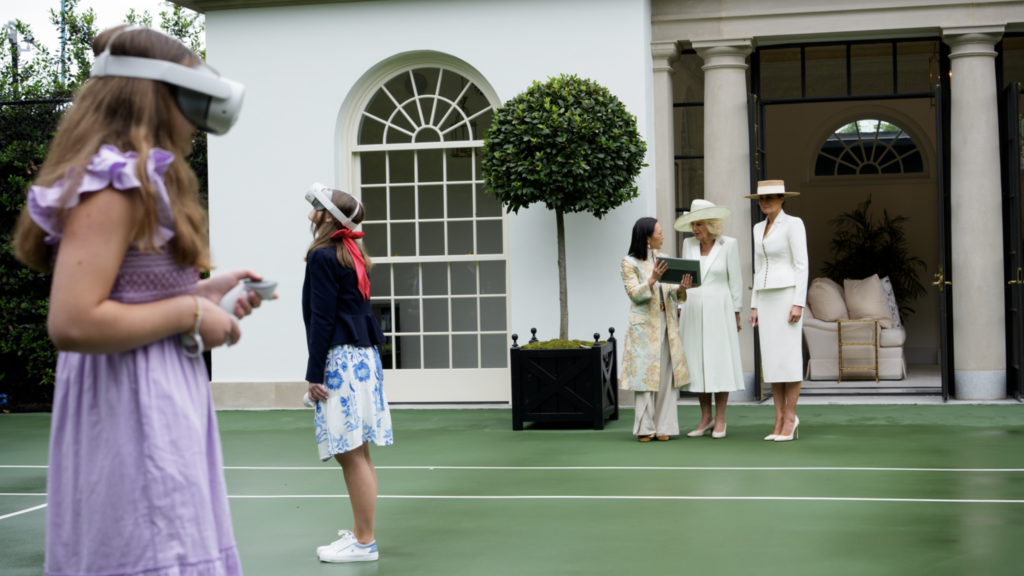
Students participated in a fully immersive virtual exploration of prominent locations across the United Kingdom. Using 360-degree virtual reality technology, they visited Snowdonia, Giant’s Causeway, Stonehenge, and the exterior of Buckingham Palace. The experience was designed to enhance understanding of geography and cultural heritage through simulated environments that replicate real-world settings.
Each participant used a Meta Quest headset customized with the program’s branding alongside U.S. and U.K. flags. Several students involved were state champions in the Presidential AI Challenge, a national competition launched to encourage early engagement with artificial intelligence. The event took place at the White House Tennis Pavilion, a structure associated with design updates completed during the Trump administration.
The program also incorporated augmented learning through artificial intelligence-enabled eyewear. Students and attendees used Meta’s AI glasses to examine historically significant artifacts curated by the First Lady. These items were selected to highlight longstanding cultural and diplomatic ties between the United States and the United Kingdom.
Among the artifacts displayed was a portrait of President John Adams, recognized as the first U.S. ambassador to the United Kingdom. Students also viewed a World War II situation map prepared for President Franklin D. Roosevelt, as well as a bronze bust of former British Prime Minister Winston Churchill. Additional pieces included Staffordshire ceramics representing early transatlantic exchange and various gifts from prior state visits.
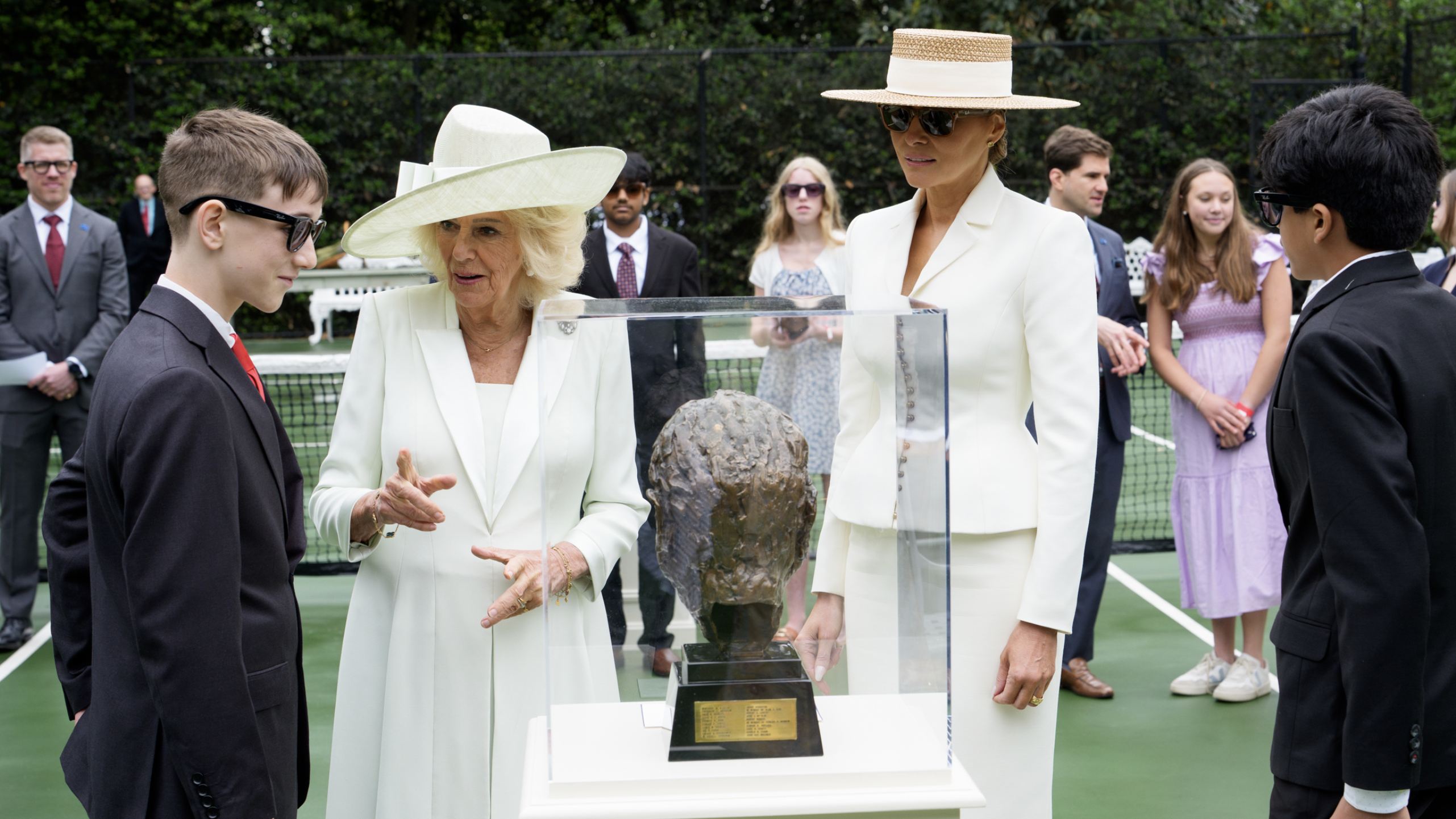
The interactive format allowed students to engage directly with both Trump and Queen Camilla, who discussed the educational applications of the technologies and encouraged dialogue about history and innovation. The event underscored the use of digital tools not only as a supplement to traditional teaching but as a means of creating more engaging and accessible learning environments.
Trump’s advocacy for artificial intelligence in education has been a consistent element of her recent initiatives. She has described AI as a “great equalizer” capable of providing personalized instruction at a level previously limited to private tutoring. Through programs like the Presidential AI Challenge, her agenda seeks to position American students to remain competitive in a global technology landscape.
At the same time, her approach has included caution about the role of AI in classrooms. She has stated that such technologies are not intended to replace teachers, emphasizing instead that they should serve as tools to support educators and enhance critical thinking. She has also highlighted the need for oversight, noting that while AI can generate information, human judgment remains essential for interpreting meaning and purpose.
The broader initiative has extended beyond individual events, including a global summit on artificial intelligence hosted at the White House in March 2026, which brought together international leaders and technology companies. That gathering, along with the cross-cultural program involving Queen Camilla, reflects a coordinated effort to integrate advanced technologies into education while promoting international collaboration.
The push has not been without criticism, as some educators and organizations have raised concerns about increased screen time and the influence of large technology companies in academic settings. Nonetheless, the White House program demonstrated a continued emphasis on merging innovation with education, positioning virtual and AI-driven experiences as a central component of future learning models.

 By
By

 By
By