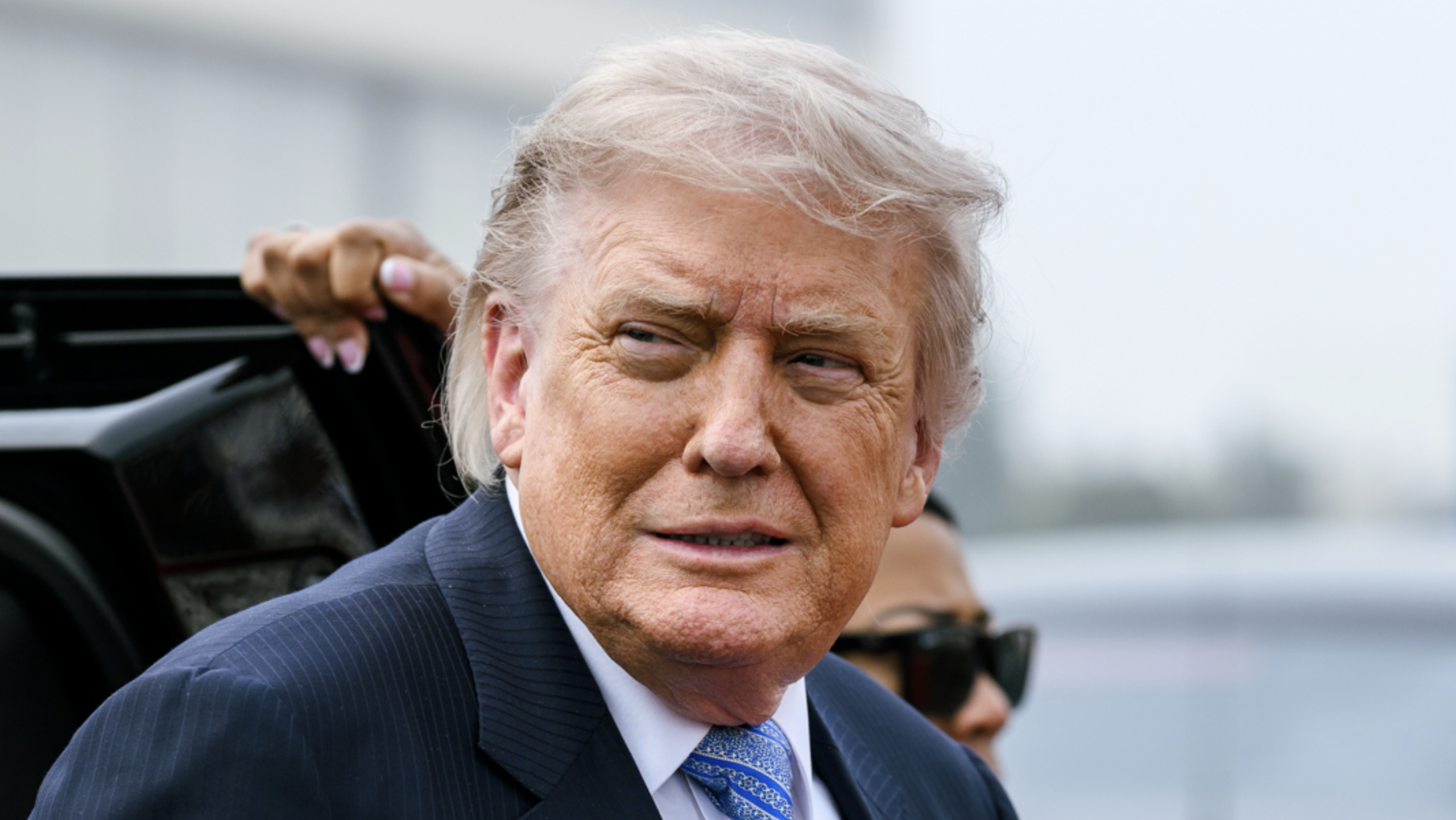

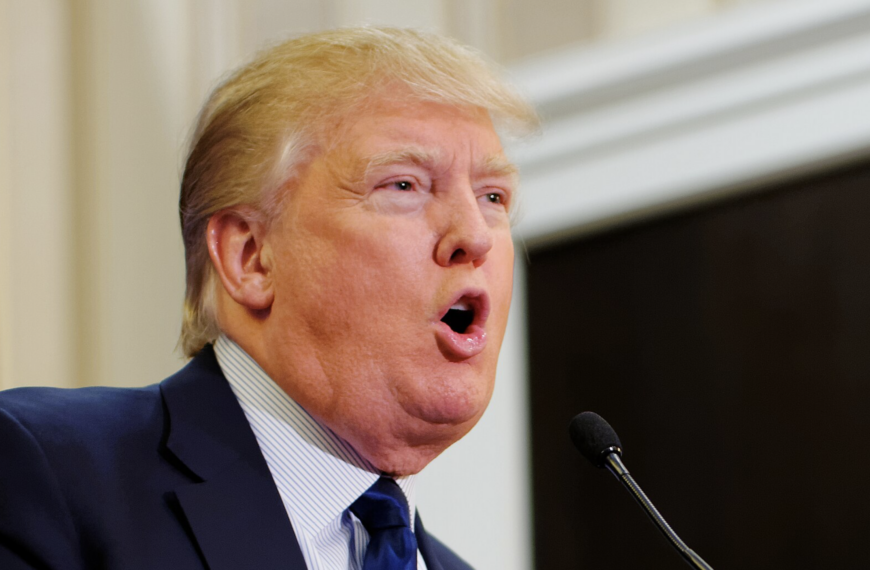
WASHINGTON, May 17, 2026 — President Donald Trump issued one of his most direct warnings yet to Iran on Sunday morning, posting to Truth Social at 11:42 a.m. that Tehran must move toward a settlement immediately or face consequences. “For Iran, the Clock is Ticking, and they better get moving, FAST, or there won’t be anything left of them. TIME IS OF THE ESSENCE! President DJT,” he wrote. The post came as ceasefire negotiations between Washington and Tehran remained deeply deadlocked and as Trump spoke by phone with Israeli Prime Minister Benjamin Netanyahu about the deteriorating diplomatic situation.
The warning did not arrive in a vacuum. It landed against a backdrop of demonstrated American military and technological capability that has already reshaped the strategic landscape of the conflict — and that gives the threat a weight that few nations could credibly match.
On February 28, 2026, U.S. Central Command commenced Operation Epic Fury under the direct orders of the President, with U.S. and partner forces striking targets to dismantle the Iranian regime’s security apparatus. By April 6, the operation had struck more than 13,000 targets and damaged or destroyed over 155 Iranian vessels. The sheer breadth of the military technology deployed was extensive, encompassing B-1, B-2 stealth, and B-52 bombers; F-22 and F-35 stealth fighters; EA-18G and EA-37B dedicated electronic warfare aircraft; U-2 and RC-135 reconnaissance platforms; MQ-9 surveillance and attack drones; LUCAS one-way attack drones; nuclear-powered aircraft carriers and submarines; and THAAD and Patriot missile defense systems — along with what the Pentagon described as “special capabilities we can’t list here.”
Among those unlisted capabilities, the cyber domain stands out as perhaps the most decisive technological edge the United States brought to the opening hours of the campaign. Cyber and electronic-warfare capabilities were integrated into the opening phase of the conflict to disrupt Iranian command-and-control, communications, and sensor networks — with coordinated U.S.-Israeli operations reportedly disrupting Iranian command, control, and sensor networks ahead of airstrikes. U.S. Space Command chief Dan Caine stated that “coordinated space and cyber operations effectively disrupted communications and sensor networks” in Iran prior to the main kinetic strikes, with the explicit goal of leaving the adversary “disrupted, disoriented and confused.” The resulting internet blackout across Iran saw connectivity fall to just 1–4 percent of normal levels for more than 60 hours, severely impairing government communications, state media, and public services — attributed to a combination of physical strikes on data centers and large-scale cyber disruption described by some Israeli sources as “the largest cyberattack in history.”
What began as a concentrated campaign against Iranian leadership and missile capabilities has developed into a sustained regional war with an expanding set of targets, including economic and logistical infrastructure. Iran’s conventional military capacity has been substantially degraded as a result, yet the diplomatic path forward has proven far more resistant to resolution than the military campaign itself.
The central sticking point in negotiations is Iran’s nuclear program. The U.S. military carried out strikes on Iranian nuclear facilities during the opening phase of the conflict, but Iran is believed to still hold roughly 970 pounds of highly enriched uranium. Trump, who frequently refers to that stockpile as “nuclear dust,” has demanded its removal from the country as a condition of any lasting agreement. Trump has stated that “there’s still nuclear material, enriched uranium, that has to be taken out of Iran” and that “there’s still enrichment sites that have to be dismantled.”
Speaking to reporters aboard Air Force One as he departed China on Friday, Trump appeared to soften one dimension of his position, saying a 20-year moratorium on Iran’s nuclear program would be sufficient — a departure from earlier demands for a permanent and total end to enrichment. “Twenty years is enough, but the level of guarantee from them is not enough,” Trump said. “In other words, it’s got to be a real 20 years.” Iran had previously countered with only a five-year freeze proposal.
As of May 7, the United States and Iran — via Pakistani mediators — were formulating a one-page, 14-point memorandum of understanding on parameters for ending the war, with the memo calling on Iran to commit to a moratorium on nuclear enrichment. Iran has not accepted those terms. Tehran’s own counterproposal has included an immediate end to hostilities on all fronts, a halt to the U.S. naval blockade, compensation for war damages, and a formal assertion of Iranian sovereignty over the Strait of Hormuz — a demand the U.S. and much of the international community have rejected as incompatible with international law governing freedom of navigation.
Iran’s response to the American framework has been defiant on multiple fronts. Iranian Foreign Ministry spokesman Esmaeil Baghaei called Tehran’s counterproposal “reasonable and generous” while accusing Washington of pressing “unreasonable demands.” Iran’s chief negotiator Mohammad Ghalibaf went further, issuing his own ultimatum last week and warning that “the longer they drag their feet, the more American taxpayers will pay for it.” Hardline voices within Iran’s parliament have gone further still, with the spokesman for the parliamentary national security commission saying lawmakers would consider enriching uranium to weapons-grade levels if conflict resumed.
Trump had already escalated his public language in the days before Sunday’s post. Trump declared the ceasefire “on life support” after Tehran’s latest offer did not include nuclear concessions, and the administration announced a new round of sanctions against Iran. Trump has also threatened that “if they don’t agree, the bombing starts, and it will be, sadly, at a much higher level and intensity than it was before.”
What makes that warning technically credible — and what gives Sunday’s Truth Social post its particular weight for a technology-focused audience — is the demonstrated performance of the American weapons systems and cyber capabilities already brought to bear. The B-2 Spirit stealth bomber, of which the United States remains the sole operator globally, was central to Operation Epic Fury’s deep-strike missions against hardened and buried Iranian nuclear and military sites. The integration of electronic warfare aircraft like the EA-18G Growler and EA-37B Compass Call — designed to suppress enemy air defenses and degrade communications networks — with offensive cyber operations created a layered disruption effect that Iranian command structures were unable to counter in the opening hours of the campaign. The MQ-9 Reaper drones and LUCAS one-way attack drones added persistent, precise strike capability across the theater at scale.
The cyber operations contributed to psychological pressure on the Iranian government and temporarily blinded parts of its command network, while regionally, electronic warfare affected maritime navigation. The combination of kinetic precision and cyber-enabled disruption reflected a doctrine of multi-domain operations that U.S. defense planners have developed over decades — and that Iran experienced in full for the first time in February.
Netanyahu, for his part, said Sunday that Israel remains prepared for whatever the diplomatic situation demands. “Our eyes are also wide open regarding Iran,” the Israeli prime minister said in a statement. “There are certainly many possibilities; we are prepared for any scenario.”
Whether Trump’s Truth Social post represents a genuine prelude to renewed military action or a calculated escalation of negotiating pressure, the technological record of Operation Epic Fury makes clear that the warning carries real weight. The United States has already demonstrated, in unprecedented detail, what its military and cyber arsenal is capable of delivering. The question now is whether Iran’s leadership, operating with a degraded military, a disrupted communications infrastructure, and a collapsing economy, will conclude that the cost of continued defiance exceeds the cost of a deal — before Trump decides the clock has run out.

 By
By

 By
By