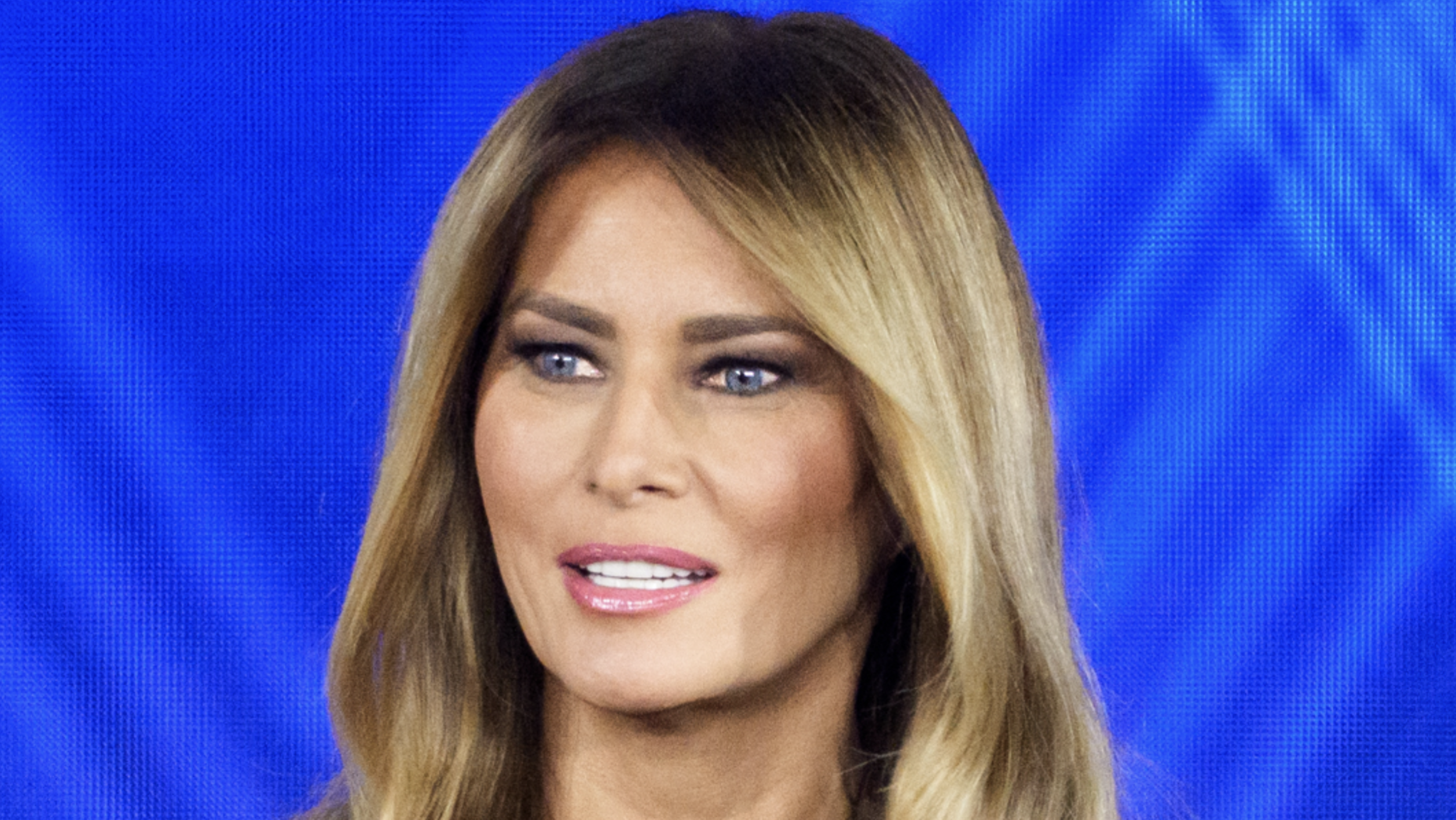

First Lady Melania Trump used a high-profile address at the Congressional Picnic on the South Lawn of the White House on May 19, 2026, to announce a significant legislative milestone — and to immediately put pressure on the Senate to follow through. The House of Representatives had passed the Fostering the Future Act unanimously just hours earlier, and Trump made clear the victory was only the beginning. “I have breaking news,” she told the assembled crowd of lawmakers and their families. “Today, the House passed the Fostering the Future Act. Thank you Chairman Smith, Chairman LaHood, Ranking Member Davis, and the House of Representatives for voting unanimously to lift America’s foster children above partisan politics.” The applause that followed set the stage for a direct challenge to the upper chamber. “Senators, we have momentum,” Trump said. “Now, it’s your turn to bring the Fostering the Future Act across the finish line. Let’s support our next generation and swiftly get this to the President for his signature.”
The Fostering the Future Act — formally H.R. 7432 — makes the first comprehensive reforms to the John H. Chafee Foster Care Program for Successful Transition to Adulthood since its creation in 1999, delivering much-needed improvements to a program that supports current and former foster youth between the ages of 14 and 21 as they transition to independence and adulthood. The legislation carries particular significance in the context of technology and workforce development: it expands Education and Training Vouchers to cover short-term workforce training programs, costs associated with earning a high school diploma, apprenticeships, and remedial education, while also increasing the maximum voucher cap from $5,000 to $12,000 — the first such increase in the program’s history. For a foster care population increasingly being prepared to compete in an AI-driven economy, that expansion of technical and workforce training access represents a direct policy investment.
The bill’s passage marks the culmination of a sustained legislative campaign by the First Lady, one that has included a rare personal appearance on Capitol Hill. Mrs. Trump visited Capitol Hill and worked with leaders from both sides of the political aisle to advance the legislation, encouraging members of the House Ways and Means Committee to “come together to prioritize America’s children… stay unified, act in good faith, and keep the next generation above politics.” That cross-aisle strategy produced results: the bill was introduced by Ways and Means Work and Welfare Subcommittee Chairman Darin LaHood of Illinois and Representative Gwen Moore of Wisconsin, and passed with unanimous support.
Ways and Means Committee Chairman Jason Smith issued a statement crediting the First Lady directly: “At every step of the way, we have also benefited from First Lady Melania Trump’s inspirational embrace of this cause and by listening to the voices of foster youth who came forward to share their stories and advocate for their peers.” President Trump, also present at the Congressional Picnic, called the bill’s passage “a big deal” and “a great thing,” reiterating his support for its passage in the Senate and joking, “In fact, the only one that gets things approved now are Melania and her friends.”
The Fostering the Future Act does not exist in isolation — it is the legislative component of a much broader initiative that has placed artificial intelligence and educational technology at its core. The bill codifies several priorities included in the Executive Order “Fostering the Future for American Children and Families,” championed by First Lady Melania Trump, which President Trump signed in November 2025 as what he described as “a revolutionary commitment… to strengthen foster care, support families, and improve outcomes for children across our Nation.” That executive order laid the groundwork for a series of technology-driven reforms to the child welfare system, many of which are now being implemented simultaneously with the legislative push.
Among the most significant of those technology-driven reforms is a new AI-powered digital platform. The Administration for Children and Families has begun launching FosteringTheFuture.gov, a new online platform that leverages artificial intelligence to connect youth transitioning out of foster care with critical resources for education, housing, and career development. The platform has been shaped at every stage of development by youth with foster care experience, through a series of roundtables and design sessions, and is expected to fully launch in fall 2026. On the data and systems side, ACF also announced a Child Welfare Technology Incubator to help states overcome persistent challenges in developing Comprehensive Child Welfare Information Systems, moving ACF away from traditional federal oversight toward a more active federal-state collaboration designed to unlock innovation and improve outcomes for children and families.
The domestic legislative and technological agenda is paralleled by an ambitious international initiative that has made AI in education a central pillar of Melania Trump’s platform. The Fostering the Future Together Global Coalition was launched by the First Lady during the 80th Session of the United Nations General Assembly in New York City on September 23, 2025, convening first spouses of heads of state and government from around the world to announce a global framework to advance children’s well-being through education, innovation, and the responsible use of technology, while prioritizing online protection. The coalition’s stated mission is to make advanced technology — including artificial intelligence — available to countries across the globe to assist children, educators, and parents, while also protecting them from online dangers, with major technology companies agreeing to make those tools available at no cost or very low cost to participating nations.
That international framework became concrete in March 2026, when the First Lady convened the coalition’s inaugural summit. Forty-five member nations attended the inaugural meeting, gathering at the U.S. Department of State and the White House over two days to collaborate on practical solutions that expand access to educational tools while strengthening protections for children in digital environments. The summit brought together an extraordinary concentration of technology industry leadership alongside heads of state. Companies including Meta, Palantir, OpenAI, Adobe, Zoom Communications, X, and Microsoft were present to advance the coalition’s mission of empowering children with technology and education. In her opening remarks to coalition members, Trump was direct about the stakes: “Our coalition’s mission is to empower children by providing greater access to technology and education. This is a historic moment in time. Our key driver: to cultivate the skills young people need to be successful in this rapidly evolving world.”
The summit’s most memorable moment reflected just how seriously the First Lady has positioned AI as central to her platform. On the second day, Trump arrived at the White House East Room accompanied by Figure 03 — a humanoid robot built by the startup company Figure AI, based in Sunnyvale, California, which had introduced the third-generation humanoid in October 2025. The robot addressed the assembled first spouses and technology leaders in eleven languages, telling the room: “I am grateful to be part of this historic movement to empower children with technology and education.” Trump thanked the robot for attending and noted: “It’s fair to state, you are my first American-made humanoid guest in the White House.” The gesture was not purely symbolic — Trump used the moment to encourage her guests to imagine a “humanoid educator” that could teach classical studies, arguing that such tools would give children more time for friendships, sports, and extracurricular interests, describing the result as “a more complete person,” while adding a note of caution: “The safety of our next generation is always paramount.”
The First Lady has articulated a clear philosophy underpinning the full scope of her initiative — one that frames AI not as a threat to educators but as a force multiplier for them. In an article published in April 2026, she wrote: “America’s teachers will remain the foundation of education, but can also be empowered by AI. As their roles evolve, AI will support them with up-to-date information, tools for personalized instruction and more time to focus on critical thinking, creativity and mentorship. AI is not intended to replace teachers with humanoids.” She also issued a pointed warning to those who might resist embracing the technology: “We are not protecting our children if America limits access to AI in education. In fact, we are putting our next generation at a global disadvantage.”
The breadth of the effort — spanning domestic legislation, an international coalition of nearly 50 nations, AI platform development, and direct engagement with the country’s leading technology companies — has drawn significant recognition from within the administration itself. ACF Assistant Secretary Alex J. Adams stated: “First Lady Melania Trump has catalyzed more action in child welfare over the last six months than we have seen in decades. Bipartisan momentum is growing to end the orphan tax, red and blue states are joining A Home for Every Child, and Congress is advancing landmark legislation to support foster youth.” The First Lady has also emphasized the landmark White House AI Workshop, which engaged nearly 3,000 schools nationwide, underscoring her leadership at the intersection of children, technology, and education.
With the House delivering a unanimous vote and the First Lady’s direct appeal to the Senate on May 19, the Fostering the Future Act now moves to its final legislative test. The administration’s trajectory — from an executive order last November, to a 45-nation international summit in March, to a unanimous House vote and a public call to action in May — reflects a coordinated effort to make the intersection of foster care, artificial intelligence, and educational technology a defining legacy of the second Trump administration. Whether the Senate moves as swiftly as the First Lady is demanding remains to be seen, but Trump’s message at the Congressional Picnic was unmistakable: the momentum, she said, is now theirs to carry.

 By
By


 By
By