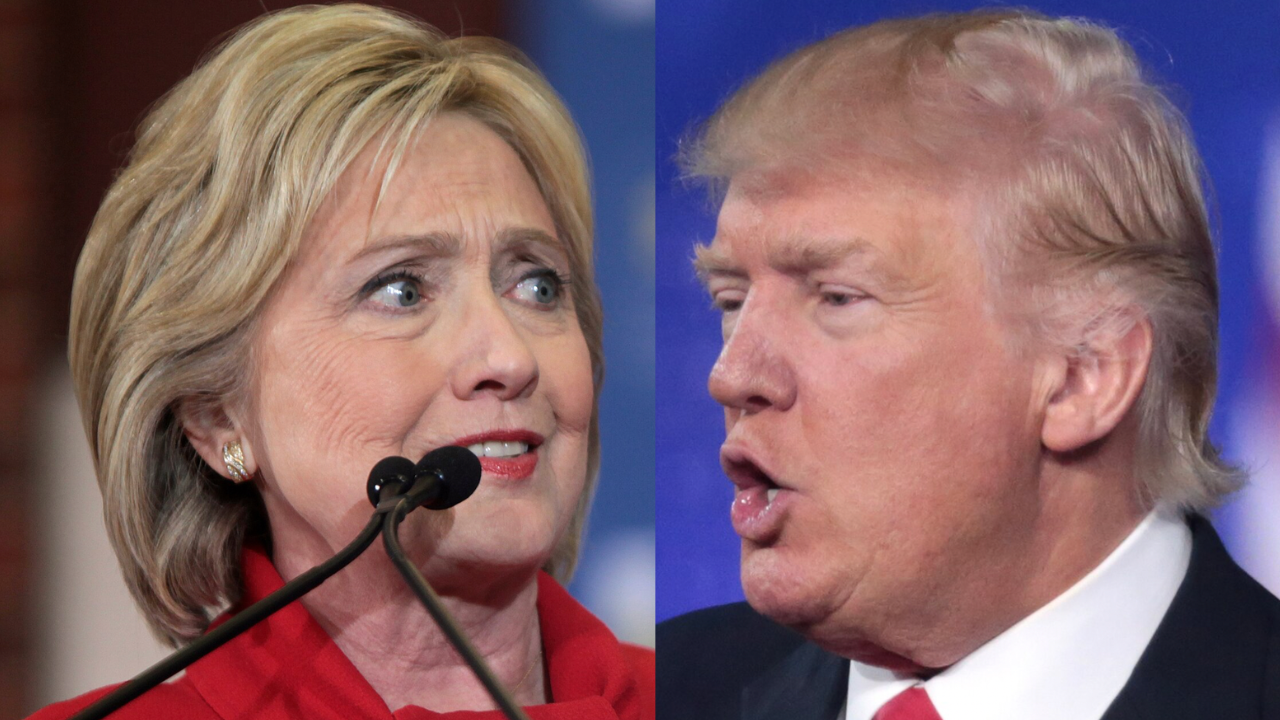

WASHINGTON, May 18, 2026 — Hillary Clinton called President Donald Trump’s stock trades in Eli Lilly “textbook corruption” Sunday after a report revealed Trump bought as much as $680,000 in the pharmaceutical giant’s stock during the same period his administration was advancing policies that directly benefited Lilly’s blockbuster obesity drug business.
“This is textbook corruption,” Clinton wrote on X, linking to a KFF Health News investigation detailing the trades and their timing against favorable regulatory decisions.
The disclosures were filed May 14 with the U.S. Office of Government Ethics and show seven purchases of Lilly stock made on Trump’s behalf from January through March 2026 — a period during which the Centers for Medicare and Medicaid Services announced a landmark pilot program to make Lilly’s GLP-1 obesity drugs available to Medicare patients for $50 a month.
The Timeline
Trump’s first Lilly purchase occurred on January 6, according to the disclosures. Two days later, on January 8, the deadline passed for drug manufacturers to submit applications indicating interest in participating in CMS’s BALANCE Model — the Better Approaches to Lifestyle and Nutrition for Comprehensive hEalth program — which is designed to expand Medicare and Medicaid coverage of GLP-1 weight loss drugs including Lilly’s Zepbound and Mounjaro. Lilly has since been named as a participating manufacturer, calling it a “significant milestone.”
CMS formally announced the Medicare GLP-1 Bridge — a short-term demonstration providing eligible Medicare Part D beneficiaries access to GLP-1 medications for $50 per month beginning July 1, 2026 — as a bridge to the full BALANCE Model. The announcement was made by CMS Administrator Dr. Mehmet Oz. “These treatments are a major medical advancement, but too many seniors are currently unable to access them due to high cost,” Oz said. “The Medicare GLP-1 Bridge changes that by making these medications more affordable and accessible.”
Historically, Medicare has not covered obesity drugs when prescribed purely for weight loss. The BALANCE Model and Medicare GLP-1 Bridge represent the most significant expansion of federal coverage for obesity medications in the program’s history — a development Lilly’s own analysts flagged as critical to the company’s 2026 revenue targets above $80 billion.
Additional Regulatory Wins for Lilly
The BALANCE program was not the only favorable regulatory decision for Lilly during the period Trump was buying its stock. In February, the White House unveiled TrumpRx — a web portal directing patients to lower-price versions of certain drugs, including Lilly’s Zepbound for as low as $299 a month — and pointing patients to LillyDirect, the company’s own telemedicine service. Lilly’s 2025 annual filing to the Securities and Exchange Commission said LillyDirect was a “growing portion” of its business.
Also in February, the FDA intensified a crackdown on “compounded” GLP-1 drugs — cheaper pharmacy-manufactured alternatives to Lilly’s branded products that critics have called unsafe. The move benefited Lilly by reducing competition from lower-cost alternatives. In April, the FDA approved Lilly’s Foundayo weight loss pill in just 50 days under FDA Commissioner Marty Makary’s Commissioner’s National Priority Voucher program — the fastest approval of a new molecular entity since 2002, and 294 days ahead of its standard review deadline. “This approval demonstrates what the FDA can achieve when we eliminate delays and prioritize fast and thorough work from the agency and industry partners,” Makary said.
Trump also purchased between $250,000 and $500,000 in West Pharmaceutical Services stock on February 10 — a company that manufactures injectable devices used in GLP-1 drug delivery and has credited GLP-1 business growth with driving increased revenue.
What Ethics Experts Say
“A president who buys or sells the stock of a company whose value is affected by his administration’s actions undermines the public’s trust in two ways,” Kathleen Clark, a legal ethicist at Washington University in St. Louis, told KFF Health News. First, she said, the public should believe government actions are motivated by the common good, not personal enrichment. Second, the public should believe those within government are not benefiting from inside information.
Four of the seven Lilly purchases are marked “unsolicited” in the disclosures — a designation whose meaning the Office of Government Ethics did not immediately clarify when asked.
The White House Response
The Trump Organization said Trump plays no role in his investment decisions. “President Trump’s investment holdings are maintained exclusively through fully discretionary accounts independently managed by third-party financial institutions with sole and exclusive authority over all investment decisions,” a spokesperson said. “Trades are executed and portfolios are balanced through automated investment processes and systems administered by those institutions.”
Eric Trump, the president’s son and a Trump Organization executive, said on X: “To suggest that individual stocks are being bought or sold, at the discretion of any member of the Trump family, would be a lie and blatantly false.” He claimed the purchases were of index funds. The disclosures record purchases of both funds and individual stocks.
A Growing Democratic Chorus
Clinton’s one-line response was the sharpest formulation yet of the Democratic critique building around the disclosures. Gov. Gavin Newsom called the trades “corruption at the highest level” and “the same kind of corruption Trump said he’d fight against.” Rep. Melanie Stansbury, D-N.M., said they “look like potential insider trading” and vowed the trades “will be investigated.” Sen. Alex Padilla, D-Calif., called Trump “the most corrupt president in our history.”
A ban on stock trading by the president would require an act of Congress. Members of Congress are also currently permitted to buy and sell individual stocks, though at least 25 measures have been introduced in the 119th Congress to restrict or ban such trading by federal officials, according to a Congressional Research Service analysis. At his last State of the Union address, Trump called on Congress to act. “Let’s also ensure that members of Congress cannot corruptly profit from using insider information,” he said. Democratic Rep. Mark Takano of California shouted back: “How about you first?”

 By
By

 By
By