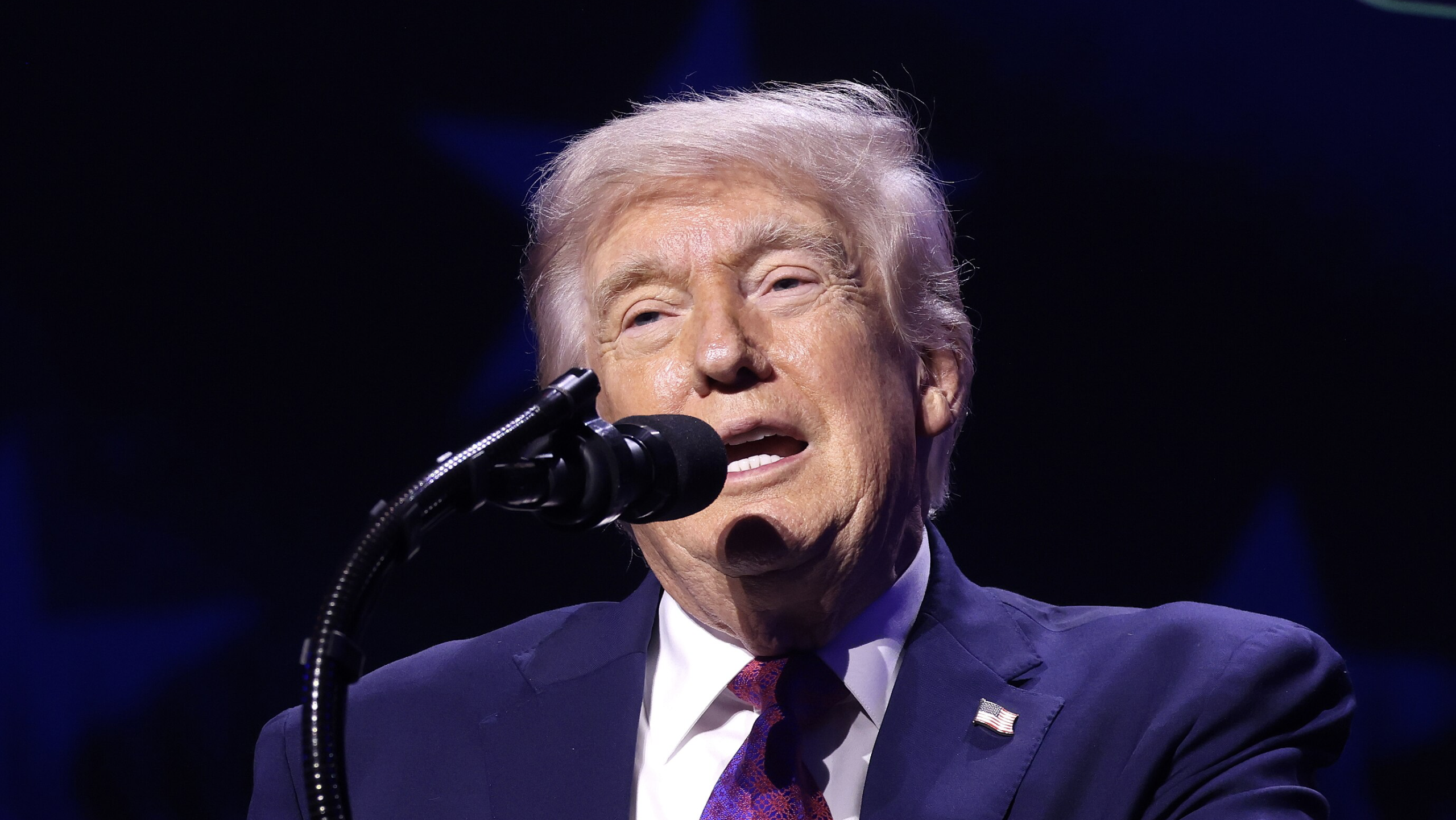

President Donald Trump pointed Monday to a historic expansion of American oil export infrastructure as evidence that the United States is cementing its role as the world’s dominant energy supplier — noting that the country is “building bigger docks” to handle the flood of global buyers now routing their tankers to Texas and Louisiana after Iran’s closure of the Strait of Hormuz effectively cut off the Persian Gulf from international shipping.
“Our big problem is we’re building bigger docks, docking, you know, dock to fill up,” Trump said at a White House Maternal Healthcare Event streamed live on the White House’s official YouTube channel on May 11. “We’re a big filling station.” His reference to infrastructure expansion is not merely rhetorical — it reflects a concrete set of government approvals, construction starts, and port upgrades that have been accelerating since the war began.
Texas GulfLink: Construction Just Began
The most significant piece of new infrastructure Trump is pointing to broke ground just six days before his remarks. On May 5, Sentinel Midstream LLC formally announced the commencement of construction on the Texas GulfLink deepwater crude oil export terminal — a project located approximately 30 miles off the coast of Freeport, Texas, that will be capable of fully loading Very Large Crude Carriers directly offshore, eliminating the costly lightering operations currently required at most U.S. ports, according to the Oil and Gas Journal. Once complete, Texas GulfLink will have loading rates of up to 85,000 barrels per hour, a nominal capacity of 1.2 million barrels per day, and onshore storage of up to 18 million barrels.
The project’s significance is hard to overstate. Currently, only one U.S. facility — the Louisiana Offshore Oil Port — can fully load a supertanker without lightering. Every other U.S. port loads Very Large Crude Carriers partially, then uses smaller vessels to ferry additional crude to fill them — a slower, costlier, and less efficient process. Texas GulfLink will be the second fully capable VLCC loading facility in the country, dramatically reducing vessel congestion in crowded Gulf Coast ship channels and increasing the effective throughput of American crude exports, according to Transportation Secretary Sean Duffy, who announced the project’s DOT license approval on February 3, as reported by PGJ Online.
The U.S.-Japan Connection
The construction start on Texas GulfLink was made possible in part by funding tied to the U.S.-Japan Trade Agreement signed in September 2025 under Executive Order 14345 — a bilateral deal that identified American crude oil export infrastructure as a strategic priority for both nations, according to Texas Politics. Japan, which relies heavily on Persian Gulf crude and has been drawing down its strategic petroleum reserves since the Hormuz closure, has a direct national interest in helping expand U.S. export capacity. “Texas GulfLink will bring well-paying jobs to Brazoria County and help generate billions of dollars in American crude oil exports,” said Senator John Cornyn at the construction announcement. Commerce Secretary Howard Lutnick called it “another example of a U.S.-Japan trade deal delivering investment into American energy production.”
The Japan angle illustrates the broader geopolitical logic Trump is advancing: that the Iran war and Hormuz closure have accelerated a long-in-the-making shift in global energy architecture, and that allied nations with a strategic interest in diversifying away from Middle Eastern supply are now willing to co-invest in American infrastructure to make that diversification permanent. Jeff Ballard, CEO of Sentinel Midstream, said the project will “strengthen the United States’ position as a dependable energy supplier by providing a direct export pathway from one of the world’s largest crude oil hubs to international markets.”
Corpus Christi: Already at the Limit
The urgency of Trump’s infrastructure expansion comments reflects a real constraint. The Port of Corpus Christi — the third-largest oil export terminal in the world before the war — had its busiest quarter ever in Q1 2026 and its busiest single month ever in March, according to CNBC. U.S. crude oil exports surged from 3.9 million barrels per day before the war to a record 6 million barrels per day in late April. Some 50 to 60 Very Large Crude Carriers are calling at U.S. ports on any given day — double the pre-war volume. But the port is approaching its practical ceiling: Corpus Christi’s export capacity maxes out at approximately 2.6 million barrels per day due to pipeline constraints into the port, and could handle perhaps another 500,000 barrels per day if pipelines were expanded.
The Port of Corpus Christi has been working to address those constraints. A four-phase ship channel deepening project, completed in 2025, increased the channel depth to 54 feet — enabling the port to accommodate larger vessels and improving loading efficiency, according to the Port of Corpus Christi’s official website. The port’s private terminals at Ingleside — including the Enbridge Ingleside Energy Center, the largest crude oil storage and export terminal by volume in the United States, with four deep-water berths capable of loading VLCCs — have been operating at maximum throughput throughout the crisis. The bottleneck is not the docks themselves but the pipeline capacity feeding crude into them from the Permian Basin.
Houston Is Also Surging
Corpus Christi is not the only terminal under pressure. Houston’s crude export volumes have been climbing steadily, rising from 0.7 million barrels per day in 2022 to 1.2 million barrels per day in 2025 — and accelerating further since the war began, narrowing the gap with Corpus Christi, according to RBN Energy. Enterprise Products Partners — one of Houston’s largest crude export operators — has expanded its Ship Channel terminal and pipeline network to accommodate the surge, with its Midland to ECHO 2 Pipeline recently returning to crude service, bringing an additional 220,000 barrels per day of capacity online for the first time since late 2023. Combined U.S. exports of crude oil and petroleum products hit a record 12.9 million barrels per day in April, according to federal data cited by Axios.
The Ceiling Is Real — and Trump Knows It
Trump’s acknowledgment that “our big problem is we’re building bigger docks” is itself a tacit recognition that existing infrastructure is straining under the demand. Industry analysts are clear-eyed about the limits. U.S. oil exports are capped at just above 5 million barrels per day due to dock capacity constraints, according to Kpler commodity research director Matt Smith, cited by CNBC. The pipeline bottlenecks feeding Corpus Christi’s Ingleside terminals were already near their limits before the war began and are now under significant strain. “If global buyers continue to prioritize supply that avoids chokepoints like Hormuz,” said Rob Wilson of East Daley Analytics, quoted by Axios, “we could see sustained investment” — but only if demand signals persist beyond the conflict itself.
The Bigger Picture — Infrastructure as Energy Strategy
Trump’s “building bigger docks” comment reflects a deliberate policy posture that predates the Iran war. The DOT’s February 3 approval of Texas GulfLink — which came just 24 days before the war began — was framed explicitly by Transportation Secretary Duffy as part of the Trump administration’s effort to “boost the U.S. oil industry and allow for the export of up to 1 million barrels of crude oil per day.” The U.S.-Japan trade agreement that funded its construction was signed in September 2025. The ship channel deepening at Corpus Christi was a decade-long infrastructure investment. What the Iran war has done is transform projects that were long-term energy strategy into urgent near-term necessity — and given the administration a concrete set of infrastructure announcements to point to as evidence that the “big filling station” vision is being built, not just described.
Whether Texas GulfLink’s 1.2 million barrels per day of new capacity — when it eventually comes online — closes enough of the gap to sustain the current level of global buyer interest in American crude after the Strait of Hormuz reopens is the central unanswered question. The Middle East produces approximately 30 million barrels per day, and American infrastructure — even with Texas GulfLink, expanded Corpus Christi pipelines, and Houston’s growing footprint — cannot replicate that volume. But the direction of travel Trump is pointing to is real: the docks are getting bigger, the tankers are getting larger, and the infrastructure to support America’s role as a primary global energy supplier is, for the first time in the country’s history, being built at a scale commensurate with that ambition.


 By
By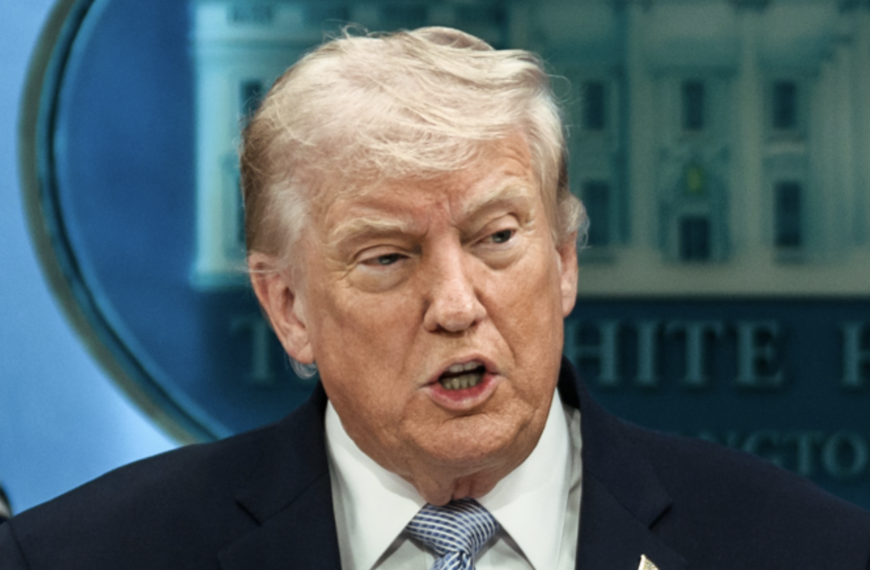

 By
By