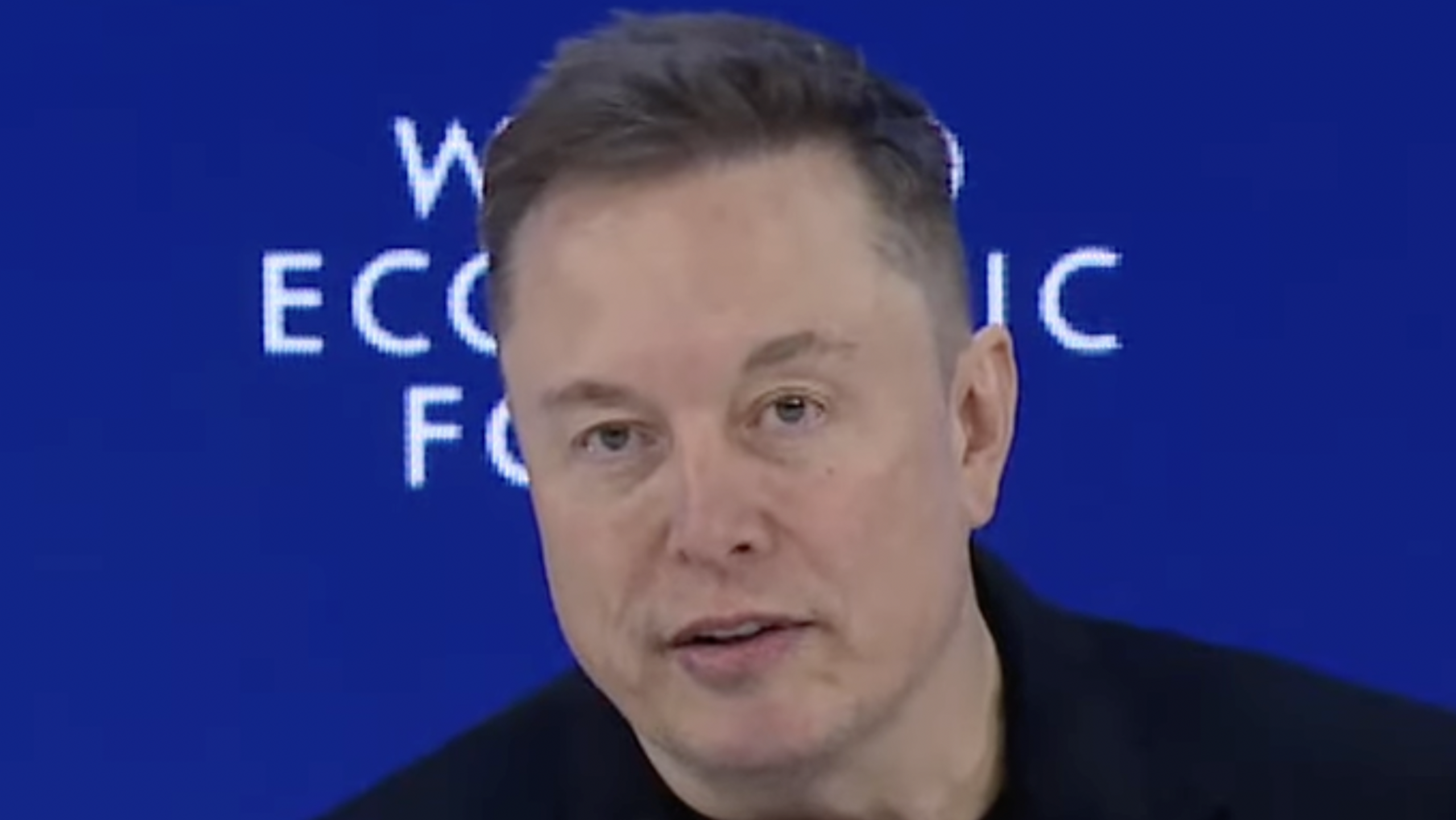

Elon Musk traced the origins of his ambitions in technology and space exploration to childhood curiosity during a conversation with BlackRock CEO Larry Fink at the World Economic Forum, describing science fiction as the foundation of his worldview and the source of a long-running desire to transform imagined futures into reality.
Fink asked Musk what initially inspired him and whether there was a defining moment that shaped the direction of his life and career. Musk said his interests developed early, long before he could have anticipated leading several major technology companies. As a child, he explained, he spent much of his time reading, particularly science fiction and fantasy novels as well as comic books, alongside a broader fascination with technology and the future.
ELON MUSK: "As a kid, I read a lot of science fiction, sci fi fantasy and comic books. I always liked technology. I didn't expect to be where I am today.
— DogeDesigner (@cb_doge) January 22, 2026
I was inspired by reading books about future, about science fiction and I want to make science fiction not fiction forever.… pic.twitter.com/tZAahmJwPh
“I didn’t expect to be where I am today; it seemed incredibly implausible,” Musk said. He explained that stories about the future helped shape his outlook, encouraging him not only to imagine what might come next but to contribute to making those possibilities real. “I was inspired by reading about the future and science fiction. I wanted to turn science fiction into science fact,” he said.
The discussion then shifted from early inspiration to broader philosophical questions. Musk said his underlying motivation is driven by curiosity and a desire to understand some of the most fundamental questions about existence and the universe.
“My central philosophy of curiosity is understanding the meaning of life, the validity of the standard model of physics, the beginning of life, the beginning of existence, and the end of the universe,” Musk said. He added that many of the most significant discoveries may come from questions humanity has not yet learned to ask. “What questions do we not know to ask that we should ask?” he said, suggesting that advances in artificial intelligence could help identify those unknown questions.
ELON MUSK: "I'd like to understand the meaning of life. Is the standard model of physics correct regarding the beginning of existence & the end of the universe?
— DogeDesigner (@cb_doge) January 22, 2026
What questions do we not know to ask that we should ask? AI will help us with these things." pic.twitter.com/DkEs0eTIBc
Musk also returned to themes he has raised frequently in recent years concerning humanity’s place in the universe and the possibility of extraterrestrial life. He said the interest is driven less by speculation and more by a basic desire to understand reality and humanity’s origins.
“I want to understand how we got here, what’s real, whether there are aliens,” Musk said.
Looking further ahead, Musk said that future advances in space travel could allow humans to directly explore other star systems, potentially providing answers to those questions. With spacecraft capable of traveling beyond the solar system, he said humanity might eventually encounter alien life or uncover evidence of civilizations that once existed. “We may encounter aliens or discover long-dead alien civilizations,” Musk said. “I just want to know what’s going on.”
The conversation offered a glimpse into the philosophical motivations Musk says have guided much of his work, connecting his early fascination with science fiction to later efforts in space exploration, artificial intelligence, and fundamental scientific research.

 By
By


 By
By