
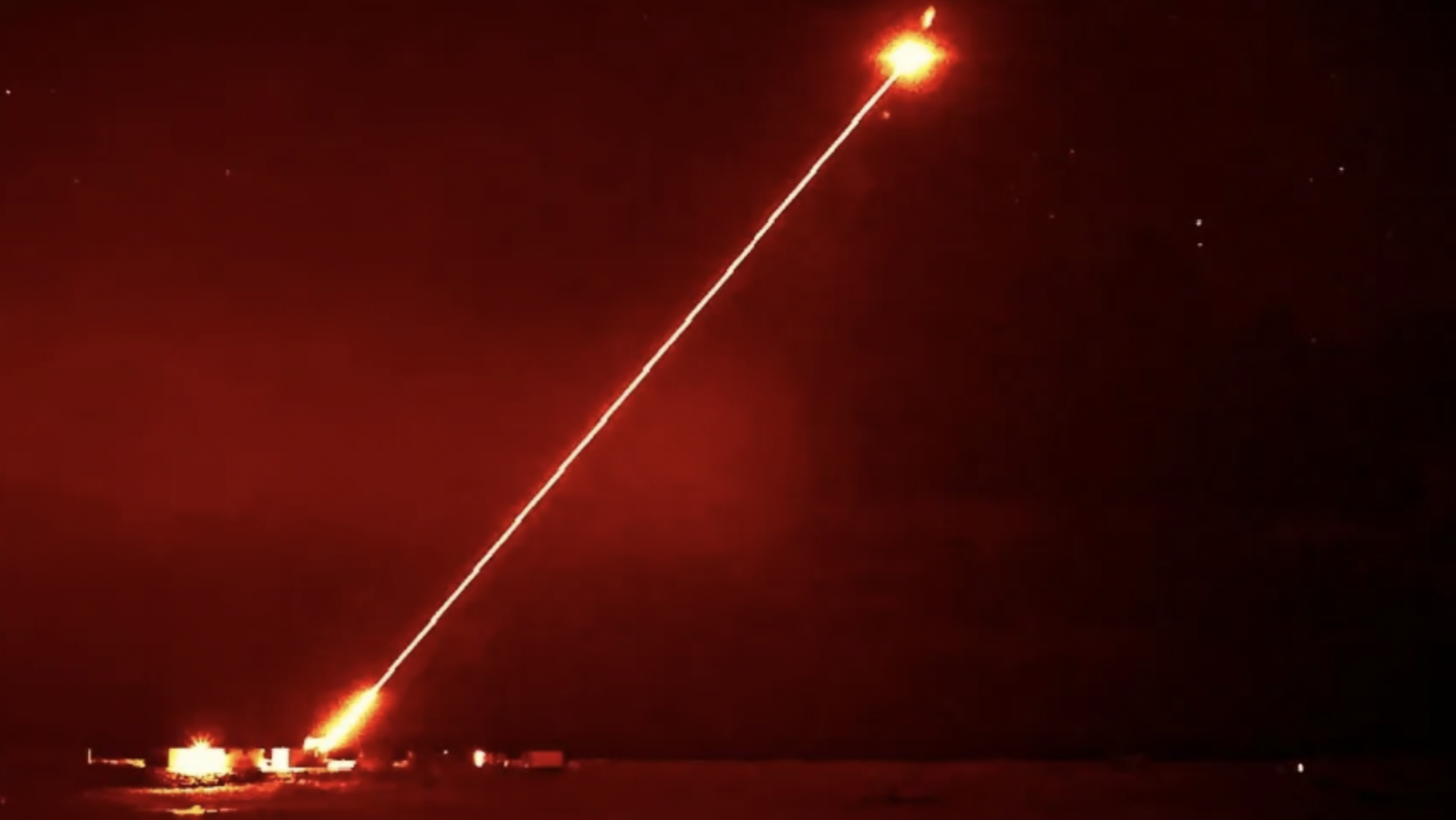

The United Kingdom has advanced its DragonFire laser weapon system through successful tests against high-speed drones, positioning it as a cost-effective defense option set for deployment with the Royal Navy by 2027. The system’s recent demonstrations highlight its potential to counter emerging aerial threats while shifting the economics of modern air defense away from expensive missiles.
The DragonFire system achieved a milestone in January 2024 by destroying an aerial drone target during trials at the Hebrides Range in Scotland, representing the UK’s first high-power laser engagement against such a threat. Building on that progress, trials in November 2025 saw the system neutralize drones moving at speeds up to 650 kilometers per hour, confirming its effectiveness against rapid and agile targets. Capable of striking with precision equivalent to hitting a coin from a kilometer away, DragonFire operates as a line-of-sight weapon that engages at the speed of light.
New footage from the United Kingdom shows the DragonFire laser weapon successfully destroying drones mid-air during live testing.
— WAR (@warsurv) February 4, 2026
🇬🇧⚡ pic.twitter.com/RtHiGBInzA
This technology addresses the cost imbalances introduced by drone warfare, where inexpensive unmanned systems have challenged traditional defenses. Each DragonFire shot costs around £10, a fraction of the hundreds of thousands of pounds required for conventional missiles, making it a sustainable solution for repelling swarms of low-cost drones that have reshaped military strategies worldwide.
Plans for integration into the Royal Navy have accelerated, with the first installation targeted for a Type 45 destroyer by 2027, five years ahead of the initial 2032 timeline. In November 2025, defense firm MBDA received a £316 million contract to produce and deliver the system, responding to heightened threats from drones and missiles, including those encountered by Royal Navy vessels in operations against Houthi rebels in the Red Sea. As of early 2026, the project remains on schedule, with potential expansion to other platforms such as Type 26 and Type 31 frigates under consideration by the Ministry of Defence.
Developed through a consortium led by MBDA, alongside Leonardo and QinetiQ, DragonFire functions as a directed-energy weapon without recoil, visible signatures, or the need for physical ammunition. It can maintain continuous operation as long as power is available, offering an inexhaustible defensive layer compared to finite missile inventories.
The advancement underscores the UK’s capacity to produce cutting-edge sovereign technologies with sufficient investment, providing a strategic counter to the ways drone proliferation has altered battlefield dynamics by enabling low-cost assets to threaten high-value equipment.


 By
By


 By
By
 By
By