
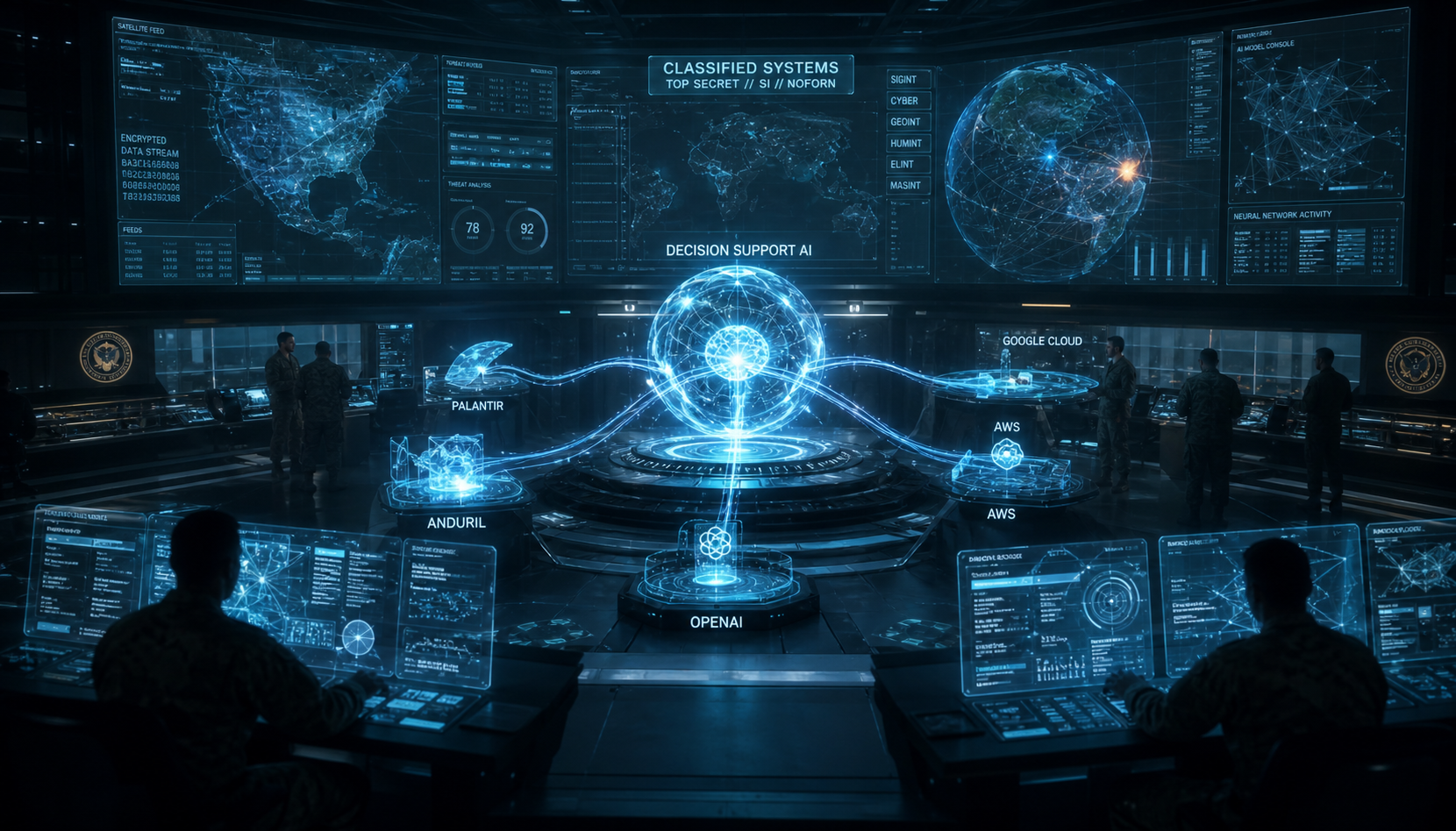

The Department of War has announced new agreements with seven leading frontier artificial intelligence companies, including SpaceX, OpenAI, Google, NVIDIA, Microsoft, Amazon Web Services, and Reflection, to deploy advanced AI capabilities across classified military networks. The initiative is positioned as part of a broader effort to accelerate the United States military’s transition toward an AI-first operational framework, aimed at strengthening decision-making and operational effectiveness across multiple domains of warfare.
According to the Department, the agreements will enable secure integration of frontier AI systems into Impact Level 6 (IL6) and Impact Level 7 (IL7) network environments. These classified systems are intended to support lawful operational use of advanced AI tools while improving data synthesis, enhancing situational awareness, and augmenting decision-making processes in complex operational settings. The participating companies will provide capabilities to support deployment across both IL6 and IL7 environments, aligning with the Department’s wider AI Acceleration Strategy spanning warfighting, intelligence, and enterprise operations.
The release also highlighted the rapid adoption of the Department’s internal AI platform, GenAI.mil, which has already seen large-scale usage within a short period of time. Over 1.3 million Department personnel have used the platform in the past five months, generating tens of millions of prompts and deploying hundreds of thousands of AI agents. Officials stated that these tools are already being used by warfighters, civilian staff, and contractors to streamline workflows, with some tasks reportedly reduced from months to days through automation and AI-assisted processing.
A key element of the initiative is an emphasis on maintaining flexibility and avoiding long-term dependency on any single vendor. The Department stated that it is building an architecture designed to prevent AI vendor lock-in while ensuring access to a broad range of capabilities from across the U.S. technology ecosystem. This approach is intended to provide the military with scalable and adaptable AI tools while supporting long-term operational resilience.
The Department of War also framed the partnerships as part of a larger strategic effort to maintain U.S. leadership in artificial intelligence as a core national security priority. The release stated that this leadership depends on a strong domestic ecosystem of advanced model developers and technology providers capable of supporting defense-related missions. It added that the ongoing integration of AI into military systems is intended to support the Department’s mandate to equip warfighters with advanced tools in response to emerging global threats and to strengthen what it described as the “Arsenal of Freedom.”
Reinforcing the significance of the announcement, Michael Kratsios, Science Advisor to the President of the United States, posted on X: “We are committed to ensuring our warfighters have the best tools at their disposal. Today, the DeptofWar announced agreements with 7 leading AI companies to deploy advanced AI on classified networks, leveraging the full strength of America’s technology stack.”
The coordinated rollout reflects the increasing role of artificial intelligence in defense operations and underscores the growing integration of major technology firms into classified government systems.


 By
By



 By
By