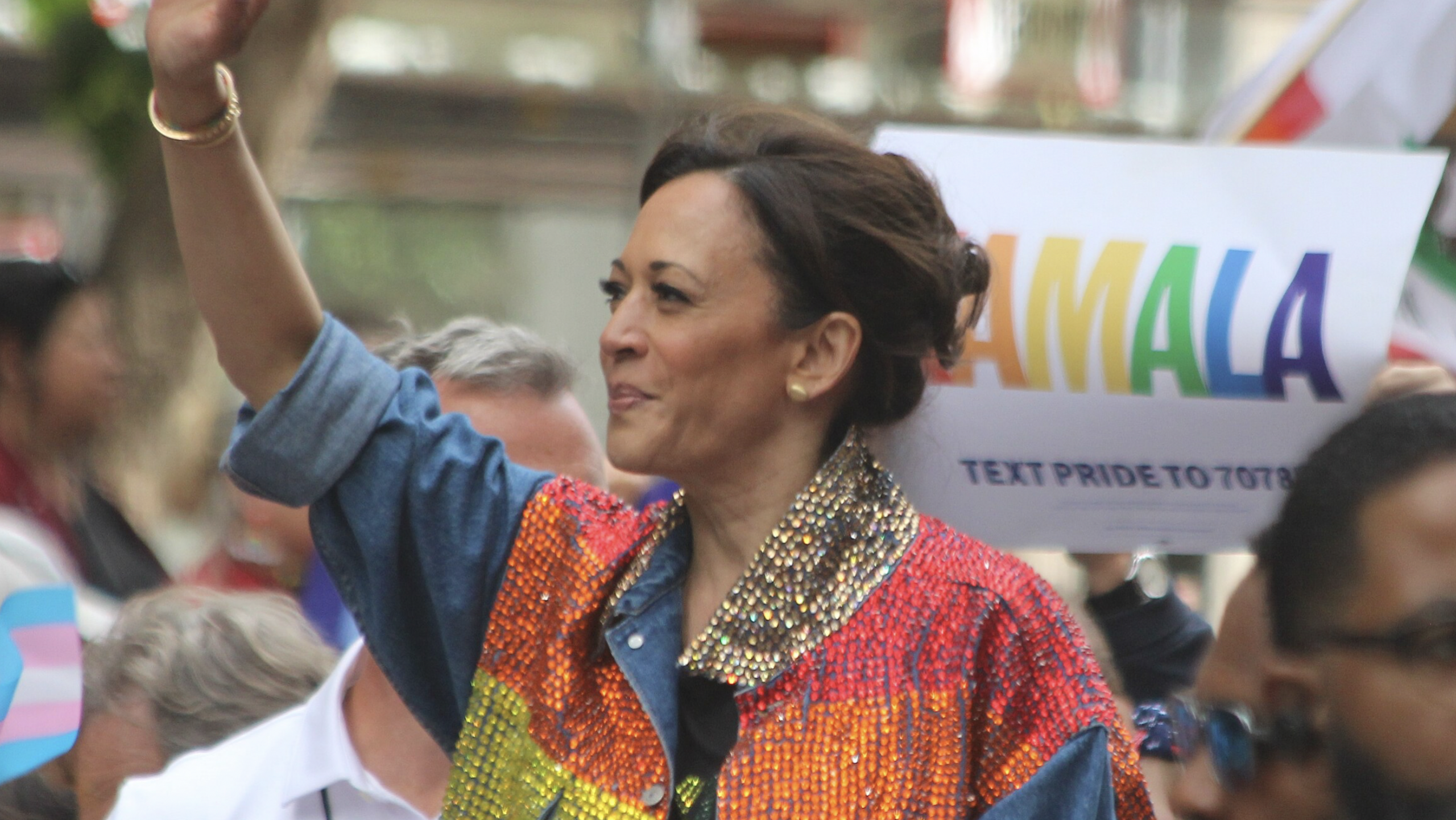

Former United States Vice President Kamala Harris marked the first day of Pride Month on June 1, 2026, with a post on X reaffirming her long-standing commitment to the LGBTQ+ community — and reminding her followers that the fight for equality is far from over. The post, short but pointed, described Pride not just as a party but as a protest, a celebration, and a continuing struggle, themes that have defined Harris’s political identity across more than two decades of public service.
“Pride Is the Ongoing Fight”
Harris’s full post on June 1st read: “Pride is joy. Pride is courage. Pride is a celebration. And Pride is the ongoing fight to ensure every person can live as their authentic self. This month and every month, we celebrate the LGBTQ+ community and all those continuing the fight for equality. Happy Pride!”
The message arrived at a moment when LGBTQ+ rights remain one of the most contested areas of American policy, with federal and state-level rollbacks accelerating since the start of the current administration. Harris, who served as the 49th Vice President of the United States under President Joe Biden from 2021 to 2025, used the post to signal that her advocacy has not diminished with her departure from office.
A Senate Career Built on LGBTQ+ Legislation
Harris’s public support for the LGBTQ+ community traces back to her time as a U.S. Senator representing California, a role she held from January 2017 until she was inaugurated as Vice President in January 2021. From her earliest days in the Senate in 2017, Harris was a co-sponsor of the Equality Act, the landmark legislation that would extend federal civil rights protections to LGBTQ+ Americans in areas including employment, housing, education, and public accommodations.
In 2018, Harris and Senator Tom Carper introduced the Census Equality Act, legislation requiring the U.S. Census Bureau to add questions related to sexual orientation and gender identity to the decennial census and American Community Survey, arguing that the approximately 10 million Americans who identify as LGBTQ+ were being undercounted and underrepresented in federal data and resource allocation.
That same year, Harris reintroduced the Do No Harm Act, legislation aimed at preventing the Religious Freedom Restoration Act from being used to deny LGBTQ+ individuals protections under anti-discrimination law, workplace protections, and access to health care. In a statement at the time, Harris said: “That First Amendment guarantee should never be used to undermine other Americans’ civil rights or subject them to discrimination on the basis of race, gender, sexual orientation, or gender identity.”
Banning the “Panic Defense”
One of the more targeted pieces of legislation Harris championed during her Senate tenure involved the courtroom. Harris joined colleagues in introducing federal legislation to ban the use of the so-called “gay panic” and “trans panic” defenses in criminal trials — a legal tactic in which defendants argue that a victim’s sexual orientation or gender identity provoked or justified a violent act. The effort reflected a pattern in Harris’s legislative work of addressing not just policy discrimination, but violence and legal vulnerability facing LGBTQ+ individuals.
Celebrating a Supreme Court Victory
In June 2020, Harris responded publicly to a landmark U.S. Supreme Court ruling. In a statement, Harris said: “The Supreme Court’s ruling today sent a clear message to all Americans: our federal civil rights law protects LGBTQ+ workers and requires that they be treated with the dignity and respect every person deserves. The Court held that the Civil Rights Act prohibits discrimination in employment on the basis of sexual orientation and gender identity. Today’s decision will go a long way toward ensuring that LGBTQ+ people are protected in other critical areas, including education, health care, and housing.”
She added: “Our work is far from over, but as we celebrate Pride Month, today’s ruling is a step in the right direction in the fight for full equality for the LGBTQ+ community in all of its diversity, and in every facet of life.”
The Biden-Harris Administration’s LGBTQ+ Record
When Harris took office as Vice President in January 2021, LGBTQ+ advocacy became embedded in the executive branch’s formal agenda. According to a January 2025 White House fact sheet, the Biden-Harris Administration characterized itself as the most pro-equality administration in American history, citing a series of legislative and executive actions on behalf of LGBTQ+ Americans.
Among the most significant was the passage of the Respect for Marriage Act. The law enshrined into federal statute the right to recognition of marriage for same-sex and interracial couples, repealing the Defense of Marriage Act and strengthening civil rights protections for all families.
The administration also moved to address longstanding injustices against LGBTQ+ military service members. The Department of Defense reviewed discharge records for former service members who received less than honorable discharges under the “Don’t Ask, Don’t Tell” policy, ultimately ensuring that 96% of individuals separated on the basis of sexual orientation who served long enough to qualify now hold honorable discharges. President Biden also issued a categorical pardon in June 2024 for certain former service members convicted of crimes based on their sexual orientation.
Pride Events and Personal Engagement
Harris’s commitment to the LGBTQ+ community extended beyond legislation and formal policy. In June 2024, Harris and Second Gentleman Doug Emhoff hosted a Pride Month reception at the Naval Observatory — the vice president’s official residence — on the eighth anniversary of the Pulse nightclub massacre.
At the start of Pride Month in June 2024, Harris engaged with local LGBTQ+ leaders in Los Angeles, saying: “Thanks to the tireless work of LGBTQ+ organizers, our community has made enormous strides to equality.” She also spoke directly to the political climate around transgender rights during the 2024 presidential campaign. Harris said that transgender Americans should have access to health care, describing it as “a decision that doctors will make in terms of what is medically necessary,” and criticized campaign attacks on transgender rights as a diversion from more substantive issues.
Continuing the Fight From Outside Office
Harris’s June 1, 2026 post makes clear she intends to remain a vocal presence on LGBTQ+ issues despite no longer holding elected or appointed office. Her framing of Pride as “the ongoing fight” echoed language she has used throughout her career — language rooted in the belief that legal equality and lived equality are not the same thing, and that both require sustained effort.
The post drew on the full arc of that career, from Senate co-sponsorships and legislative fights to four years at the center of an administration that described LGBTQ+ equality as a core governing priority. Whether she seeks elected office again or continues as a private citizen, Harris’s June 1st message signals that her voice on these issues is not going quiet.


 By
By



 By
By