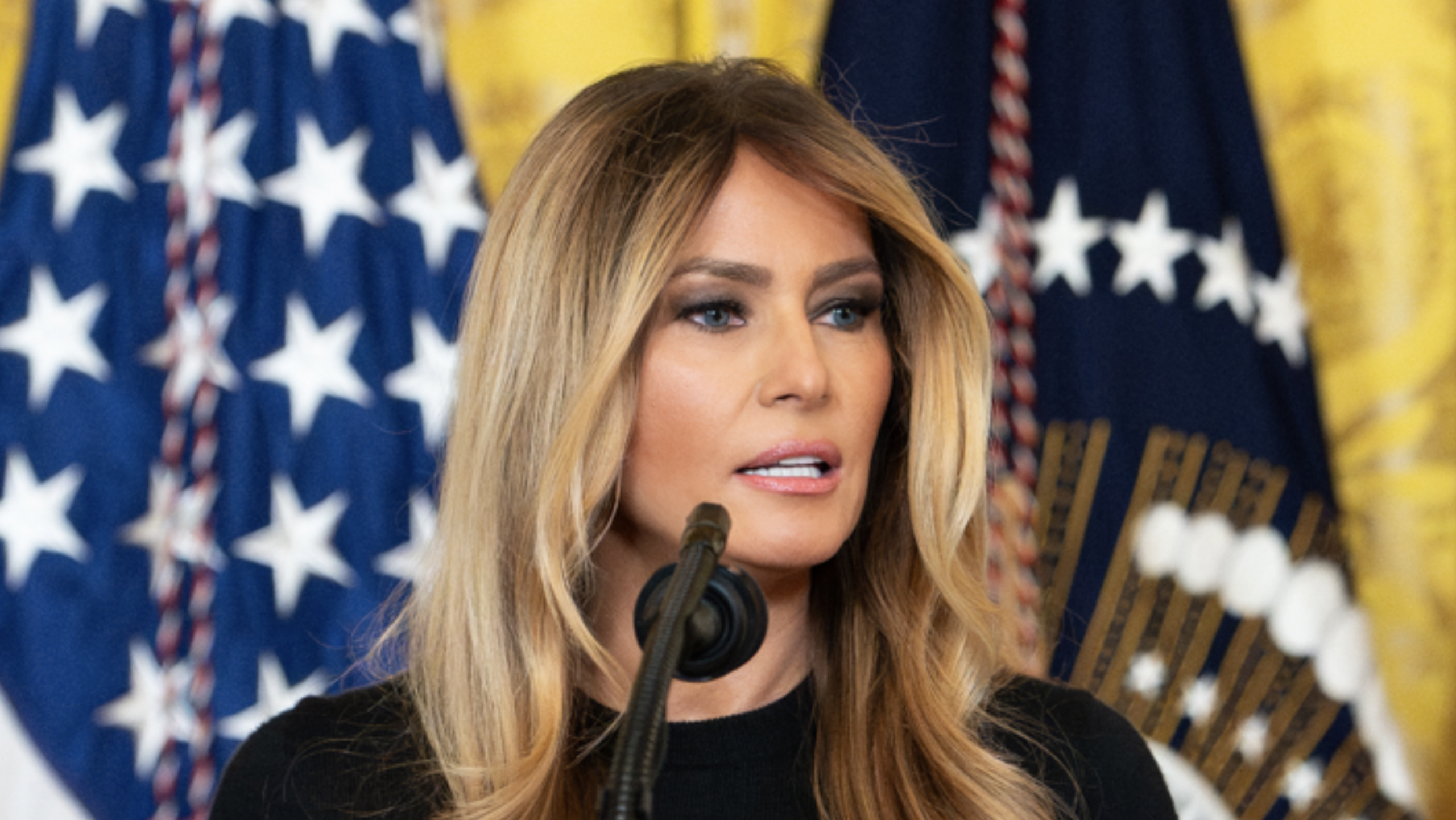

First Lady Melania Trump said artificial intelligence should be viewed as a transformative tool for expanding opportunity in education rather than a force that replaces human roles, emphasizing its potential to broaden access to high-quality learning for children worldwide.
In a post shared on April 4, 2026, she wrote, “Artificial Intelligence Delivers World-Class Education to Every Child. This is About Opportunity, Not Replacing Humans. Do not dismiss the power of AI – open your mind to its potential and educate yourself.” The message accompanied a broader argument that AI can serve as a powerful equalizer in education systems.
Her remarks aligned with a wider push to integrate artificial intelligence into classrooms, highlighted during the “Fostering the Future Together” global coalition summit held on March 24 and 25. The event brought together representatives from 45 nations at the White House and the State Department to discuss strategies for combining technology and education to better prepare future generations.
During that gathering, participating leaders outlined national approaches to equipping children with digital skills, with a particular focus on artificial intelligence. The discussions underscored a shared view that early adoption of AI tools could play a decisive role in maintaining competitiveness in a rapidly evolving global landscape.
Trump’s argument centered on AI’s ability to expand access to elite-level education. She described the technology as a means of delivering the “highest level of human knowledge” to students regardless of geographic or economic barriers, benefiting not only learners but also families and educators.
She pointed to AI-powered tutoring systems as a key example, noting that such tools can provide personalized instruction tailored to individual learning speeds and challenges. These systems, she said, allow students in remote or underserved areas to access high-quality explanations and academic support at any time, effectively narrowing longstanding educational gaps.
The emphasis on accessibility was paired with a warning about digital literacy. Trump stressed that understanding how AI works and how to use it effectively is becoming essential, stating that students who lack these skills risk falling behind in both academic and professional contexts.
Her comments framed artificial intelligence as part of a broader historical pattern in which technological advancements reshape education. From the printing press to computers and the internet, each innovation has expanded access to knowledge, and AI was described as the next step in that progression.
At the same time, she underscored that teachers would remain central to the educational system. AI, in this view, is intended to support educators by providing updated information, enabling more personalized instruction, and freeing up time for mentorship, creativity, and critical thinking rather than replacing human interaction in the classroom.
Trump also referenced her previous efforts since 2017 to address issues such as cyberbullying, digital security, and online safety. She said those concerns, once dismissed by some, have since become everyday challenges for families, and argued that the rise of AI represents another pivotal moment requiring awareness and preparation.
Her position included a caution against restricting access to artificial intelligence in education, suggesting that doing so could disadvantage future generations. She pointed to global competition, noting that countries such as China are rapidly integrating AI into education and industry with the goal of strengthening economic and technological leadership.
The broader message emphasized that preparing students for an AI-driven future is tied to national competitiveness and societal advancement. Trump concluded that ensuring children have the tools and understanding to engage with artificial intelligence will be critical to maintaining leadership in innovation and shaping the future of education.

 By
By


 By
By