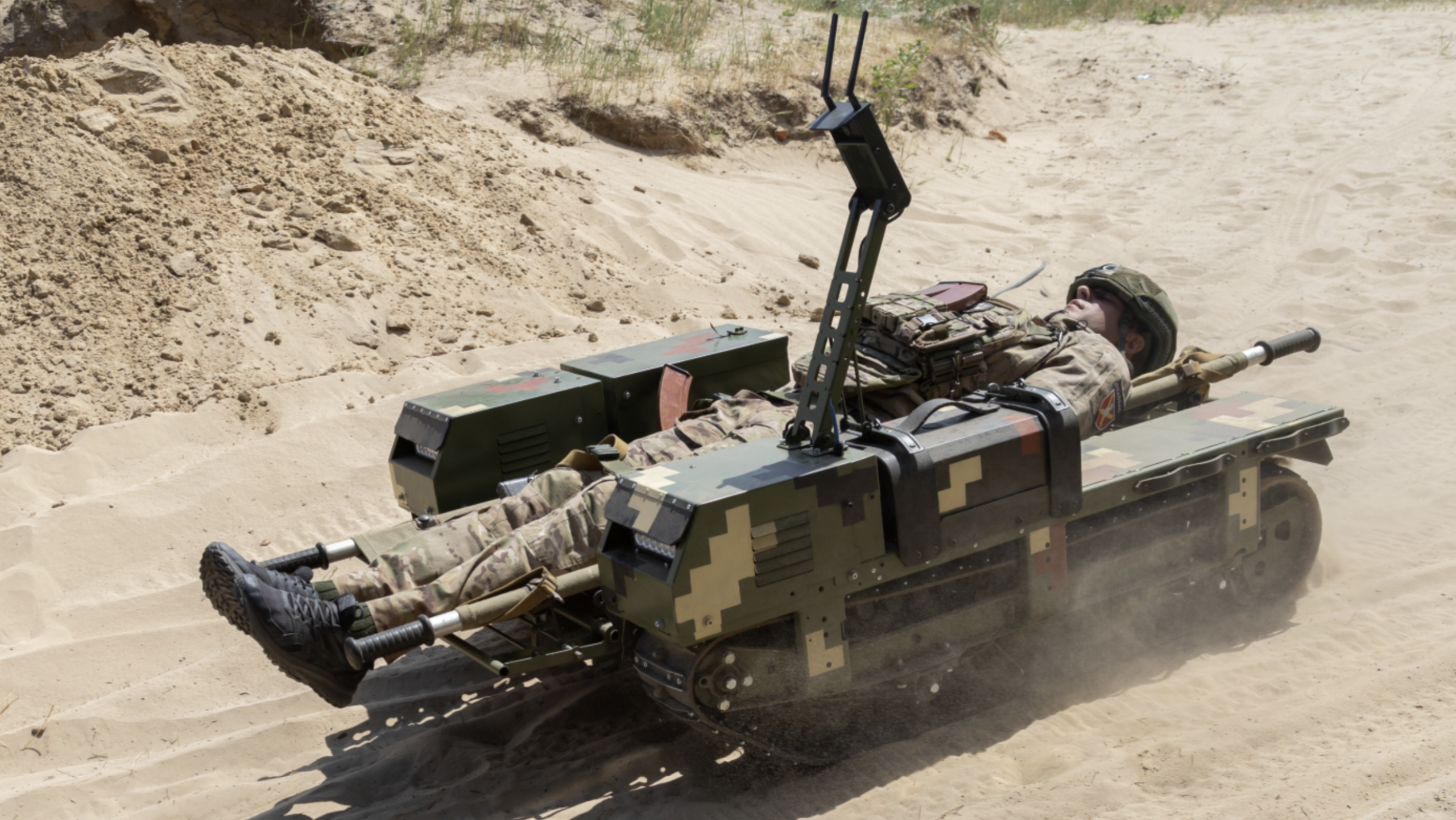

Uncrewed ground systems are reshaping battlefield medical response in Ukraine, where constant aerial surveillance and drone threats have made traditional rescue missions increasingly dangerous. In contested areas of eastern Ukraine, the critical “golden hour” for treating wounded soldiers is being preserved through the use of remotely operated vehicles designed to extract casualties without exposing medics to direct danger.
The shift reflects a broader transformation in how modern militaries approach both risk and technology. With low-cost drones capable of destroying high-value equipment, the emphasis is moving away from complex, expensive platforms toward simpler, more replaceable systems. Ukraine’s battlefield environment has highlighted how over-engineered solutions can become liabilities when they are easily targeted, reinforcing the need for scalable and cost-effective alternatives.
A growing number of robotic platforms are now integrated into Ukrainian operations, performing tasks that range from logistics to casualty evacuation. According to U.S. Navy veteran Jeffrey Wells, who works with the nonprofit Task Force Antal, effectiveness in this environment does not depend on sophistication. He has emphasized that simpler robotic stretchers can provide consistent utility without the operational hesitation that comes with risking expensive equipment.
Ukraine’s medical unit carried out six successful casualty evacuation missions in a single day using unmanned ground robots, rescuing wounded troops from frontline positions under constant FPV drone threat.
— Dylan Malyasov | 🧐 (@DylanMalyasov) April 7, 2026
Read more: https://t.co/fcDR8La7hS pic.twitter.com/p2PzE575Gr
Ukrainian defense officials have reported that multiple robotic systems have been deployed along the front lines since early 2024, with dedicated units established to manage and operate these technologies. The fleet includes both domestically developed platforms and systems supplied through European partnerships, such as the modular Gereon uncrewed ground vehicle designed for adaptability in combat conditions.
Despite their growing role, these robotic systems are not without limitations. Oleksandr Yabchanka of the Da Vinci Wolves Battalion has described them as a “last hope,” noting their vulnerability to electronic interference and difficult terrain. Similar concerns have been raised by U.S. Army Secretary Dan Driscoll, who has pointed to the unsustainable cost of high-end equipment that can be neutralized by inexpensive weapons, reinforcing the argument for more practical and replaceable designs.
The operational lessons emerging from Ukraine are already influencing military planning beyond the region. U.S. defense strategy is increasingly accounting for scenarios where traditional air-based medical evacuation, such as helicopter deployments, may be infeasible in high-intensity conflicts. As a result, development efforts are focusing on multi-role, uncrewed systems that can be rapidly produced, deployed, and replaced, reflecting a shift toward resilient and iterative battlefield technology.


 By
By


 By
By
 By
By