
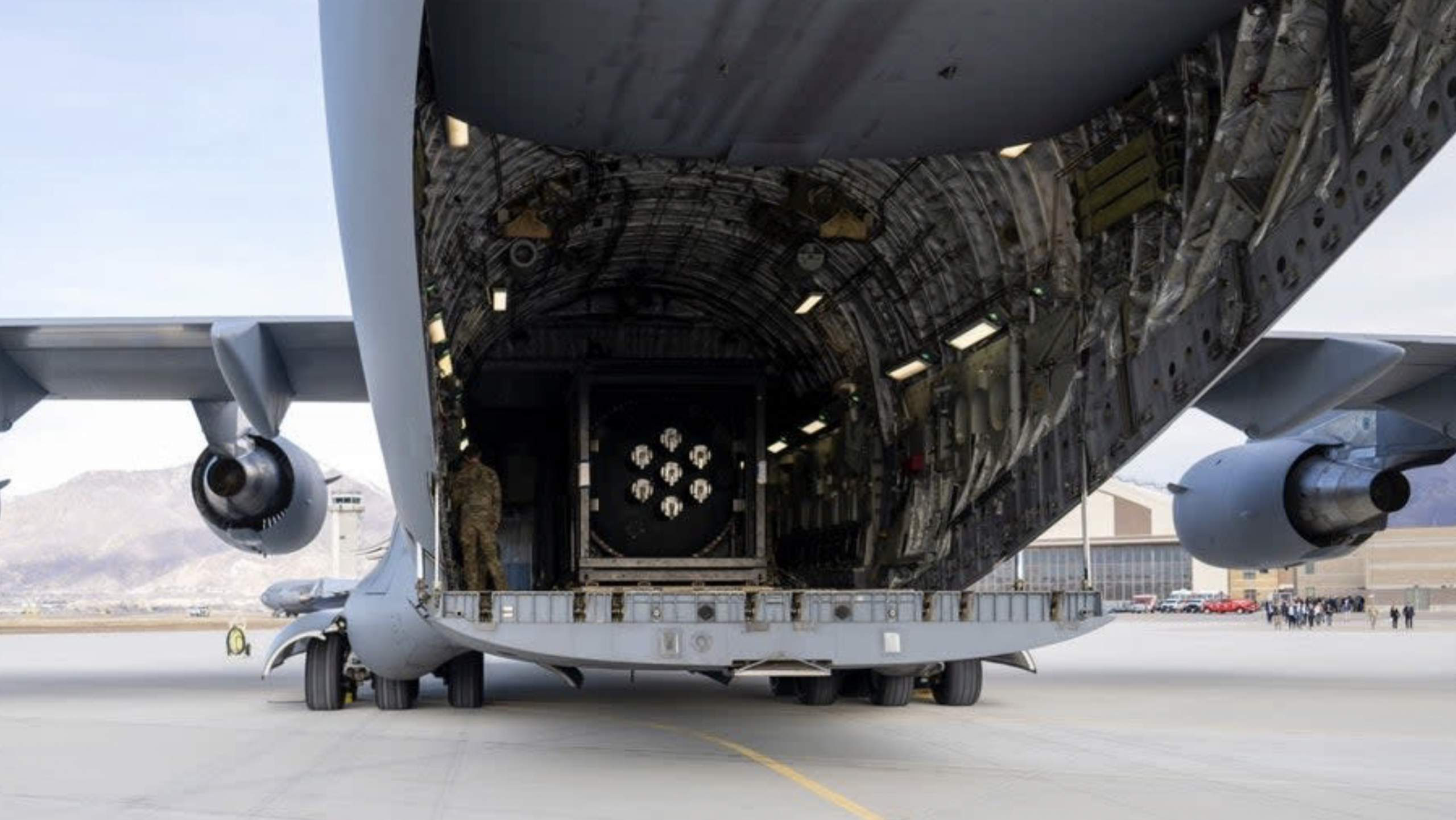

The United States carried out a first-of-its-kind demonstration on February 17, 2026, transporting a compact nuclear reactor by cargo aircraft from California to Utah, highlighting the potential for rapidly deployable nuclear energy systems. The effort, reported by Reuters and confirmed by federal officials, reflects growing interest in advanced energy technologies that could support both military operations and civilian infrastructure.
The operation involved the Departments of Energy and War working alongside Valar Atomics to move one of the company’s Ward microreactors aboard a C-17 aircraft from March Air Reserve Base to Hill Air Force Base. Officials stated the reactor was transported without nuclear fuel. Energy Secretary Chris Wright and Under Secretary of War for Acquisition and Sustainment Michael Duffey were present during the flight, with Duffey stating the initiative could enable nuclear power deployment “when and where it is needed” for U.S. forces.
The U.S. Air Force said its 452nd Logistics Readiness Squadron airlifted an unfueled, next-generation Ward250 mini nuclear reactor built by Valar Atomics aboard a C-17A from March Air Reserve Base on Feb. 15, marking the first-ever reactor airlift, with modules bound for testing… pic.twitter.com/XbnCesHZtR
— Open Source Intel (@Osint613) February 16, 2026
Following its arrival in Utah, the reactor was scheduled for transfer to the Utah San Rafael Energy Lab for testing and evaluation. The Department of War said the demonstration aligns with policy directives under Donald Trump aimed at expanding domestic nuclear energy production, particularly as demand rises from national security needs and emerging technologies such as advanced computing systems.
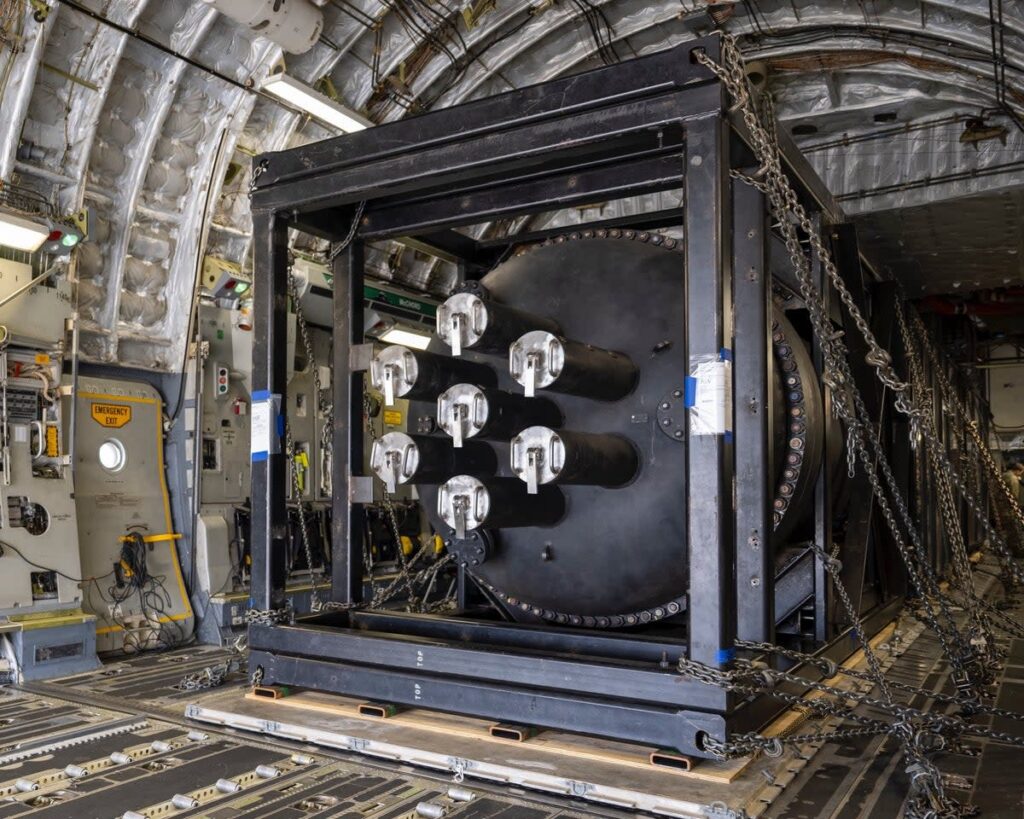
According to Valar Atomics, the Ward microreactor is designed to generate up to 5 megawatts of electricity, roughly equivalent to powering about 5,000 homes. Chief executive Isaiah Taylor told Reuters the system is expected to begin operating at lower output levels before gradually increasing toward full capacity. The Department of Energy has indicated that three microreactors are expected to reach “criticality” — the point at which a nuclear reaction becomes self-sustaining — by July 4, with fuel for the Utah test unit to be shipped separately from the Nevada National Security Site.
Today, we’re exited to partner with the Department of War and Department of Energy on Operation Windlord. Three C-17s will be transporting our Ward250 reactor from March ARB to Hill AFB.
— Valar Atomics (@valaratomics) February 15, 2026
Here’s a peek at what it took to bring this operation to life. (Part 1) pic.twitter.com/aQR2l9aTd3
The transport operation, referred to by the company as “Operation Windlord,” involved multiple aircraft and components. Defense analyst Brent Sadler noted the reactor was moved in sections across several cargo pallets and will undergo fueling and initial testing later in 2026. Public officials including Spencer Cox and John Curtis attended related events, with Curtis stating the mission marked the first time a nuclear reactor had been transported aboard a C-17 aircraft and emphasizing its implications for energy security.
Federal agencies described the demonstration as a test of logistics, regulatory coordination, and deployment capabilities for next-generation nuclear systems. While proponents argue microreactors could provide reliable power in remote or austere environments and reduce reliance on diesel fuel, critics such as Edwin Lyman contend the technology has yet to demonstrate economic viability, stating that “there is no business case for microreactors,” citing higher projected electricity costs compared to traditional large-scale nuclear plants.


 By
By



 By
By