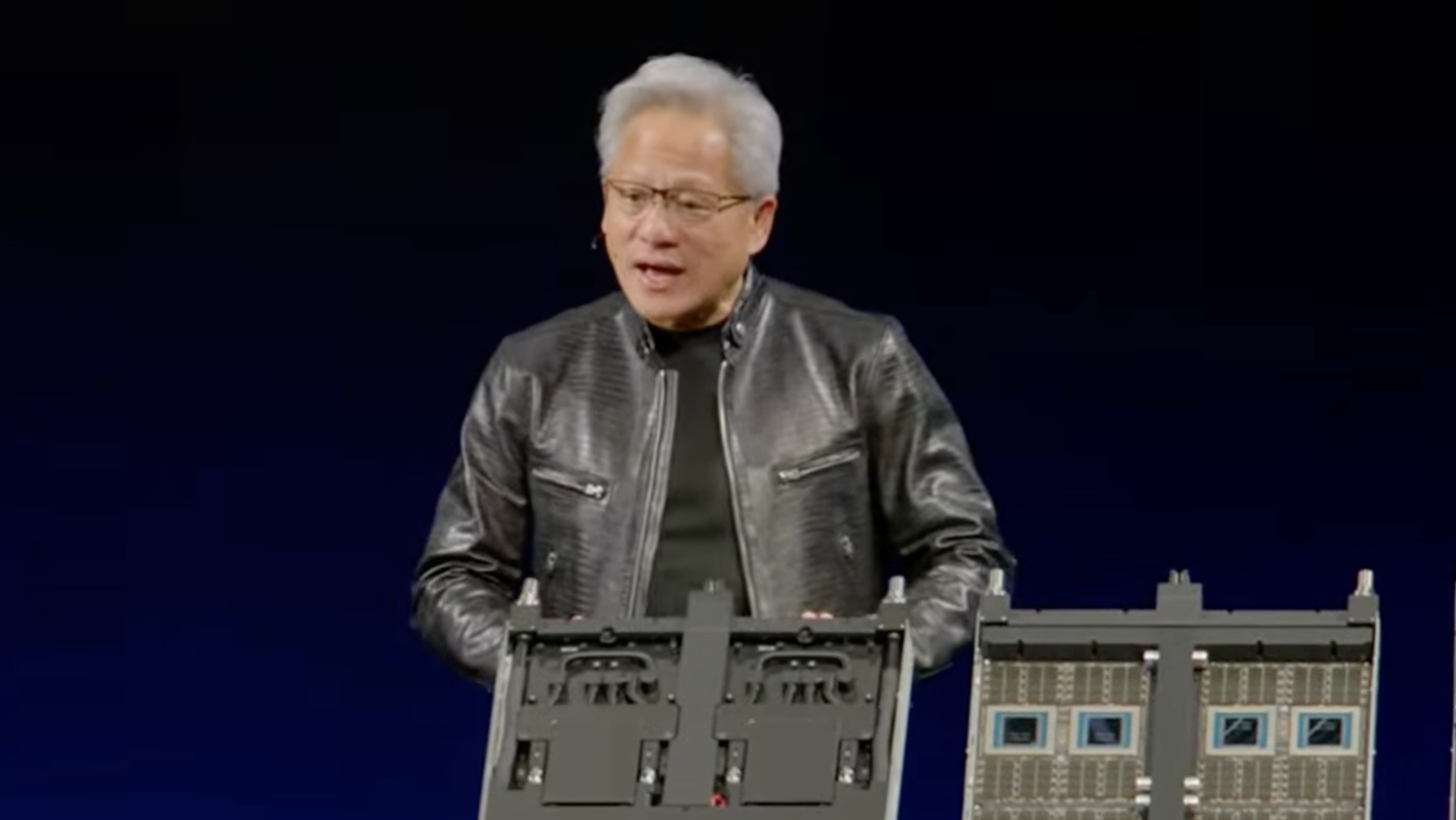

TAIPEI — Nvidia CEO Jensen Huang took the stage in Taiwan on Monday before one of the technology industry’s most watched audiences and announced something the PC market has not seen in decades: a genuine architectural challenger to the chips that have run personal computers for a generation. Standing before a packed hall at the Taipei Music Hall ahead of the annual Computex trade conference, Huang unveiled the RTX Spark — a new superchip designed to bring autonomous artificial intelligence agents directly into laptops and desktop computers, positioning Nvidia against entrenched rivals including Intel, Advanced Micro Devices, Apple, and Qualcomm.
A New Chip for a New Era of Computing
The RTX Spark superchip, developed in partnership with Taiwan’s MediaTek and Microsoft, combines Nvidia’s Blackwell GPU architecture with a new Arm-based processor Huang also referred to as the N1X. The chip debuts in the fall on a fresh line of Windows PCs from Microsoft, Dell, HP, ASUS, Lenovo, and MSI, with models from Acer and GIGABYTE to follow. Huang described the moment in sweeping terms, declaring that “this reinvention of the computer is as big of a deal as the reinvention of the phone into what we now know as the smartphone.”
The announcement marks the first time Nvidia has broken into the personal computer chip market as a primary processor provider — territory long dominated by Intel and AMD on the Windows side, and Apple with its own silicon on the Mac side. Nvidia has emerged as the world’s most valuable company by dominating the market for artificial intelligence chips in the data center, and is now expanding its prowess to chips that will serve as the main processor for personal computers.
Agentic AI at the Center of the Push
Central to Nvidia’s pitch is the concept of agentic AI — systems capable of reasoning and taking autonomous actions, rather than simply responding to user prompts. Industry analysts immediately recognized the significance. Neil Shah, co-founder of Counterpoint Research, said the RTX Spark is poised to redefine what a personal computer is fundamentally capable of. “The RTX Spark looks to transform the traditional app-centric PC to a real useful Agentic AI personal computer which will eventually be in every home in coming years as private edge AI agents become pivotal,” Shah said. He went further, comparing the launch to watershed moments in recent technology history: “This is going to be the ‘RTX Spark’ moment for the personal computing segment like how iPhone, ChatGPT or DeepSeek have been.”
Huang’s emphasis on local, on-device AI processing aligned closely with remarks made separately by Qualcomm CEO Cristiano Amon, who also spoke ahead of Computex and framed 2026 as the pivotal year for agentic computing. “Two years ago we talked about how AI will change the human computer interface, and as a consequence will change the architecture of all of our personal computing devices. And that is starting to become a reality in 2026. That’s why we call 2026 the year of agents,” Amon said, adding that the industry is moving “past AI as a simple prompt-answering tool toward fully autonomous agents.” Amon further argued that local edge computing is not optional in this shift, because today’s hardware was engineered for a different paradigm entirely. “All of these devices today, they have been built for actions initiated by the user, not by the agents,” he said.
Nvidia Moves Beyond the Data Center
Nvidia’s PC chip launch is part of a broader strategic expansion the company has been methodically building out. After years of dominating the chips used to train large AI models in data centers, Nvidia is now pursuing the inference side of the market — the chips that power AI responses to user queries and handle the autonomous agents being built to manage routine tasks. Huang repeatedly highlighted that Nvidia’s strategy is no longer centered on selling standalone chips but complete systems spanning networking, compute, software, and data center infrastructure.
Also announced at Computex was Nvidia’s Vera central processing unit for data centers, which Huang said is now in full production. Huang said Nvidia is making millions of the CPUs for “a market that never existed before,” with Vera available starting in the fall. Early customers include Anthropic, OpenAI, SpaceX’s xAI, Dell, Oracle, and CoreWeave. During an earnings call in May, Huang had said Nvidia’s new Vera processors give it access to a new $200 billion market. “This (Vera CPU) is going to be our new major growth driver,” he said Monday in Taipei, during a lengthy speech that underscored Taiwan’s central role in the global technology industry.
Market Reaction and Mixed AI PC History
Wall Street responded sharply to the news. Nvidia shares jumped 4%, while AMD, Intel, and Qualcomm fell between 4.9% and 8.5%. Apple dipped 0.8%, while Microsoft rose 2.7%, boosted also by a broader rebound in software stocks. HP and Dell each gained more than 7%, and Lenovo shares closed more than 5% higher in Hong Kong.
The market reaction arrives against a backdrop of uneven consumer adoption of AI-enabled PCs so far. HP reported last week that AI PC devices helped support quarterly sales, while Dell said earlier this year that demand had fallen short of initial expectations. Qualcomm has also been competing in the AI PC space alongside Microsoft. Whether Nvidia’s entry changes the trajectory of the category will be closely watched across the industry.
Dismissing AI Job Loss Fears
Huang used a portion of his keynote to directly address one of the more persistent anxieties surrounding artificial intelligence: its impact on employment. He dismissed concerns that AI would reduce demand for software engineers, arguing the opposite is true. “This is the promise of AI. The number of engineers, software engineers, is actually increasing. People talk about AI reducing jobs — complete nonsense. It’s causing more software engineers to be hired,” Huang said.
A central theme of the keynote was agentic AI — systems capable of reasoning, taking actions, and working autonomously. Huang described the industry’s shift toward “useful AI,” arguing that future AI systems will function less like chatbots and more like digital workers capable of dramatically improving productivity.
Huang’s Taiwan Ties and Global Footprint
The Computex keynote carries added personal significance for Huang, who was born in Taiwan’s southern city of Tainan. He announced plans last week to invest approximately $150 billion a year in Taiwan, describing the island as the epicenter of the AI revolution. The speech comes roughly two weeks after Huang accompanied U.S. President Donald Trump on a visit to Beijing as part of a high-powered corporate delegation to meet Chinese President Xi Jinping — a trip that underscored both Nvidia’s geopolitical weight and Huang’s growing stature as one of the central figures in the global technology order.
According to Forbes, Huang’s net worth stands at approximately $190 billion as of June 1, 2026, ranking him eighth wealthiest in the world — a figure that has climbed dramatically in step with Nvidia’s transformation from a gaming graphics company into the defining infrastructure provider of the artificial intelligence era. Nvidia’s strategy is no longer centered on selling standalone chips, but complete systems spanning networking, compute, software, and data center infrastructure — and with the RTX Spark, that strategy has now arrived at the personal computer sitting in the average consumer’s home.


 By
By



 By
By