


Researchers have developed an artificial intelligence-based blood test called PanMETAI that demonstrates high accuracy in detecting pancreatic ductal adenocarcinoma, a form of pancreatic cancer known for its low survival rates due to typically late diagnosis. The test combines nuclear magnetic resonance spectroscopy of blood samples with machine learning to analyze metabolic profiles, achieving an area under the curve of 0.99 in initial cohorts and 0.93 in external validation, which translates to overall accuracies around 92 to 94 percent. This advancement addresses the critical need for earlier detection, as current methods often fail to identify the disease until advanced stages, when the five-year survival rate stands at just 13 percent.
The approach integrates serum metabolomic data, including small-molecule metabolites and lipoproteins, alongside clinical factors such as age, the biomarker CA19-9, and the protein Activin A. Data came from 902 participants in Taiwan, consisting of 424 high-risk controls and 478 patients with pancreatic ductal adenocarcinoma, split into training, development, and blind validation sets. An additional 322 samples from Lithuania served as an external validation cohort to confirm the model’s robustness across different populations.
In the Taiwanese training and validation groups, the TabPFN-based PanMETAI model reached an area under the curve of 0.99, with sensitivity of 0.93 and specificity of 0.94 in the blind test. Performance held strong in the Lithuanian cohort, yielding an area under the curve of 0.93, sensitivity of 0.90, and specificity of 0.83. The model proved particularly effective for early-stage disease, stages I and II, where it achieved an area under the curve of 0.95 in Taiwan and maintained similar efficacy in Lithuania, highlighting the value of incorporating metabolomic data to capture subtle changes not evident in later stages.
Analysis of the model’s selected features revealed key metabolic alterations associated with the disease, including decreased levels of high-density lipoprotein and glutamine, alongside increases in lactic acid, trimethylamine N-oxide, ornithine, glutamic acid, and glucose. These changes appeared stage-dependent, with some normalizing in advanced disease while others persisted. Pathway analysis linked these metabolites to dysregulated processes such as glucose-alanine cycling, amino acid metabolism, and lipid handling, which play roles in cancer progression.
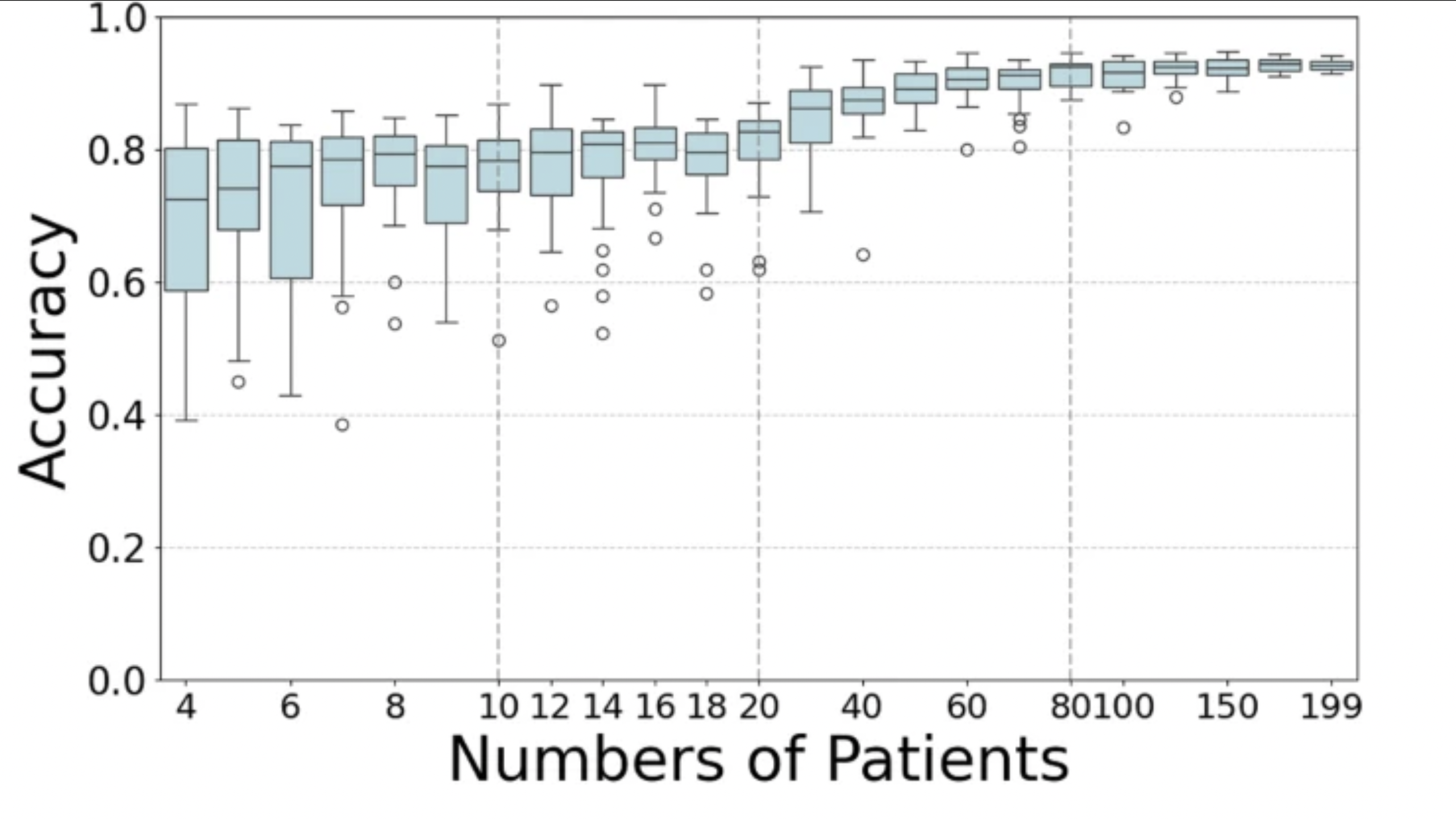
The model also showed resilience with limited data, achieving stable accuracy near 0.90 with as few as 50 to 70 training samples, making it suitable for settings where large datasets are unavailable. This efficiency stems from the TabPFN algorithm’s ability to learn from small, heterogeneous inputs without extensive tuning.
Overall, PanMETAI represents a non-invasive, rapid diagnostic tool that could enhance early detection in high-risk groups, potentially improving outcomes through timely intervention. Further large-scale studies across diverse populations will be needed to confirm its clinical utility.


 By
By



 By
By