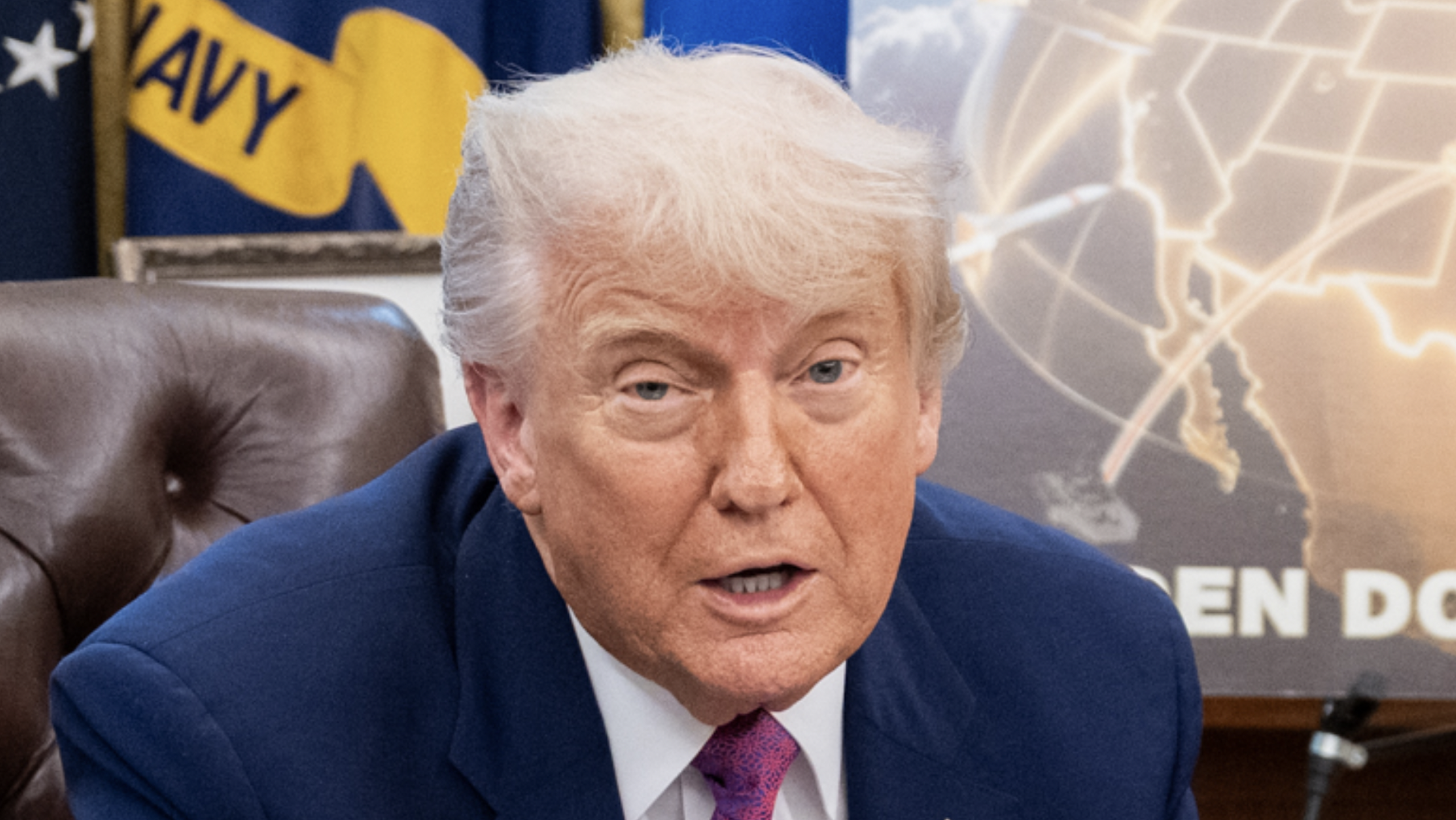

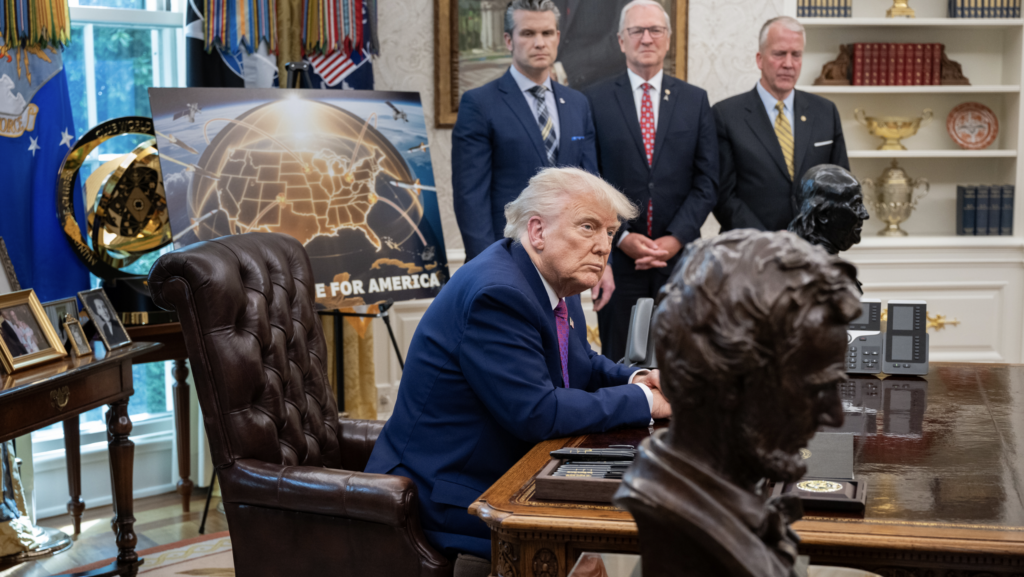
President Donald Trump last month called on Congress to fund a sweeping new missile defense system designed to protect the United States from advanced aerial threats, arguing that recent technological advances now make such a system possible.
“As a first step, I’m asking Congress to fund a state-of-the-art Golden Dome missile defense shield to protect our homeland, all made in the USA,” Trump said during his State of the Union address. “And Ronald Reagan wanted to do it long ago, but the technology just wasn’t there, not even close. But now we have the technology.”
The proposal is part of a broader effort to develop a next-generation missile defense system capable of countering ballistic, hypersonic, and cruise missile threats, which the administration has described as among the most significant risks facing the country, according to a White House directive.
New reporting suggests major technology and defense firms are already working to build key components of the system. According to The Wall Street Journal, Anduril Industries and Palantir Technologies are part of a consortium developing the software that would power the Golden Dome shield.
The software is expected to play a central role in the system, connecting data from radars, sensors, and defense platforms to allow military commanders to detect, track, and intercept incoming threats in real time. Pentagon officials have described it as a “glue layer” that integrates capabilities across multiple military systems.
The consortium, which also includes companies such as Aalyria, Scale AI, and Swoop Technologies, is aiming to have a version of the system ready for testing as early as this summer, the Journal reported. If successful, the software could become a cornerstone of the broader $185 billion defense initiative.
Traditional defense contractors including Lockheed Martin, Northrop Grumman, and RTX are also involved in the effort, though in a departure from typical Pentagon contracting structures, they are working as subcontractors to technology firms leading the software development.
The Golden Dome project reflects a shift in military strategy toward integrated, software-driven defense systems capable of responding to increasingly complex and fast-moving threats. Officials say the system is intended not only to defend against attacks but also to deter adversaries by demonstrating advanced technological capabilities.
While the full scope and timeline of the program remain unclear, the administration has emphasized the need to accelerate development, citing rapid advances in missile technology by global competitors. Funding for the project will ultimately depend on congressional approval, as lawmakers weigh the cost and strategic implications of building a nationwide missile defense shield.

 By
By


 By
By