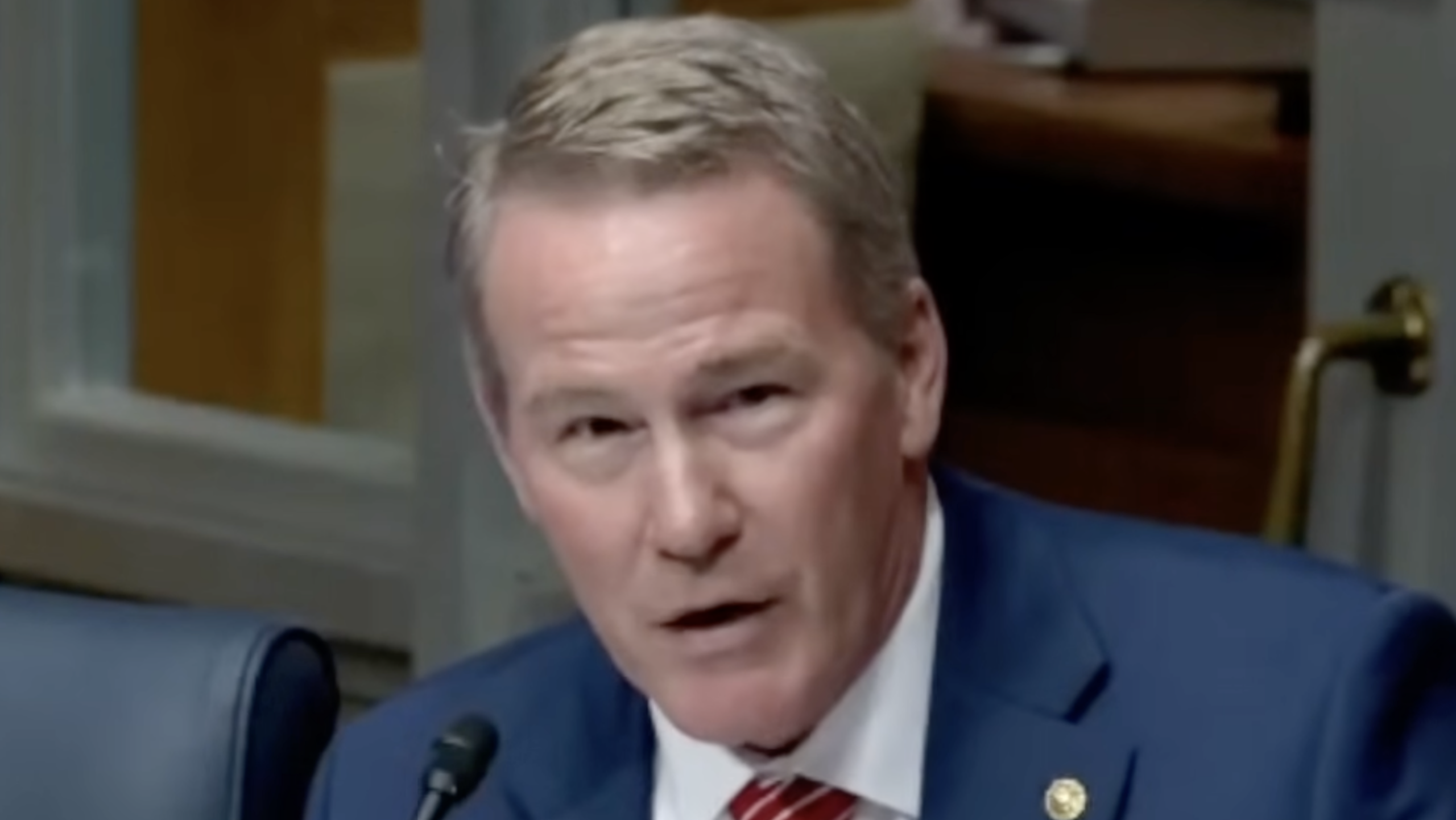

During a White House roundtable focused on the Ratepayer Protection Pledge, Senator Jon Husted of Ohio emphasized the connection between technological leadership and the nation’s economic and national security priorities. Addressing President Donald J. Trump and leaders from the technology sector, Husted argued that maintaining American dominance in artificial intelligence and the infrastructure that supports it will be critical to ensuring long-term competitiveness while also protecting households from rising energy costs.
Husted, who represents Ohio in the United States Senate, described the rapid expansion of artificial intelligence and data centers as particularly significant for states with growing technology and industrial sectors. “In places like Ohio this is a very, very big deal,” Husted said, adding that technological leadership plays a central role in both economic strength and national defense. “If we want to have economic prominence and national security dominance, we need to have technological dominance, and AI and data centers are a big piece of that.”
.@SenJonHusted: What you are offering today with the Ratepayer Protection Pledge is great leadership because this solves the problem that people were worried about. As the data centers build new power plans, it leads to energy stability—affordable, reliable electricity. pic.twitter.com/apDGIcadrv
— Rapid Response 47 (@RapidResponse47) March 4, 2026
He said the competition for leadership in artificial intelligence is widely understood by the public and tied directly to global geopolitical rivalry. “I know the American people want to win this just like you do,” Husted said. “We want to be superior to our challengers like China. We want to have AI dominance because that helps give our military, our manufacturing — everybody across the country needs AI dominance if America wants to win.”
At the same time, Husted noted that while many communities welcome the investment and job creation tied to large-scale data center projects, concerns remain about the potential impact on electricity costs. He pointed to the workers involved in building the infrastructure supporting AI development. “They like those folks out there, the construction trades that build these, the plumbers, pipe fitters, HVAC, the people who build the power plants, laborers — people that do amazing work build the data centers, to build the power plants,” he said. “But people are worried about their energy prices.”
According to Husted, the Ratepayer Protection Pledge directly addresses those concerns by ensuring that the financial burden of increased electricity demand from AI infrastructure will not fall on American households. “What you’re offering today with this round table with the Ratepayer Protection Pledge, Mr. President, is great leadership because this solves the problem the people were worried about,” he said. “It leads to affordable, reliable electricity for American ratepayers, helping them win the affordability battle that you’re leading on behalf of this great team that you’ve assembled and I want to say thank you for your leadership.”
President Trump responded by noting Husted’s political role in the state, saying, “Thank you very much, Jon. He’s running for a very important seat in a great state that I like a lot. It’s always been good to me and it’s been good to you. Good luck with that.”
Husted replied, “Thank you very much, Mr. President.”
The Ratepayer Protection Pledge announced at the roundtable brings together several major technology companies — including Amazon, Google, Meta, Microsoft, OpenAI, Oracle, and xAI — to ensure that the rapid expansion of artificial intelligence infrastructure does not drive up electricity costs for American households. Under the agreement, participating companies will finance the additional power generation and transmission infrastructure needed for new data centers, negotiating separate rate structures with utilities and covering those costs regardless of their actual electricity usage.
The framework is intended to protect consumers from higher utility bills while allowing the United States to expand the energy capacity required for advanced computing, cloud services, and AI development. By requiring companies to fund new generation resources and grid upgrades, the initiative also aims to strengthen grid reliability, support local job creation, and maintain U.S. leadership in artificial intelligence and emerging technologies.


 By
By

 By
By