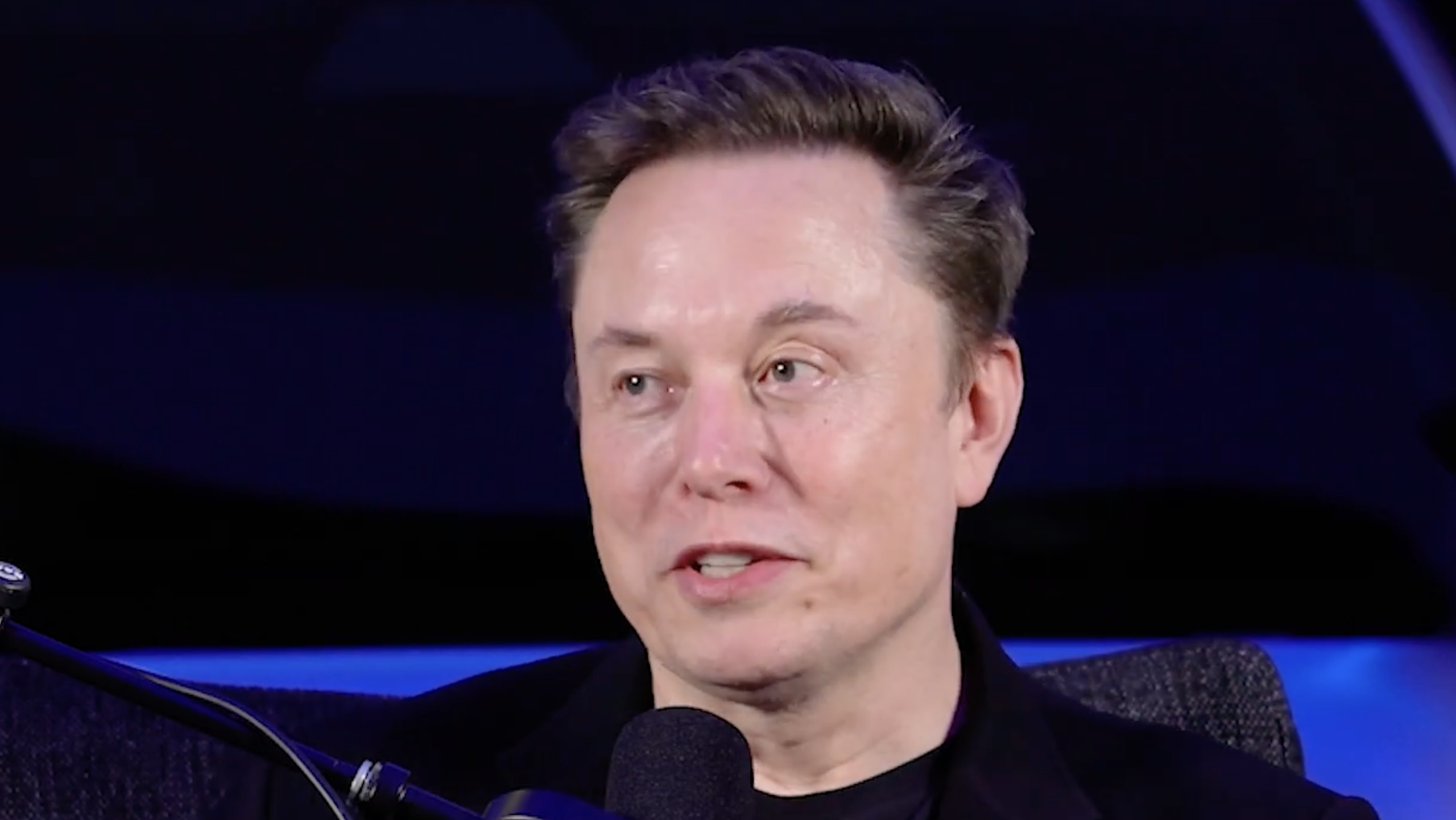

Musk made the comments during a podcast interview with Peter Diamandis on the Moonshots podcast, recorded on December 22, 2025 and released on January 6, 2026.
“Three years,” Musk said when asked how long it would take for Optimus to be a better surgeon than the best human surgeons. “I’d say three or three years at scale.”
He added that with a small margin of error, Optimus would be better than any human surgeon in four years and “by five years, it’s not even close.”
Musk pointed to the current shortage of great surgeons and the long, expensive training required for humans to become skilled doctors.
“It takes a ridiculously long time to learn to be a good doctor,” he said. “Even then, the knowledge is constantly evolving. It’s hard to keep up with everything. Doctors have limited time. They make mistakes.”
Musk argued that Optimus would benefit from three converging exponentials: rapid advances in AI software, AI chip capability, and electromechanical dexterity. He said the usefulness of the humanoid robot is these three factors multiplied together, further accelerated by a recursive effect in which Optimus helps build more Optimus robots.
“You have a recursive multipliable triple exponential,” Musk said.
He noted that every Optimus surgeon robot would share knowledge and experiences across the entire fleet, giving each unit access to every possible variation of a procedure.
“It won’t be possible for humans to compete,” Musk said. “Extreme precision … in infrared, in ultraviolet … no caffeine that morning … they didn’t have a fight with their husband or wife.”
Musk said the result would be medical care better than what the president currently receives becoming available to everyone.
“Everyone will have access to medical care that is better than what the president receives right now,” he said. “Medicine is gonna be effectively free.”
When asked about the future of medical school, Musk replied, “Pointless,” adding that it might only make sense for social reasons.
He also predicted massive scale for Optimus production. When Diamandis referenced Musk’s earlier forecast of 10 billion robots by 2040, Musk called that number “low.”
The comments have resurfaced amid growing activity in medical robotics. On March 10, 2026, Vitestro, a Netherlands-based company, announced it raised $70 million in an oversubscribed Series B financing to advance its Aletta Autonomous Robotic Phlebotomy Device.
Aletta is designed to autonomously perform diagnostic blood draws using multimodal imaging, advanced robotics and artificial intelligence. The device is CE-marked and in clinical use in Europe but has not yet received U.S. Food and Drug Administration approval.
Vitestro said the funding will support further development, U.S. regulatory efforts and commercial readiness for the high-volume procedure, which faces staffing shortages worldwide.
While Aletta is a specialized, task-specific robot rather than a general-purpose humanoid like Optimus, its progress illustrates growing automation in routine medical procedures.
Musk’s prediction reflects his broader vision for Optimus as a versatile humanoid capable of complex tasks, though no public demonstrations of surgical capabilities have been shown as of March 2026. Timelines for such advanced applications remain subject to technical, regulatory and manufacturing challenges.

 By
By
 By
By