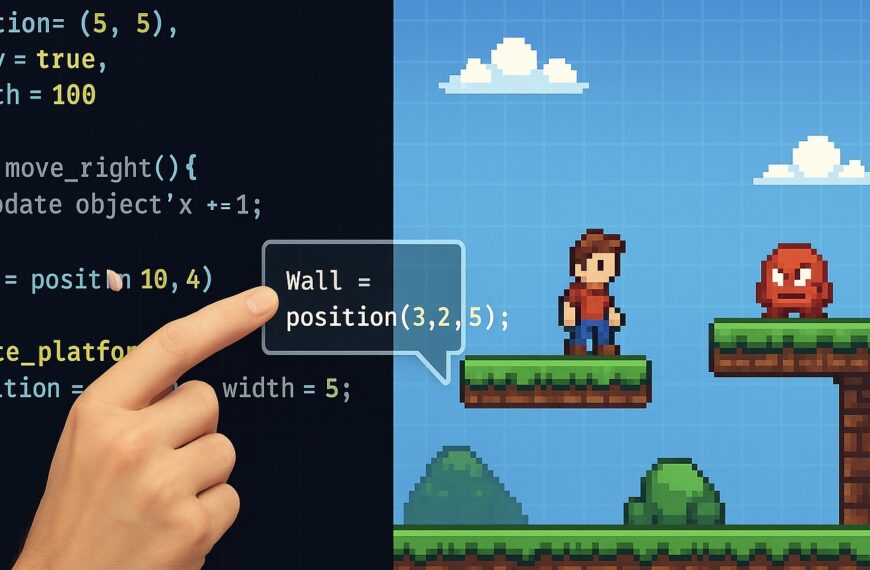


Over the past year, a new category of AI-powered software tools has surged from niche novelty to Silicon Valley obsession. Marketed as “vibe coding,” these tools promise to transform programming into a largely conversational process — one where developers prompt an AI agent, watch it generate code, and then simply adjust rather than hand-write. It is a vision tailor-made for startup hype: software engineering without friction, teams that can scale without hiring, and anyone able to produce sophisticated applications with minimal expertise.
Two startups in particular — Cognition and Anysphere, maker of the coding environment Cursor — have risen to the top of this movement. Both are based in the San Francisco Bay Area. Both have raised staggering sums at valuations approaching or topping ten billion dollars. And both claim to have created sophisticated, high-speed AI coding agents that outperform anything available just a year or two ago.
But behind this rapid rise lies a quieter, more complicated story:
the core AI models powering these American tools may have been developed in China.
The Vibe-Coding Boom
Cognition, founded in 2023, announced its newest model — SWE-1.5 — earlier this year. The company described it as a “software-engineering-optimized” large language model trained on “hundreds of billions” of parameters. In public demos, SWE-1.5 appears blisteringly fast, often producing complete multi-file implementations within seconds. Investors have rewarded those claims: Cognition’s valuation climbed to roughly $10.2 billion, according to public reporting.
Anysphere, builder of Cursor, has experienced a similar ascent. Cursor positions itself as “the best way to write code with AI,” and its new agent, Composer, promises code generation up to four times faster than comparable tools. Anysphere’s valuation reportedly reached nearly $10 billion in 2025, tripling in half a year.
The underlying appeal is clear. Vibe coding offers a vision of software development in which the AI becomes a proactive collaborator — exploring architecture, proposing fixes, rewriting modules, and even reasoning through design choices. And for some developers, the experience really does feel like entering a new creative flow state.
But as usage scaled, some users began to notice something unusual.
A Curious Clue: Chinese Output From “American” Models
In late 2025, developers repeatedly observed Cursor’s Composer producing internal reasoning traces — not visible final code, but the behind-the-scenes “thought process” — in Chinese. That raised immediate questions: Why would an American-built AI model think in Mandarin?
At around the same time, Cognition declined to identify the specific “open-source base model” underlying SWE-1.5. The company only said it used a “leading” foundational model, heavily fine-tuned for engineering tasks. That silence, combined with curious behavior from Composer, fueled online speculation.
Then a more direct signal emerged:
Zhipu AI, one of China’s most prominent AI labs, suggested publicly that Cognition’s SWE-1.5 was likely built on its model GLM-4.6, which Zhipu had released under a permissive, commercial-use-friendly license.
Cognition did not deny the claim. Nor did it confirm it.
Anysphere also declined to identify Composer’s base model.
And so the question lingered:
Are the flagship American coding agents actually running on Chinese foundational models beneath their glossy interfaces?
Why It Matters
From a legal standpoint, there may be no issue at all. Many Chinese AI models — including Zhipu’s GLM series — are open source under licenses that explicitly permit commercial reuse without attribution. Startups are free to build billion-dollar companies on top of them.
But to researchers, policy analysts, and even some developers, the concern isn’t legality — it’s transparency. If foundational models built with Chinese data, compute, and research are quietly powering billions of dollars of American products, then the artificial intelligence supply chain is far more globally intertwined than most end-users realize.
It also complicates a deeper narrative. In American press and investor materials, the success of vibe-coding startups is often framed as another example of Silicon Valley’s engineering dominance. But if the foundational technology originates elsewhere, what does “American innovation” mean in an era of open-source AI?
Chinese researchers point out that global adoption is a feature, not a bug. If U.S. startups improve, harden, or extend Chinese-built models, it feeds back into a more robust global ecosystem. But it also means that determining “who owns the breakthrough” becomes increasingly difficult.
A More Complex Picture of AI Innovation
Academic studies of vibe-coding systems suggest the real breakthroughs may come not from foundational models themselves but from what researchers call agentic layering — the orchestration frameworks, tool integrations, error recovery loops, and context-tracking systems wrapped around a base model. These layers make AI feel less like autocomplete and more like an autonomous software collaborator.
Still, the performance ceiling remains tied to the underlying model.
If Cognition and Anysphere rely on Chinese-developed foundations, their ability to innovate and differentiate depends partly on decisions made by labs in Beijing.
Meanwhile, Chinese open-source AI continues to gain global traction. Reports in 2025 showed that Chinese LLMs had begun “quietly making inroads” into Silicon Valley tooling, partly because of their low cost and permissive licenses. And as open-source alternatives outpaced Western proprietary models in areas like long-context reasoning and code synthesis, adoption only accelerated.
The Future of Vibe Coding — and Who Gets Credit
The vibe-coding boom shows no signs of slowing. Startups are racing not just to build faster agents but to integrate AI deeper into development lifecycles: automated testing, code review, architectural exploration, and even autonomous feature creation.
But as the ecosystem matures, attribution and transparency may become central issues. If companies tout “breakthrough American AI” while quietly using open-source Chinese models, users, investors, and policymakers may demand clarity.
The deeper question may be this:
In a world where AI models are open, global, and remixable, how do we define where innovation truly happens?
In vibe coding, the answer may not lie in the headquarters address of a startup — but in the unseen layers of code and research beneath it.
Sources
These are the publicly available sources used or referenced for reporting and context:
- TechSpot – US “vibe coding” startups soar in value, but their AI may be powered by Chinese models
https://www.techspot.com/news/110143-us-vibe-coding-startups-soar-value-but-their.html - South China Morning Post – AI coding tools built by US firms face scrutiny over Chinese model origins
https://www.scmp.com/tech/tech-trends/article/3331451/ai-coding-tools-built-us-firms-face-scrutiny-over-chinese-model-origins - Gizmochina – US AI Tools Under Fire: Are America’s Top Coders Using Chinese Models?
https://www.gizmochina.com/2025/11/07/us-ai-tools-under-fire-are-americas-top-coders-using-chinese-models/ - NewsBytes – These US AI coding tools might be using Chinese models
https://www.newsbytesapp.com/news/science/us-ai-coding-tools-suspected-of-using-chinese-models/story - Al Jazeera – China’s AI is quietly making big inroads in Silicon Valley
https://www.aljazeera.com/economy/2025/11/13/chinas-ai-is-quietly-making-big-inroads-in-silicon-valley - The Wire China – Cheap and open-source Chinese AI models are taking off
https://www.thewirechina.com/2025/11/09/cheap-and-open-source-chinese-ai-models-are-taking-off/ - VentureBeat – Vibe coding platform Cursor releases first in-house LLM Composer
https://venturebeat.com/ai/vibe-coding-platform-cursor-releases-first-in-house-llm-composer-promising - Academic analysis – Vibe Coding in Practice: Motivations, Challenges, and Outlook
https://arxiv.org/abs/2510.00328


 By
By



 By
By