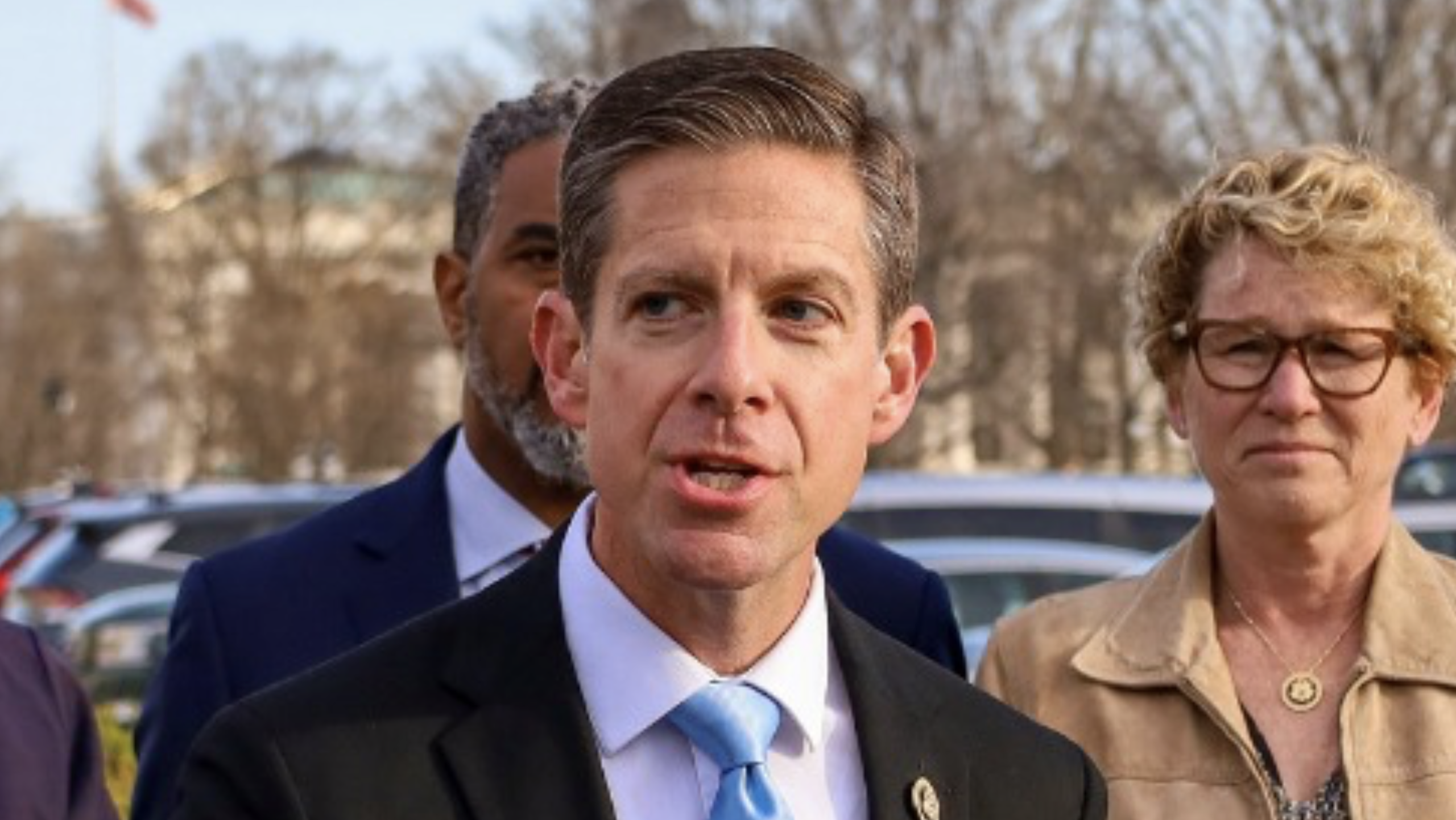

WASHINGTON, May 30, 2026 — Rep. Mike Levin, D-Calif., called for Justice Samuel Alito to answer for participating in Supreme Court cases involving Trump’s Treasury Department while his son was secretly employed there as a political appointee — threatening to withhold the Court’s congressional funding if the justices refuse to adopt a binding ethics code with mandatory recusal review.
“There is no world in which this is okay,” Levin wrote on X. “Supreme Court Justice Samuel Alito did not recuse himself from cases involving Trump’s Treasury Department while his own son was secretly working there as a political appointee and attorney. His son’s employment was hidden so thoroughly that his name appears nowhere on the Treasury Department website, he has no public resume, and his bar listings are outdated.”
Levin, a Duke University School of Law graduate and former environmental attorney who represents California’s 49th Congressional District, added: “If Alito had recused himself, the secret would have come out. He didn’t recuse himself. This is a clear conflict of interest, and the American people deserved to know about it.”
What the NOTUS Investigation Found
The post responded to an investigation by NOTUS revealing that Philip Alito — Justice Alito’s son — has been working as an attorney in the Treasury Department’s Office of the General Counsel since early in Trump’s second term, hired as a political appointee to the office that provides legal and policy advice to Secretary Scott Bessent. Four former government officials confirmed his employment to NOTUS, which also obtained a functional Treasury email address for Alito.
Philip Alito’s employment was deliberately kept quiet. He does not maintain a public resume or LinkedIn profile, the Treasury Department website makes no mention of him, and his three professional bar listings are outdated or incorrectly list previous employers. Inside the department, he went by “Phil” rather than “Phil Alito.” “I kind of had the impression that he was kind of a little bit sheepish about his celebrity affiliation,” one former official told NOTUS. “He’s a pretty soft-spoken guy.”
Attorney-advisers in the Office of the General Counsel “are in all the meetings, so they knew all the issues across the board,” a second source told NOTUS. “There’s no doubt he got that position because of who he is.”
The Tariff Case — and the Non-Recusal
Philip Alito was working at Treasury when a lawsuit challenging Trump’s use of emergency powers to issue sweeping tariffs was argued before the Supreme Court in November 2025. The Treasury Department — one of the named defendants — never disclosed his employment in court documents. Justice Alito did not recuse himself from the case and ultimately joined a dissent written by Justice Brett Kavanaugh.
The majority ruled in February 2026 that Trump did not have the authority to issue sweeping tariffs under the International Emergency Economic Powers Act, setting into motion massive refunds that have complicated the Trump administration’s trade policy. The Supreme Court’s public information officer said in a statement that Philip Alito “has not worked on any matter related to the tariffs imposed by the federal government” and that “as a result, Justice Alito has not recused in those cases.”
Treasury separately said Philip Alito “does not counsel on any matters reasonably expected before the Supreme Court” and that “like all attorneys in the Office of the General Counsel, Phil is in compliance with all applicable ethical obligations.” The department did not answer questions about when Alito began, who he reports to, or whether he files an ethics disclosure form.
Cases Coming Next — The Jan. 6 Fund
Levin’s concern extends beyond the tariff case. He noted that the Treasury Department sits at the center of a coming legal battle over Trump’s so-called “Anti-Weaponization Fund” — a $1.776 billion mechanism that directs public money to reward people who claim to have been unfairly targeted by the Justice Department, with some funds expected to go to January 6 participants Trump pardoned upon returning to office.
Two federal lawsuits have already been filed challenging the fund. Democracy Forward filed a Virginia lawsuit arguing the fund is “on a collision course with the United States Constitution,” and two former Capitol Police officers filed a D.C. lawsuit calling it “a corrupt sham.” On Wednesday, 35 former federal judges made an independent attempt to reopen Trump’s original $10 billion lawsuit against the IRS in an effort to block the settlement that created the fund. Those cases could ultimately reach the Supreme Court — with Treasury again as a central party.
The Federal Recusal Standard
The federal recusal statute, 28 U.S. Code § 455, requires a justice or judge to disqualify himself in any proceeding “in which his impartiality might reasonably be questioned” — including where he has “a financial interest in the subject matter in controversy or in a party to the proceeding.” A justice’s child’s employment at a litigating agency has traditionally been understood to raise exactly those questions, though the Supreme Court has no binding enforcement mechanism to compel recusal.
The arrangement is not without precedent. President George W. Bush appointed former Justice Antonin Scalia’s son, Eugene Scalia, as solicitor of labor in 2002 while the elder Scalia was still on the Court — an arrangement The New York Times warned at the time could require recusal. The difference in the Alito case, Levin and other critics argue, is that Philip Alito’s employment was never publicly disclosed at all.
Levin’s Funding Threat
Levin closed his post with a direct threat to the Court’s budget. “The Supreme Court is the only court in America with no binding code of conduct. That is completely unacceptable, and it has to change NOW,” he wrote. “Congress controls the Power of the Purse, and therefore the Court’s funding. If the Court will not adopt a binding code of conduct with real recusal review on their own, I support withholding their funding until they do.”
The Supreme Court adopted a voluntary Code of Conduct for Justices in November 2023 — the first in its history — but the code contains no enforcement mechanism and justices are the sole arbiters of their own recusal decisions. Levin’s funding threat reflects a growing Democratic push to subject the Court to the same binding ethical standards that apply to every other federal judge under the Code of Conduct for United States Judges.

 By
By

 By
By