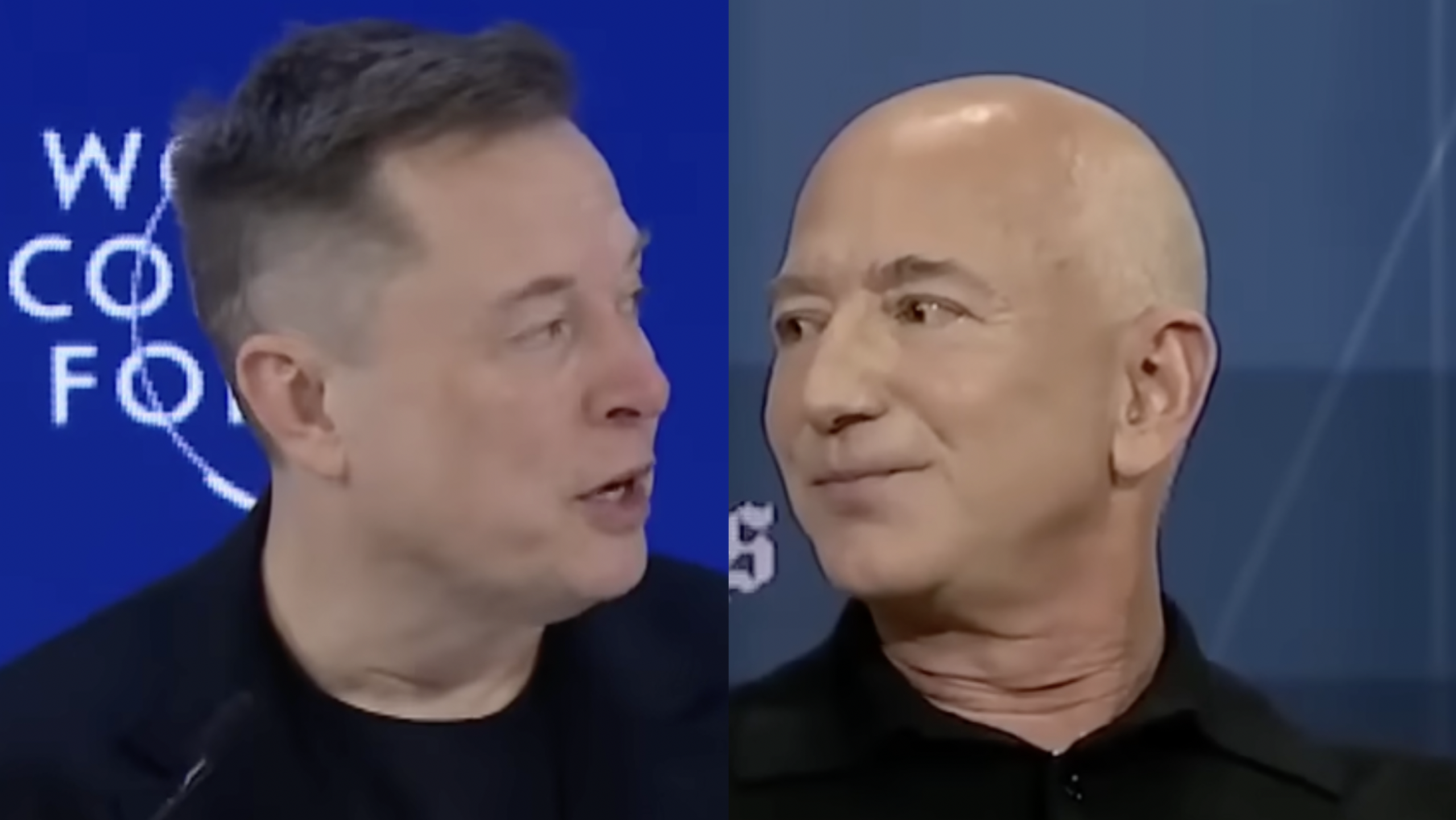

When a 322-foot rocket belonging to Jeff Bezos’ space company Blue Origin detonated in a massive fireball on a Florida launchpad Thursday night, the first notable public response did not come from a government official or a NASA administrator. It came from Elon Musk — Bezos’ billionaire rival, the founder and CEO of SpaceX, and the richest human being who has ever lived. “Most unfortunate. Rockets are hard,” Musk wrote on X shortly after the explosion. “I hope you recover quickly.” In six words, the world’s wealthiest man offered both sympathy and an unspoken reminder of the enormous distance that now separates the two most ambitious private space programs on Earth.
The Explosion That Started the Conversation
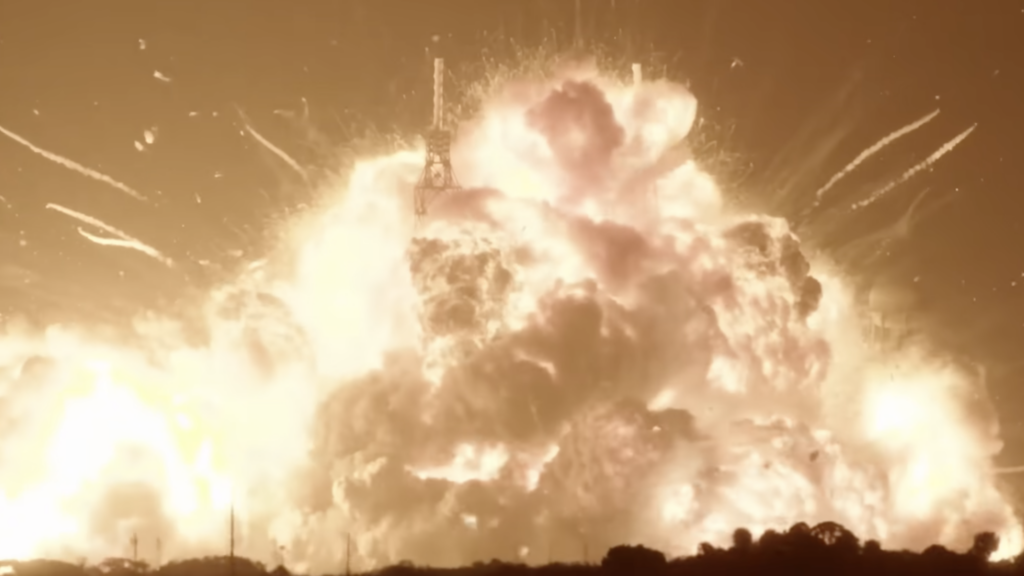
The explosion occurred around 9 p.m. EDT Thursday as engineers were counting down to a brief test firing of New Glenn’s seven methane-fueled BE-4 first stage engines at the Cape Canaveral Space Force Station. Blue Origin was preparing for a June launch carrying Amazon’s “Leo” internet satellites when something went catastrophically wrong. The 188-foot-tall first stage became enveloped in a rapidly growing fire, the upper stage tilted and began to fall, and the vehicle suddenly exploded as its load of methane fuel and liquid oxygen ignited in a roiling fireball. Homes shook across Cape Canaveral and Cocoa Beach. The sky turned orange. The rocket — and the only launchpad Blue Origin has for New Glenn — was destroyed.
Bezos Responds: “Very Rough Day”
Bezos, whom Forbes places at a net worth of $224 billion — ranking him fourth on its 2026 World’s Billionaires List — addressed the disaster directly on social media. “All personnel are accounted for and safe,” he wrote. “It’s too early to know the root cause but we’re already working to find it. Very rough day, but we’ll rebuild whatever needs rebuilding and get back to flying. It’s worth it.” Blue Origin confirmed no injuries occurred, and the Federal Aviation Administration noted the test was not within the scope of FAA-licensed activities and had no impact on air traffic.
Musk and Bezos: Parallel Visions, Vastly Different Trajectories
The exchange between the two men — however brief — captures a rivalry that has defined the commercial space age. Both Musk and Bezos founded their space companies driven by a shared foundational belief: that humanity must become a multi-planetary species, that access to space must become cheaper and more routine, and that private enterprise, not government bureaucracies, would lead the way. Bezos established Blue Origin in the year 2000. Musk founded SpaceX just two years later, in 2002. For years, the two companies developed largely in parallel, testing rocket engines in the desert and trading engineering milestones — while the two founders traded occasional barbs on social media.
The Numbers Tell a Different Story
The similarities in mission, however, have not translated into comparable outcomes. In 2025, SpaceX flew 165 Falcon 9 missions — more than the rest of the world combined. SpaceX is now responsible for 82% of U.S. space launches, hitting new launch records every year from 2020 through 2025. As of early 2026, Falcon 9 has completed over 400 missions with a success rate exceeding 99%. Blue Origin’s New Glenn, by contrast, has launched three times total — with a mixed record that included one lost payload — before Thursday’s explosion halted the program entirely.
Starlink vs. Leo: The Satellite Internet Showdown
Nowhere is the competitive gap more visible than in the satellite internet race, where the stakes are enormous for both companies. SpaceX’s Starlink now operates a constellation of more than 10,200 satellites in low Earth orbit, available on all seven continents and in over 160 countries, with Musk describing Starlink’s commercial service as “by far” the largest contributor to SpaceX’s revenue. SpaceX had projected revenues between $22 billion and $24 billion in 2026, with Starlink expected to contribute approximately 70% of that total. Blue Origin’s Amazon-backed Leo satellite internet constellation, designed as a direct competitor to Starlink, was set to begin its first dedicated launch on the very rocket that exploded Thursday night. No Leo satellites were onboard for the test.
$839 Billion vs. $224 Billion
According to Forbes’ 2026 World’s Billionaires List, Musk increased his net worth from $428 billion to $839 billion over the past year, making him more than three times richer than Jeff Bezos, who ranked fourth on the same list at $224 billion. Forbes noted that Musk is the first person ever to surpass the $800 billion mark and is currently on course to become the world’s first trillionaire. Much of that fortune is tied directly to SpaceX, whose potential IPO — being discussed at valuations between $1 trillion and $2 trillion — would represent one of the largest public offerings in history. For Bezos, Forbes reports that nearly 90% of his fortune lies in Amazon stock, with Blue Origin representing a separate, privately held bet on the future of space — one that just suffered its worst setback to date.
SpaceX Has Been Here Before
Musk’s message of sympathy carried a degree of hard-won credibility. SpaceX’s own road to dominance was paved with explosions. The last major on-pad explosion at Cape Canaveral Space Force Station before Thursday came in September 2016, when a helium tank rupture caused a SpaceX Falcon 9 rocket to explode at Space Launch Complex 40. The Falcon 9 did not return to flight for three and a half months, and that pad was out of action for more than a year. SpaceX survived by launching from backup pads at Kennedy Space Center and Vandenberg Space Force Base in California. Blue Origin, critically, has no such fallback. Space Launch Complex 36 at Cape Canaveral is the only pad from which New Glenn can fly — and it is now destroyed.
The Scope of the Setback
This upcoming fourth mission was supposed to be the first of 24 launches for which Amazon has contracted Blue Origin, and Blue Origin had been planning to attempt as many as 12 launches of New Glenn this year after spending around a decade developing the rocket to compete with SpaceX. All of that is now on hold. NASA’s Artemis moon program, which had awarded Blue Origin a $3.4 billion contract to develop a crewed lunar lander and a separate $188 million contract for Moon Base infrastructure just two days before the explosion, is also reassessing its near-term timeline. NASA Administrator Jared Isaacman wrote that the agency would “provide information on any impacts to the Artemis and Moon Base programs as it becomes available,” calling spaceflight “unforgiving.”
A Rivalry That Will Continue
Despite the scale of the setback, both the explosion and Musk’s response underline something important about the modern space industry: even the most catastrophic failures are framed not as endings, but as waypoints. Bezos said as much himself — “we’ll rebuild whatever needs rebuilding.” Musk, who has watched his own Starship vehicle explode repeatedly on its way toward becoming the most powerful rocket ever flown, has long held that rapid iteration through failure is the only reliable path to progress in aerospace. Blue Origin has spent years developing New Glenn while using its smaller New Shepard program to test sub-orbital rockets and ferry wealthy passengers and celebrities to the edge of space — all while working toward the orbital ambitions that Thursday’s explosion has now delayed. The gap between the two companies, measured in launches, revenue, and the net worth of their founders, remains enormous. But both men have staked their legacies on the same destination: the stars.

 By
By

 By
By