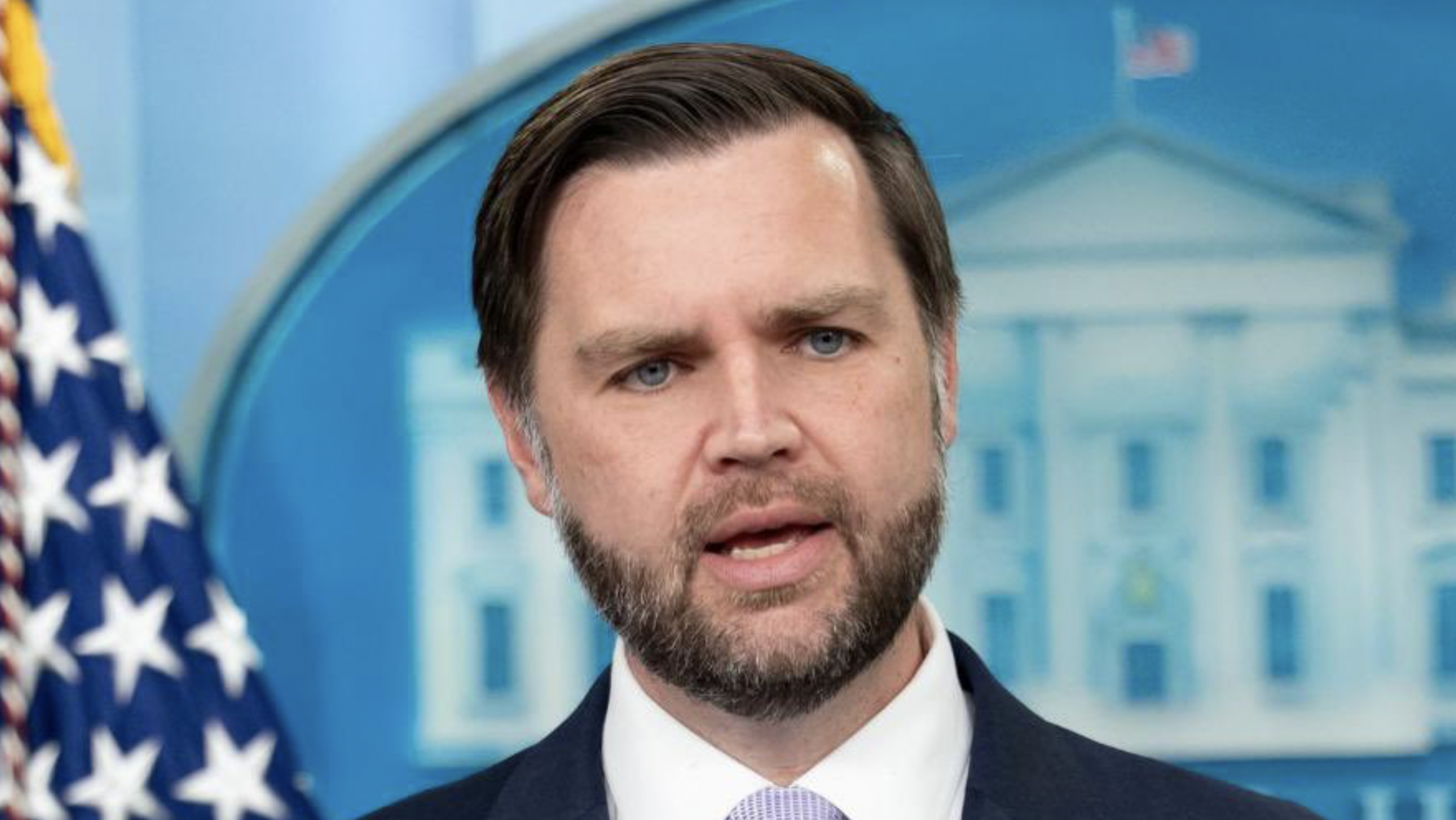

When Vice President JD Vance stood before more than 900 graduating cadets at the United States Air Force Academy on Thursday, he told them he had watched corporate executives attempt to discuss artificial intelligence at graduation ceremonies across the country — and get booed for it. He acknowledged that Americans have real and understandable anxieties about AI: how it will affect jobs, how it will reshape society, how it will change the way people interact with one another. Then he told the new officers that none of that was what kept him up at night. “The thing I worry about most with AI,” Vance said, “is how it will change warfare.”
It was the most pointed moment in an address otherwise filled with warmth, humor, and tributes to American military tradition. And it landed against a backdrop that makes the concern far from abstract. The military the new officers are joining is in the midst of one of the most aggressive artificial intelligence integration campaigns in its history — one that the Department of War’s own documents describe not as a measured evolution, but as a race. In a January 2026 memorandum, the Secretary of War directed the entire Department to accelerate military AI dominance by becoming an “AI-first” warfighting force across all components, stating that “AI-enabled warfare and AI-enabled capability development will redefine the character of military affairs over the next decade” and that the transformation “is a race — fueled by the accelerating pace of commercial AI innovation.”
Vance’s worry is rooted in something the Pentagon’s own doctrine acknowledges directly: that as AI takes on greater roles in targeting, decision support, and autonomous systems, the question of who — or what — ultimately controls the use of lethal force becomes harder to answer. The vice president framed that question in moral terms at the commencement. “One of the things that makes Americans unique, that makes you as war fighters unique, is that we wage war justly,” he told the graduates. “You are the ones who execute. You are the ones who lead on the battlefield. You are the ones who ensure that our lethality in war, which is amazing and necessary, also coexists with our heart and with our conscience.” His conclusion was unambiguous: “If the warfare of the future is to live up to the moral values of our ancestors, decisions over life and death must be made by humans and not machines.”
The challenge is that adversaries are not waiting. The Air Force’s own doctrine, updated in April 2025, assessed that both China and Russia are aggressively wagering on AI for military applications — with China accelerating efforts to become an “intelligentized” force optimized by human-machine teaming, investing in autonomous vehicles, intelligent robotic systems, and AI-driven command decision-making, logistics, cyber operations, swarms, and missile guidance, while Russia is integrating AI into its doctrine and making significant advances in unmanned aerial vehicles, autonomous ground vehicles, and electronic warfare systems. At China’s Zhuhai Airshow in late 2024, defense manufacturer Norinco unveiled an AI-enabled synthetic brigade combining advanced armored vehicles, swarming drones, loitering munitions, and electronic warfare tools into a single integrated combat unit.
That competitive pressure is reflected directly in the speed and scale of the U.S. military’s own AI push. The Department of War’s January 2026 AI strategy outlined seven “Pace-Setting Projects,” including a program called Agent Network — described as unleashing AI agent development and experimentation for AI-enabled battle management and decision support, spanning from campaign planning to kill chain execution — and Swarm Forge, a competitive mechanism to discover, test, and scale novel ways of fighting with and against AI-enabled capabilities. The memo declared flatly that the risks of not moving fast enough outweigh the risks of imperfect alignment, a posture that encapsulates the very tension Vance was speaking to from the podium.
The question of how much human judgment must remain in the loop over lethal force is one the U.S. government has been grappling with for years without fully resolving. Department of Defense Directive 3000.09, the foundational U.S. policy on autonomous weapons systems, requires that they be designed to allow commanders and operators to exercise appropriate levels of human judgment over the use of force. But the directive does not define what “appropriate” means in practice, and the line between human-supervised and fully autonomous engagement has grown increasingly difficult to draw as systems become more capable and operational tempos faster. Senior Pentagon officials have acknowledged that the United States may be compelled to develop fully lethal autonomous weapons systems if competitors choose to do so first — a logic of mutual escalation that, if left unchecked, pushes the moral question Vance raised ever further into the background.
A 2024 RAND Corporation report found that AI military systems could increase the risk of unintended conflict precisely in scenarios where there is no human judgment involved — the scenario Vance was directly warning against. The concern is not hypothetical. As autonomous systems take on targeting roles at speeds far beyond human reaction times, the margin for moral deliberation — the space where a war fighter’s conscience, as Vance described it, coexists with their lethality — can effectively disappear. That is the specific erosion the vice president was asking the new officers to resist.
Army acquisition officials, writing in early 2026, described modern warfare as a high-stakes game of speed chess in which AI has become a cornerstone of military operations, influencing everything from strategic-level decision-making to tactical execution — and noted that the ethical implications of military AI extend well beyond lethal autonomous weapons to cover decision-support systems, intelligence analysis, and predictive logistics. The breadth of that integration is precisely what makes Vance’s warning difficult to operationalize. Telling a new officer to never submit to technology is a clear moral directive. Telling that same officer which specific AI system crosses the line — at what point a recommendation becomes a command, or a decision-support tool becomes a decision-making one — is a question the military is still working out in real time.
Vance acknowledged that AI’s impact on the battlefield will not be uniformly negative. “AI will inevitably change warfare,” he said. “And of course, as you’ve learned over the last four years, it already has.” He told the graduates that the technology will transform the battlefield in some ways positively, in some ways not — and he asked them to engage with that transformation with clear eyes and a protective instinct toward their own authority. “As AI transforms the battlefield, I ask that you be jealous and selfish about your role as the decision maker in warfare,” he said. “Use technology to make you better, but never submit to it.”
The vice president grounded his argument in an appeal to both faith and philosophy, citing a recent document from Pope Leo XIV urging humanity not to outsource its most important moral decisions to digital technology. It was a notable invocation at a military commencement — a signal that Vance views the question not merely as a matter of doctrine or policy, but of civilization. U.S. Army research has noted that AI weapons systems use computer algorithms to attack targets without the manual control of a human operator, and that the integration of AI into autonomous weapons systems enables lower-echelon units to deliver lethal fires more quickly, with greater precision, over longer distances — capabilities that, unchecked by human conscience, carry the potential for escalation that no algorithm can fully anticipate or prevent.
The graduates Vance addressed Thursday commissioned as officers in the United States Air Force and United States Space Force at Falcon Stadium in Colorado Springs, in the Academy’s 68th commencement ceremony. They will enter a force that is simultaneously racing to embrace AI and, through its own doctrine, trying to ensure that embrace never fully displaces the human beings who carry the moral weight of its use. That balance is exactly the one Vance urged them to protect — not as a philosophical exercise, but as the defining professional obligation of their careers. “You are the masters of warfare,” he told them, “and both your minds but also your hearts are the opposite of artificial.”

 By
By



 By
By