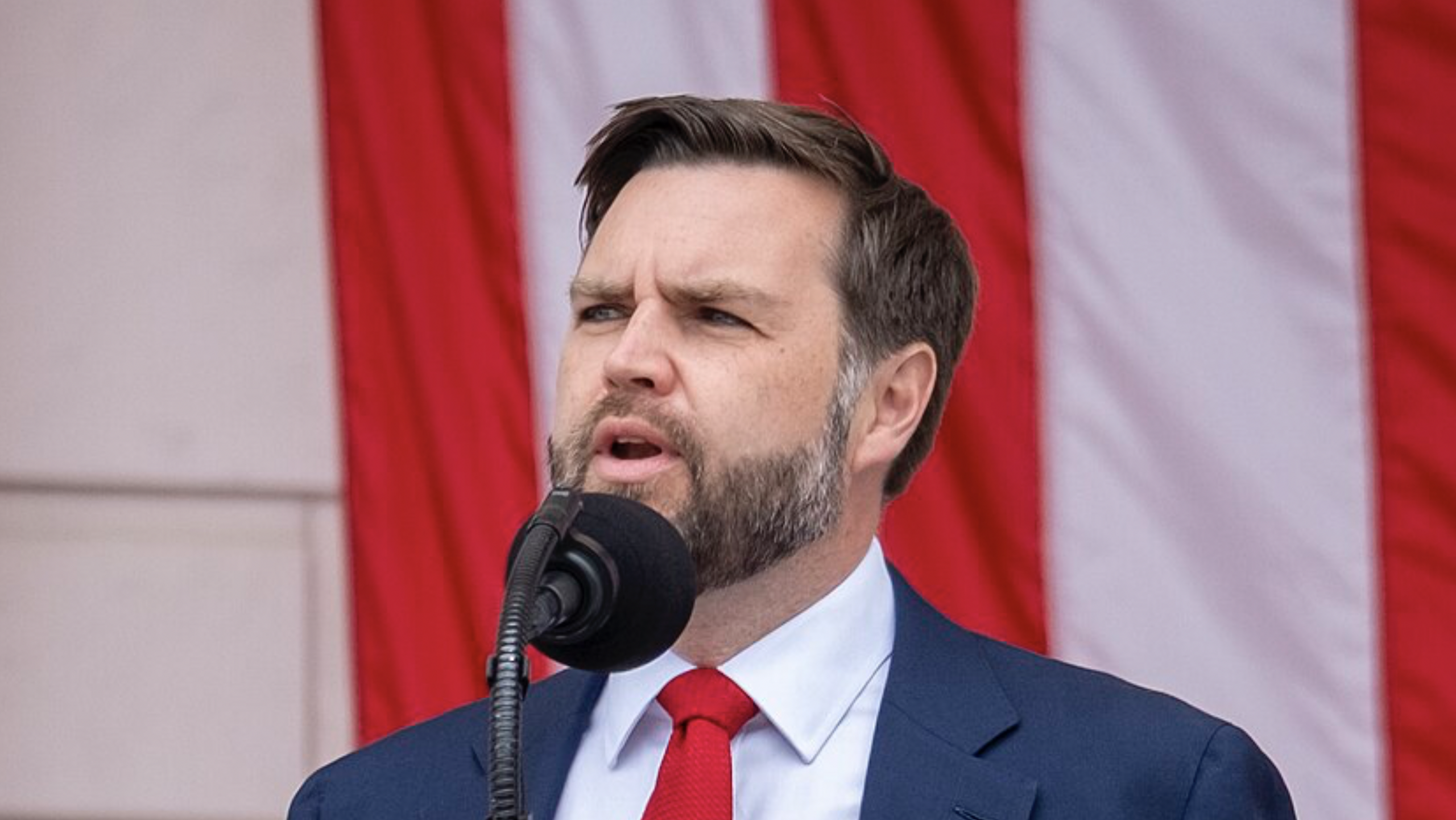

Vice President JD Vance stood before more than 900 graduating cadets at the United States Air Force Academy on Thursday and delivered an address that ranged from battlefield heroism to artificial intelligence, from gratitude for military families to a pointed warning about the future of war — all in service of one central message: the nation believes in the officers it is commissioning, and those officers must now carry the weight of that belief into an era unlike any that came before it.
The ceremony, held at Falcon Stadium in Colorado Springs, marked the Academy’s 68th commencement, with more than 900 cadets commissioning as officers in the United States Air Force and United States Space Force. For Vance, the address carried particular personal resonance. A Marine Corps veteran himself, the vice president noted at the outset that many of the people who make his daily work possible — the crews of Air Force Two, the staff at the vice president’s residence, the officer who delivers his daily intelligence briefing — are airmen and guardians. “Without fail, they are skilled and brilliant and professional and kind — the very best of us,” he told the graduates. “Just like you.”
Vance opened with humor and warmth, granting amnesty to all cadets serving restrictions and confinements for category one and two offenses, and calling out a group of cadets responsible for releasing a herd of wild hogs near Fairchild Hall — noting dryly that the few hands that cautiously went up in response were “the future politicians.” He also announced that he had hired a member of the graduating class, Cadet Tang, for a summer internship. “Consider this your very first meeting with the new boss,” Vance told the cadet. “Congratulations. Don’t screw it up.”
But beneath the lightness, Vance moved quickly into the serious reality confronting the new officers. He told them they were graduating into an era of profound unpredictability, invoking the military axiom that no plan survives first contact with the enemy — and expanding it well beyond battlefield tactics. “People like predictability. We like systems and routines and plans because they create the feeling that the future has already been negotiated on our behalf,” he said. “But then something crazy happens. It’s called reality.” He told the graduates that adversaries study this country every single day — its military doctrine, its industrial capacity, its political divisions, its attention span. “And new graduates, they are studying you.”
The vice president spent considerable time honoring the recent operational record of the Air Force and Space Force, offering the graduating class a window into the kinds of missions their predecessors had already accomplished under his watch. He described in vivid detail a rescue operation involving the 494th Fighter Squadron, in which two pilots were downed in Iran. For a period following the second pilot going down, Vance said, there was genuine fear that the airman had not survived. Then came what he described as a moment of joy, followed immediately by the reality that an American pilot was behind enemy lines. “Your Air Force went in there and did the impossible,” Vance said. “Sent airplanes into places where no one thought they could land. Assembled helicopters on site and went and retrieved an American pilot behind enemy lines. One of the most daring and amazing things that I have ever seen.”
Vance told the graduates he had never shared one detail of that operation publicly before: that at a critical moment in the mission, when senior leaders in a secured conference room were quietly asking whether it would succeed, it was Chairman of the Joint Chiefs of Staff General Dan Kaine who spoke up. “Mr. President, Mr. Vice President, we’ve hit some snags, but I promise you we’re still going to get everyone out alive,” Vance recalled Kaine saying. “So smooth. So confident.” The rescue succeeded. “What we learned is that sometimes plan A doesn’t always work out. Sometimes plan B doesn’t always work out. But the reason why the Air Force and the Space Force are so powerful is because they go from plan A to plan B to plan C and they execute time and time again.”
That legacy of adaptability, Vance argued, defines not only the Air Force’s recent history but its entire lineage — from the skies over occupied Europe, to Mig Alley in Korea, to the long years of combat over Vietnam, Iraq, and Afghanistan. He told the graduates they were now the latest members of what he called the strong blue line, inheriting a tradition they had a responsibility to both protect and build upon for the next generation. “This tradition will very soon become your very own,” he said. “Something that gives you credibility. Something that people look to you and say, ‘You’ve got to be impressive because you’ve got on that beautiful uniform.'”
The vice president made clear that the civilian leadership’s commitment to those in uniform is not rhetorical. He pointed to the administration’s advancement of the F-47 and the Golden Dome missile defense system, its push to increase the defense budget to $1.5 trillion, and its investments in military pay raises, new barracks, hospitals, and on-base schools. “We want you to be supported so that you can focus on the fight and focus on winning,” he said. He also cited extraordinary recruitment numbers across the Air Force and Space Force as a source of particular pride for the administration. “The men and women you will lead are passionate. They are ready to go. They are excited to serve, and they will look to you for the leadership of the future.”
The class of 2026 was recognized as having the highest average GPA of any graduating class in 20 years and the highest physical fitness scores in over a decade, with five cadets absent from the ceremony to compete in the NCAA Track and Field Championships. The graduating officers will serve a minimum of five years after commissioning in the Air Force or Space Force.
Vance then turned to the subject that he said represented his deepest concern about the era these officers are entering: artificial intelligence and its growing role on the battlefield. He acknowledged that AI makes many Americans anxious for reasons that have nothing to do with warfare — jobs, social dynamics, the distribution of resources — but said his own worry runs deeper. “The thing I worry about most with AI is how it will change warfare,” he told the graduates. He called on them to protect their role as the ultimate decision-makers in any conflict, framing it in terms of conscience and moral responsibility. “If the warfare of the future is to live up to the moral values of our ancestors, decisions over life and death must be made by humans and not machines,” he said.
The vice president grounded that appeal in both religious and philosophical terms, endorsing a recent message from Pope Leo XIV warning against allowing digital technology to take over humanity’s most consequential moral decisions. He told the graduates that what makes American war fighters unique is not just their capability, but their character — the fact that lethality on the battlefield coexists, by design and by training, with heart and conscience. “I ask that you be jealous and selfish about your role as the decision maker in warfare,” he said. “Use technology to make you better, but never submit to it. You are the masters of warfare, and both your minds but also your hearts are the opposite of artificial.”
In his closing remarks, Vance acknowledged that the graduating class is entering a world that has changed enormously even over the four years they spent at the Academy. He noted that the United States is weeks away from celebrating the 250th anniversary of its founding — and that with commissioning, the duty to preserve and extend that civilization now falls to the new officers. The commencement ceremony concluded with a flyover by the Air Force Thunderbirds. “Your country is asking a great deal from you,” Vance told the graduates. “But it would not be asking it if we didn’t believe that you were capable of carrying that duty every single day.” He closed with a direct message from both himself and the president: “I am proud of you. I love you, and I’ll be rooting for you every single step of the way.”

 By
By

 By
By