
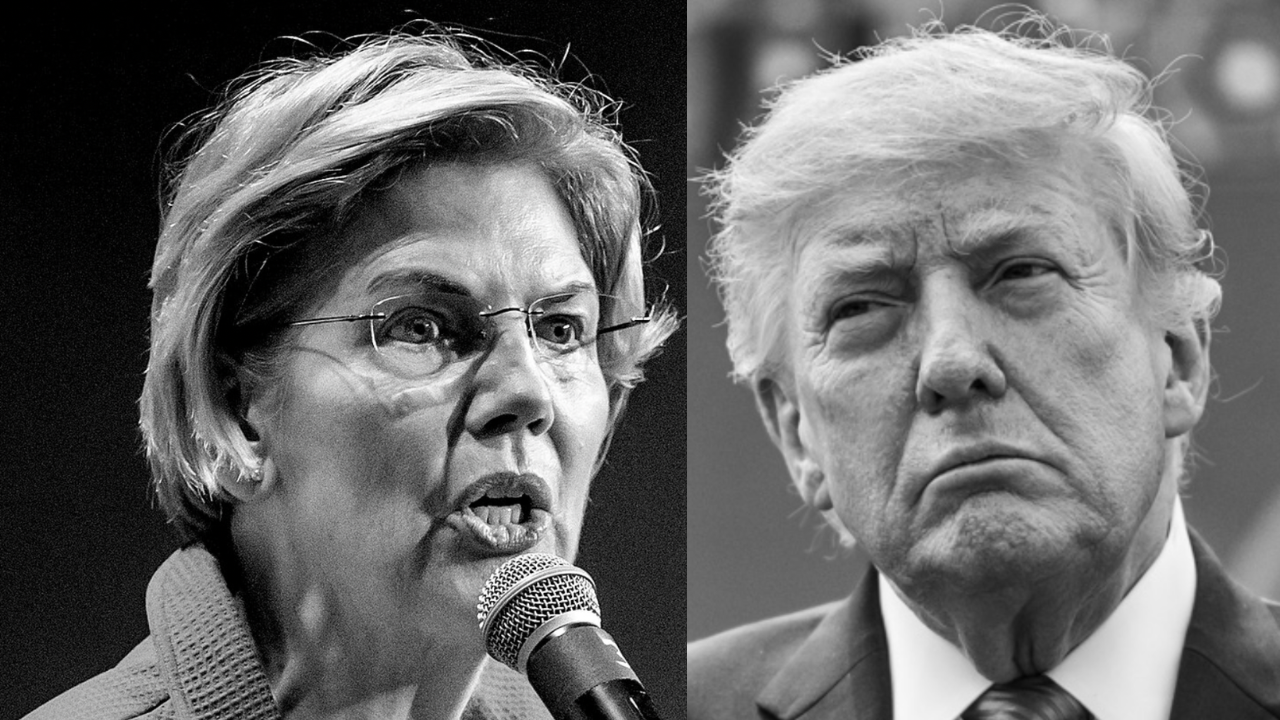

WASHINGTON, May 27, 2026 — Sen. Elizabeth Warren, D-Mass., introduced new anti-corruption legislation Tuesday targeting President Donald Trump’s stock trading activity, declaring that the president “should not financially benefit from the very government he controls” and expressing disbelief that such a principle needs to be codified into law.
“I can’t believe I have to say this: The President should not financially benefit from the very government he controls,” Warren wrote on X. “I’ve got a bill to stop Trump’s corruption.”
The bill, S. 4299, was introduced Tuesday in the 119th Congress and represents Warren’s latest legislative effort to address what she and other Democrats have described as an unprecedented pattern of financial self-dealing by the current administration.
Warren’s History on Presidential Corruption
Warren has been building toward this legislation for months. In April 2026, she introduced the Ban Presidential Plunder of Taxpayer Funds Act alongside Senate Majority Leader Chuck Schumer, Rep. Jamie Raskin, and Rep. Dave Min — targeting Trump’s use of the Justice Department to settle personal lawsuits at taxpayer expense. That bill cited Trump’s October 2025 attempt to extract $230 million from the DOJ to settle claims challenging investigations into his alleged coordination with Russia, and a January 2026 lawsuit against the IRS seeking $10 billion in damages over an employee’s unauthorized release of his tax data.
Also in April, Warren pressed Defense Secretary Pete Hegseth at a Senate Armed Services Committee hearing on allegations that Trump administration officials were engaging in possible insider trading by placing bets on the Iran War through prediction markets — a practice she called a direct conflict of interest for officials with advance knowledge of military decisions.
In May, Warren and Sen. Rick Scott, R-Fla., introduced a bipartisan bill to impose a lifetime lobbying ban on former members of Congress — another piece of what Warren has described as a comprehensive anti-corruption agenda.
The Stock Trades Driving the Legislation
S. 4299 arrives as Trump’s stock trading activity has drawn intense bipartisan scrutiny. Disclosures filed May 14 with the U.S. Office of Government Ethics show Trump made more than 3,600 individual trades in the first quarter of 2026, collectively worth between $211 million and $687 million — in companies including Nvidia, Palantir, Eli Lilly, Axon, Microsoft, Amazon, and Boeing.
Several trades coincided directly with favorable regulatory decisions by Trump’s own administration. Trump purchased Nvidia stock one week before the Commerce Department approved Nvidia chip sales to China. He bought Palantir stock while Palantir was negotiating a billion-dollar DHS deportation contract. He bought Axon shares before ICE outlined a $220 million Taser contract. He bought Eli Lilly stock as CMS advanced a Medicare program for Lilly’s GLP-1 obesity drugs. The disclosure forms bear Trump’s own signature, according to KFF Health News.
Trump has also been fined $200 — the third time — for disclosing tens of millions in Microsoft and Amazon trades months after the legal 45-day deadline. His full 2025 annual financial disclosures, due in mid-May, were delayed 45 days after Trump and Vice President JD Vance both requested extensions.
A Moment of Rare Bipartisan Agreement — and Its Limits
At his State of the Union address in February 2026, Trump himself called on Congress to ban members from trading on insider information — prompting a rare moment of Democratic applause that visibly surprised him. “Let’s also ensure that members of Congress cannot corruptly profit from using insider information,” Trump said. Warren was among those who stood and applauded.
Trump appeared taken aback. “Did Nancy Pelosi stand up?” he quipped. “Doubt it.” He then urged Congress to pass the Stop Insider Trading Act “without delay” — a bill that would ban congressional stock trading but does not cover the president or vice president.
That distinction is precisely what Warren’s new bill targets. The president is not covered by the Stop Trading on Congressional Knowledge Act of 2012 and faces no statutory prohibition on trading individual securities while in office — a gap Warren has argued S. 4299 is designed to close.
A Growing Democratic Chorus
Warren’s bill arrives alongside a wave of Democratic legislative and rhetorical action on Trump’s stock trades. Sen. Mark Kelly introduced the Ban Congressional Stock Trading Act covering both Congress and the executive branch. Rep. Melanie Stansbury vowed the trades “will be investigated.” Sen. Alex Padilla called Trump “the most corrupt president in our history.” Hillary Clinton called the trades “textbook corruption.” Gov. Gavin Newsom called them “the same kind of corruption Trump said he’d fight against.”
Rep. Daniel Goldman, D-N.Y. — who served as lead counsel in Trump’s first impeachment — framed the stock trading as one of three core motivations for Trump’s presidency alongside avoiding prison and exacting revenge on enemies. Rep. Ilhan Omar called it unacceptable that elected officials are “getting rich off the backs of the American people while having access to insider information.”
Vice President Vance defended the trades at a White House briefing Monday, saying Trump “has independent wealth advisors who manage his money” and is “not sitting on his Robinhood account.” Vance also said “nobody should be taking proprietary information gained from public service and buying and selling stocks” — while defending the administration’s position that Trump’s trades do not constitute that practice.
Warren, for her part, has been saying that for years. “No one in this country should wonder whether or not their senator, their representative, and president is making a decision that is good for the country — or maybe just good for their own private portfolio,” she said last year. Tuesday’s bill was her attempt to make that principle the law.


 By
By


 By
By