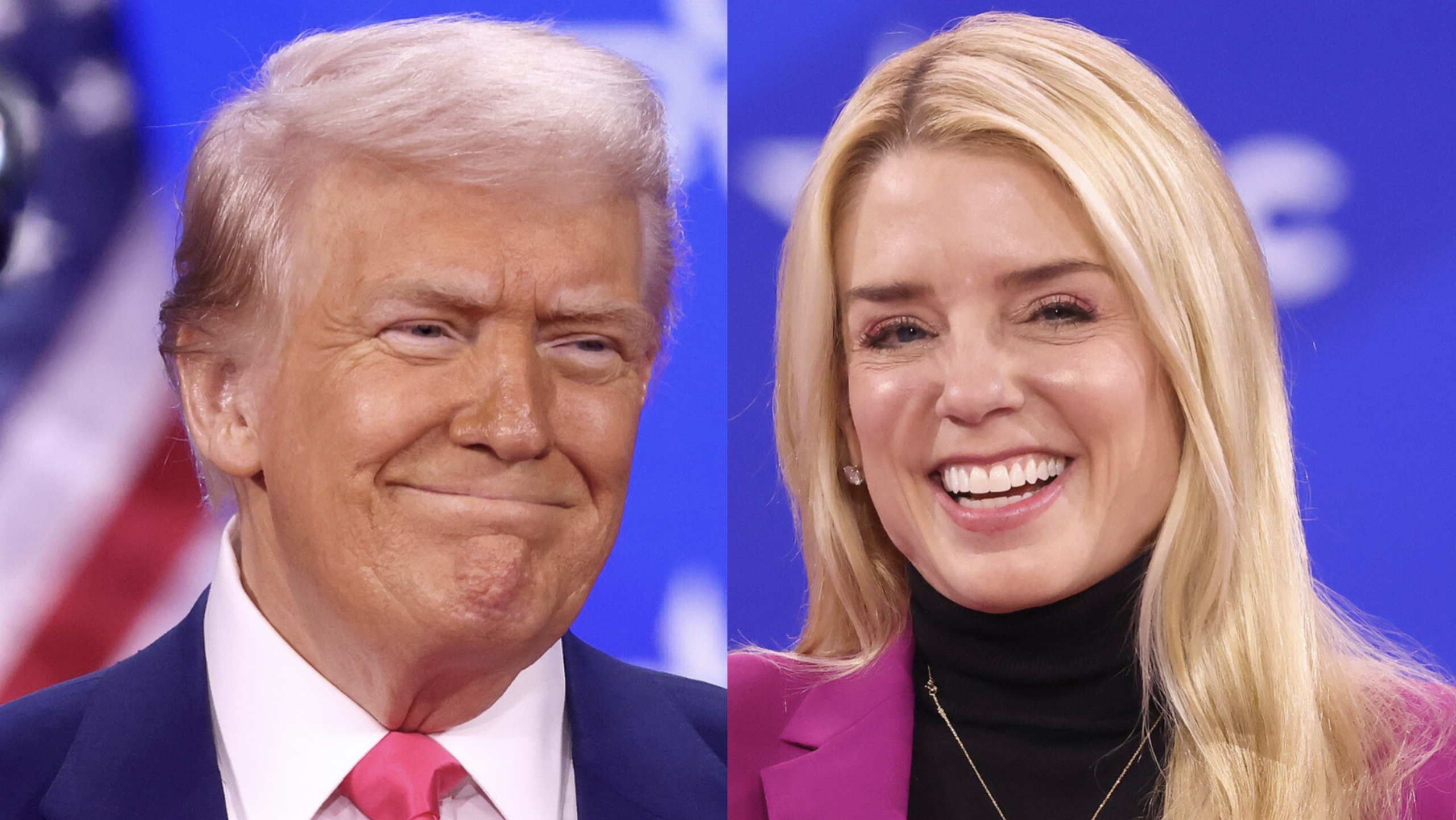

President Donald Trump has appointed former Attorney General Pam Bondi to the Presidential Council of Advisors on Science and Technology (PCAST), the White House’s premier advisory body on artificial intelligence and emerging technology policy, according to a report by Axios on Tuesday. The move places Bondi alongside some of the most powerful names in the global technology industry — including Meta CEO Mark Zuckerberg, Nvidia co-founder Jensen Huang, and Oracle co-founder Larry Ellison — just weeks after she was ousted from the Justice Department.
A Seat at the Table With Silicon Valley’s Elite
PCAST was reestablished by executive order on January 23, 2025, as one of the Trump administration’s early signals that artificial intelligence and emerging technology would be central priorities of the presidency. The council is mandated to provide evidence-based recommendations to the president and is designed to increase information-sharing between the federal government and the private sector in order to bolster American innovation and strengthen the nation’s global standing in science and technology. It can include up to 24 members drawn from industry, academia, and beyond.
The council is co-chaired by Michael Kratsios, director of the White House Office of Science and Technology Policy, and David Sacks, the former White House AI and Crypto Czar who transitioned into the PCAST co-chair role in March 2026 after exhausting his 130-day limit as a special government employee. “I think moving forward as co-chair of PCAST, I can now make recommendations on not just AI but an expanded range of technology topics,” Sacks told Bloomberg Television at the time of his transition.
The Council’s Roster
When Trump formally announced the first 13 PCAST members on March 25, 2026, the roster read like a who’s-who of the technology world. Members include Nvidia CEO Jensen Huang, Meta CEO Mark Zuckerberg, Oracle executive chairman Larry Ellison, Alphabet co-founder Sergey Brin, Dell Technologies CEO Michael Dell, AMD CEO Lisa Su, venture capitalist Marc Andreessen of Andreessen Horowitz, and Coinbase co-founder Fred Ehrsam, among others. The White House noted at the time that additional members would be appointed, with Bondi now among those joining the panel.
Sacks, describing the council’s composition, called it a group with “the most star power of any group like this that has been created.” The council’s mandate spans not only artificial intelligence but also quantum computing, advanced biotechnology, and other critical emerging technologies the administration has identified as essential to maintaining American global leadership.
Bondi’s Role on the Council
According to Axios, Bondi will be specifically charged with facilitating coordination between the federal government and the technology executives sitting on the panel — a bridging role that draws on her legal and governmental background rather than a technical one. She will also serve in a newly established advisory capacity focused on national infrastructure.
Vice President JD Vance offered an endorsement of the appointment in a statement. “Pam has been an enormously valuable asset to the president’s team, and I’m thrilled for her and for all of us that she’s going to remain involved in confronting some of the most important issues the administration faces,” Vance said.
From the Justice Department to a New Chapter
Bondi’s appointment to PCAST comes nearly two months after Trump removed her as attorney general on April 2, 2026 — a firing that ended her 14-month tenure atop the Justice Department. Trump announced her departure in a Truth Social post, writing that Bondi would be “transitioning to a much needed and important new job in the private sector” and calling her “a Great American Patriot and a loyal friend.” Deputy Attorney General Todd Blanche was named acting attorney general in her place.
Reports at the time indicated Trump had grown frustrated with Bondi over her handling of the Jeffrey Epstein files, a matter that carried significant political weight given it had been a prominent campaign issue during the 2024 election cycle. Sources also told multiple outlets that Trump felt Bondi had not moved aggressively enough to investigate or prosecute political opponents. Bondi was the second cabinet official Trump removed in the span of a few weeks, following the earlier departure of Homeland Security Secretary Kristi Noem in March.
A Health Battle in the Background
Adding another layer to Bondi’s story, a source told Axios that she was diagnosed with thyroid cancer shortly after departing the Justice Department. She underwent treatment and is currently recovering. The diagnosis had not been previously reported publicly, and no further details on the extent of her treatment were disclosed.
PCAST’s Place in the AI Policy Landscape
The PCAST appointment arrives at a pivotal moment for American artificial intelligence policy. The Trump administration released a national legislative framework for AI on March 20, 2026 — just days before the council’s initial membership was announced — calling for a unified national approach to AI governance and backing a lighter federal regulatory structure over a fragmented state-by-state system. Sacks, who was closely involved in crafting that framework during his time as AI czar, described the policy as designed to ensure “America leads — and wins — in artificial intelligence and other cutting-edge technologies.”
Under Sacks’s earlier tenure, the administration also reversed a series of Biden-era restrictions on AI chip exports, reflecting a broader strategic recalibration in how the U.S. approaches global competition in the semiconductor and AI sectors. Those policy decisions directly affected companies like Nvidia — whose CEO Jensen Huang now sits on the very PCAST panel that Bondi is joining.
Continuity and Coordination
Bondi’s addition to PCAST underscores the administration’s apparent desire to keep her close to the policy table despite her exit from the cabinet. Her specific charge — coordinating between government officials and the assembled tech titans — positions her as a liaison at a moment when the White House is leaning heavily on private sector expertise to shape the country’s technology future. With names like Zuckerberg, Ellison, and Huang on the same council, the stakes of that coordination are considerable.
The White House did not immediately respond to Reuters when reached for comment on the appointment.

 By
By
 By
By