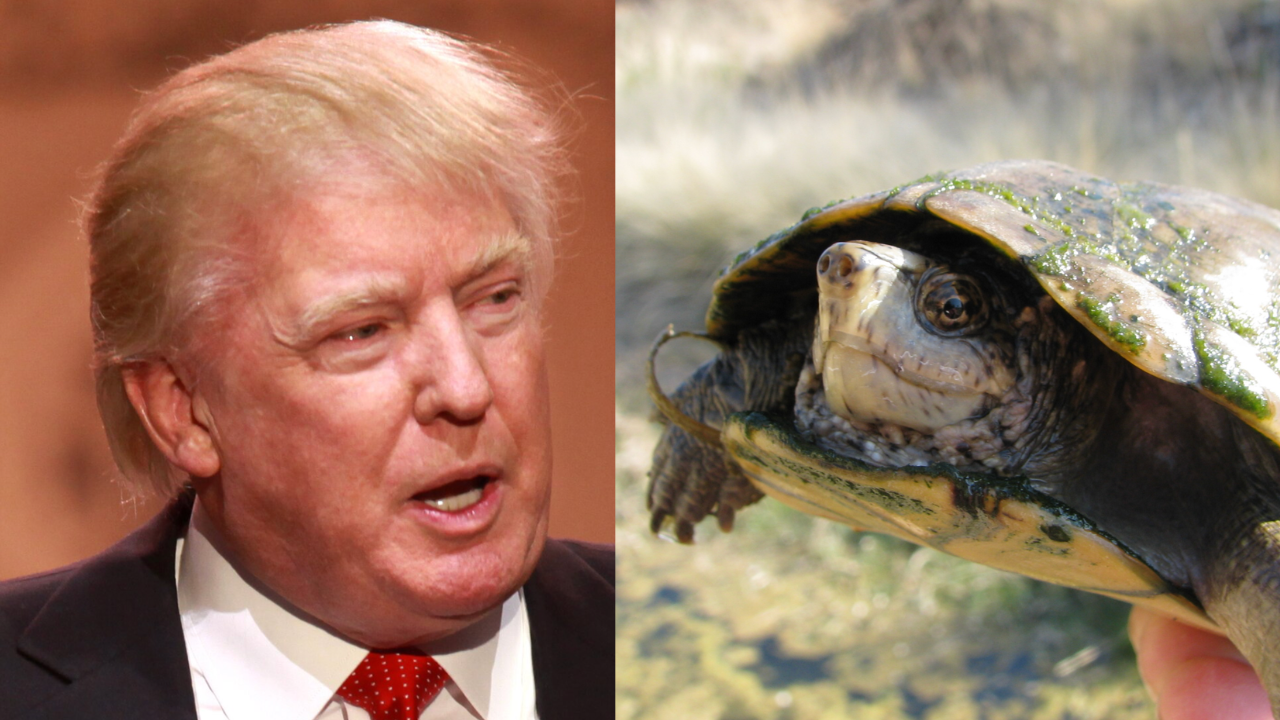

ORGAN PIPE CACTUS NATIONAL MONUMENT, Ariz., May 26, 2026 — An all-volunteer team of biologists is racing to draft an emergency rescue plan for the Sonoyta mud turtle — an endangered freshwater reptile whose entire U.S. population of approximately 250 individuals lives in a single desert spring that sits directly in the path of the Trump administration’s planned second border wall.
The turtle survives in the United States only at Quitobaquito Springs, a remote oasis roughly 170 miles southwest of Tucson inside Organ Pipe Cactus National Monument. Biologists were recently advised that survey work for the secondary wall could begin soon and that a construction contract could follow as early as this summer — a timeline that has pushed the Sonoyta Mud Turtle Recovery Team, led by University of Arizona freshwater biologist Michael Bogan, into emergency mode, according to the Arizona Daily Star.
“It’s insanity,” Bogan told the Arizona Daily Star. “There’s potential that whatever turtles we salvage from Quitobaquito may not be able to go back there for a long time.”
The Species and Its Last Refuge
The Sonoyta mud turtle is an olive-brown freshwater reptile that was listed as endangered by the U.S. Fish and Wildlife Service in 2017 after spending two decades as a candidate species. It is found in the United States only at Quitobaquito Springs and in a handful of shrinking water sources along its mostly dry namesake river in northern Mexico, where the population has declined dramatically.
Quitobaquito is a spring-fed pond that has existed as a desert oasis for thousands of years. According to the National Park Service, the pond and surrounding system support rare and protected species found almost nowhere else on Earth — including the Sonoyta mud turtle, the endangered Sonoyta pupfish, and the Quitobaquito tryonia springsnail, which is currently under consideration for federal endangered species protection. The springs are also sacred to the Tohono O’odham Nation and one of the Sonoran Desert’s few dependable year-round water sources for wildlife.
What the Second Wall Could Do
The Trump administration is planning a secondary border barrier — a second wall running parallel to the existing primary structure — in the area near Quitobaquito. The pond sits approximately 100 yards from the site of the planned construction.
U.S. Customs and Border Protection has said construction will not use groundwater within five miles of Quitobaquito Springs and that it will steer clear of the oasis itself. However, two University of Arizona hydrologists have warned that pumping groundwater from distances greater than five miles could still lower the water level in the pond — and scientists note that construction typically requires large volumes of water for concrete mixing and road dust suppression.
Border wall projects can receive waivers from federal environmental laws, reducing the legal safeguards that would normally require agencies to consult with the U.S. Fish and Wildlife Service before proceeding with construction that could affect a listed species. Waiver authority has been used repeatedly in previous border wall construction to bypass Endangered Species Act requirements.
The Phoenix Zoo, which has been monitoring wildlife corridors near the Arizona-Mexico border for years, warned in May that both the Quitobaquito project and a separate wall project in the Pajarito Mountains west of Nogales could devastate species and fragment critical wildlife corridors, according to KJZZ.
The Emergency Rescue Plan
The Sonoyta Mud Turtle Recovery Team has shifted from long-term recovery planning to emergency salvage preparation. Bogan’s plan outlines responses calibrated to different levels of disturbance at Quitobaquito — ranging from increased truck traffic nearby to catastrophic failure of the spring dam.
For moderate or short-lived disruptions, the plan calls for capturing approximately 50 turtles and holding them on site in temporary facilities. In the event of catastrophic damage — including failure of the spring or a sudden drop in the pond’s water level — the team would attempt to collect the entire U.S. population of approximately 250 turtles and transfer them to off-site holding facilities at the Arizona-Sonora Desert Museum and the Phoenix Zoo, according to the Arizona Daily Star.
The team is entirely volunteer-based — composed of university researchers, students, and citizen scientists. Rep. Adelita Grijalva, D-Ariz., who represents the district encompassing Organ Pipe Cactus National Monument and sits on the House Committee on Natural Resources, has questioned Interior Secretary Doug Burgum about the federal government’s plans to protect Quitobaquito and called the situation an indictment of the administration’s priorities.
“It shouldn’t be on scientists, students, and volunteers to run emergency rescue missions because the Trump administration is bulldozing protected ecosystems,” Grijalva wrote on X.
A Sacred Site at Risk
Beyond its ecological significance, Quitobaquito holds deep cultural importance. The springs are sacred to the Tohono O’odham Nation, whose ancestral territory spans the Arizona-Sonora border. The Hia-Ced O’Odham people have also maintained a spiritual connection to the site for centuries.
The National Park Service describes Quitobaquito as “one of the most significant sites in the Sonoran Desert” and notes it has been a stopping point for travelers, traders, and wildlife for thousands of years. The first border wall construction through Organ Pipe in 2020 drew widespread condemnation from tribal leaders, conservationists, and Democratic lawmakers — including Raúl Grijalva — who argued the project used emergency waiver authority to bypass both environmental and cultural protections.
The second wall, if built, would bring construction even closer to the pond itself.

 By
By


 By
By