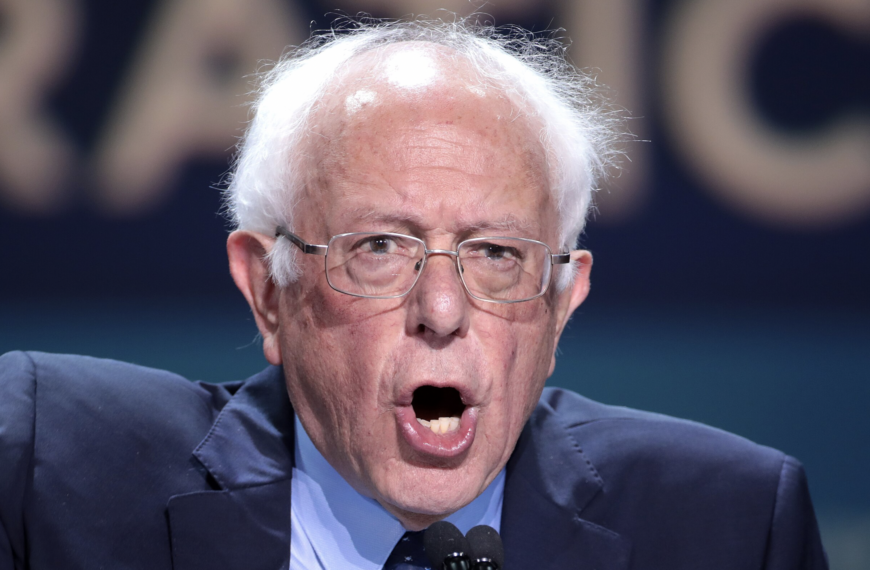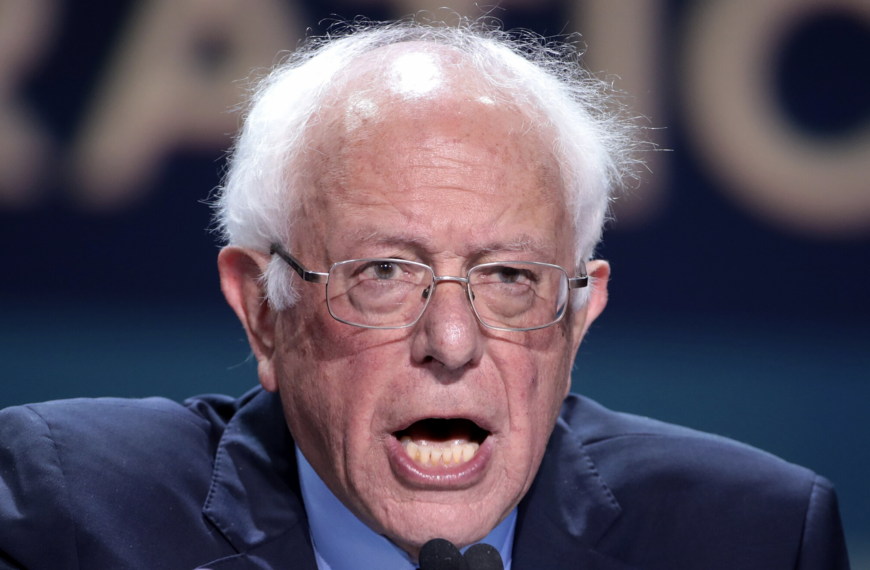
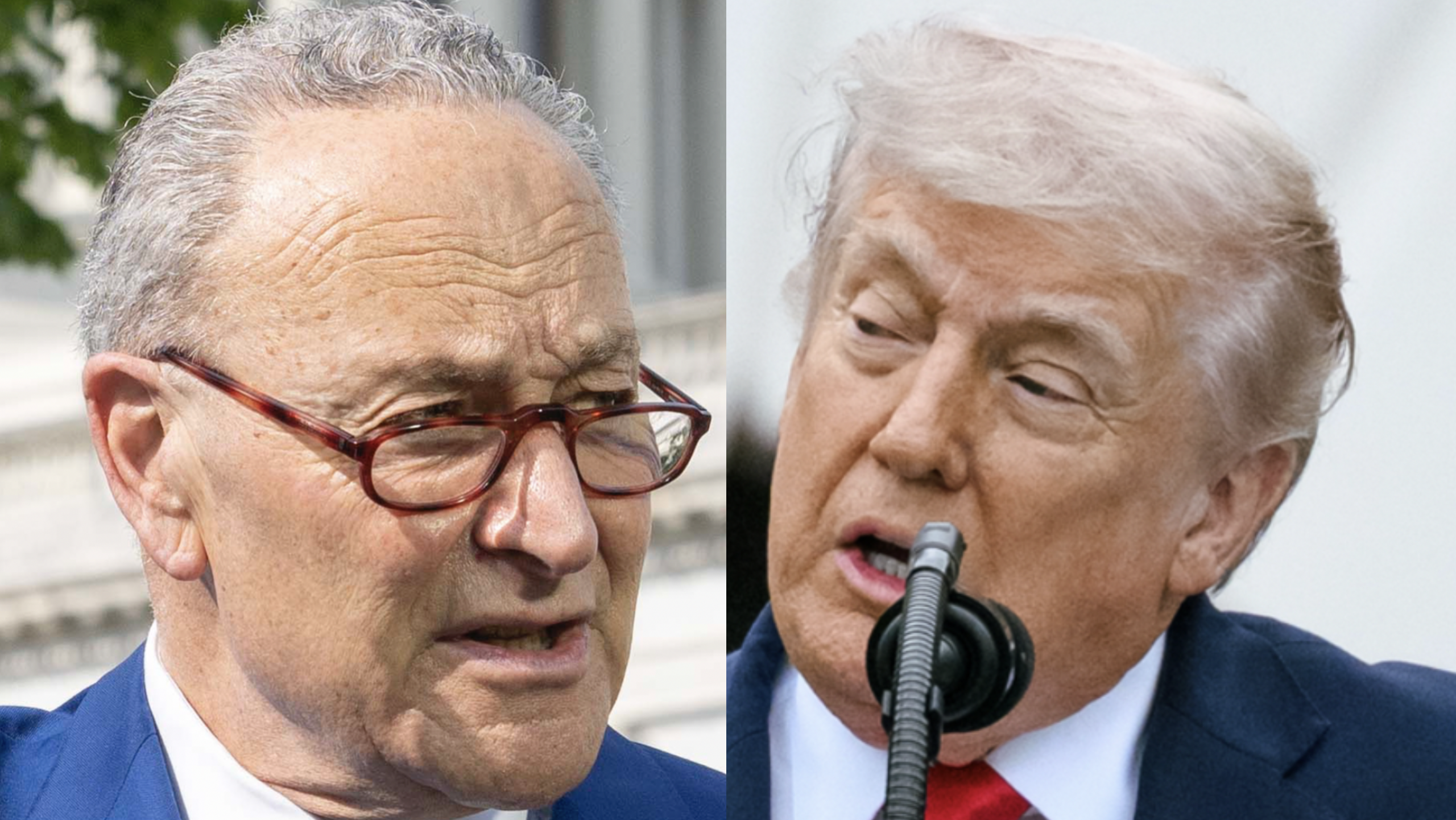

WASHINGTON, May 18, 2026 — Senate Minority Leader Chuck Schumer took to X Sunday in a blistering condemnation of President Donald Trump’s recently disclosed stock trading activity, calling it blatant criminal insider trading carried out in full public view while everyday Americans continue to absorb rising costs. The post was direct and unsparing.
“Donald Trump is engaging in insider trading in broad daylight,” Schumer wrote. “3700 stock trades. $750 million. Just in 2026 alone. As he fights for a gold-plated, taxpayer-funded ballroom instead of any relief for Americans’ rising costs.”
The statement arrives days after the U.S. Office of Government Ethics quietly released a pair of OGE Form 278-T reports on May 14, spanning more than 100 pages and disclosing more than 3,700 individual stock and bond transactions executed between January and March 2026 — an average of nearly 40 trades every single market day, with a cumulative value estimated between $220 million and $750 million. The sheer scale of the disclosures immediately ignited calls for accountability from Democratic lawmakers across Congress.
At the center of the controversy is the heavily tech-weighted composition of Trump’s disclosed portfolio. Trump’s biggest purchases and sales skewed toward the tech sector, with large purchases including securities of ServiceNow, Nvidia, Adobe, Microsoft, Oracle, Broadcom, Motorola, Amazon, Texas Instruments, and Dell. For a senator whose constituency includes New York’s massive financial and technology industries, the overlap between those holdings and active White House policy was impossible to ignore.
The timing of specific trades is what has drawn the most pointed scrutiny. Trump bought between $500,000 and $1 million worth of Nvidia stock one week before the Commerce Department officially approved the sale of some Nvidia chips to China. Schumer himself had already called out the Nvidia chip approval as a national security risk, writing on X just days earlier that “giving China access to this premier US technology is dangerous and threatens our lead in the AI race that will shape the global economy for decades.” The disclosure that Trump held a significant Nvidia position just before greenlighting those chip sales added a sharply personal dimension to that critique.
The trades extended far beyond Nvidia. On February 10, 2026, Trump-affiliated accounts purchased $1 million to $5 million worth of Dell Technologies shares — a buy that predates Trump’s public endorsement of Dell hardware products at a White House event in early May. Trump also increased his stake in Intel through a series of purchases starting in early March 2026, after the U.S. government decided to acquire a significant equity stake in Intel at the end of 2025. Several of those Intel transactions were marked as “unsolicited,” meaning they were reportedly initiated by brokers, though the designation has raised questions of its own.
The filings do not specify whether Trump directed the trades. His personal assets and business empire are actively run and managed by his sons Donald Trump Jr. and Eric Trump, but some entries also indicate broker involvement. The White House, for its part, has maintained that the president has no role in any investment decisions. “President Trump’s investment holdings are maintained exclusively through fully discretionary accounts independently managed by third-party financial institutions with sole and exclusive authority over all investment decisions,” a spokesperson said, adding that “neither President Trump, his family, nor The Trump Organization plays any role in selecting, directing, or approving specific investments.”
Despite that explanation, Schumer’s post framed the trading as inseparable from Trump’s simultaneous exercise of presidential power — a pattern critics argue is exactly what insider trading laws were designed to prevent. Schumer has previously warned that “when people on the inside can profit from what they know before the public knows it, we have a serious problem,” and that such activity “puts our democracy at risk.” That concern has only intensified now that the scale of the trading activity has been made public.
Schumer’s post also drew an explicit contrast between the magnitude of Trump’s financial activity and the lack of any corresponding relief for American households. The reference to a “gold-plated, taxpayer-funded ballroom” points to the ongoing controversy over Trump’s White House East Wing renovation. Trump repeatedly said the ballroom would be paid for solely through private donations and that “not one penny is being used from the federal government” — but the gleaming 90,000-square-foot space may ultimately leave taxpayers on the hook for $1 billion, due to new security enhancements tied to the project. The cost has since soared to $400 million, with Republicans in Congress weighing a request for an additional $220 million in taxpayer funding for security upgrades within a broader $1 billion funding request.
Schumer is not the first lawmaker to sound the alarm over Trump’s market activity in 2026. Rep. Melanie Stansbury, D-N.M., wrote on X Friday that it “[l]ooks like potential insider trading to us” and declared that the trading “will be investigated.” Schumer and Sen. Elizabeth Warren previously sent a letter to the SEC requesting that it determine whether Trump, members of his cabinet, or other administration officials engaged in insider trading, market manipulation, or other securities laws violations.
Legally, the situation remains complex. U.S. presidents are not covered by the STOCK Act, which governs members of Congress, and face no statutory prohibition on trading individual securities while in office. However, traditional insider trading law under Section 10(b) of the Securities Exchange Act of 1934 and SEC Rule 10b-5 prohibits trading on material non-public information by any person — including the president. Whether trades executed while the administration was simultaneously making policy decisions affecting the same companies would meet that legal threshold remains a question for investigators. No charges have been made or proven acts of insider trading outlined, but the revelation draws significant ethics scrutiny and a renewed push for trading restrictions.
There is also an ongoing debate over whether any ban should extend beyond Congress to include the president and vice president, with some Democratic-backed proposals applying restrictions to the executive branch partly in response to concerns surrounding Trump’s trading disclosures. Several proposals have advanced through committee or gained enough support to potentially reach the House floor, but no comprehensive ban has yet become law. Schumer’s post on Sunday did not specify what investigative body he believes should act or under what authority — but the message was clear: in his view, what has been disclosed is not a gray area.

 By
By

 By
By