
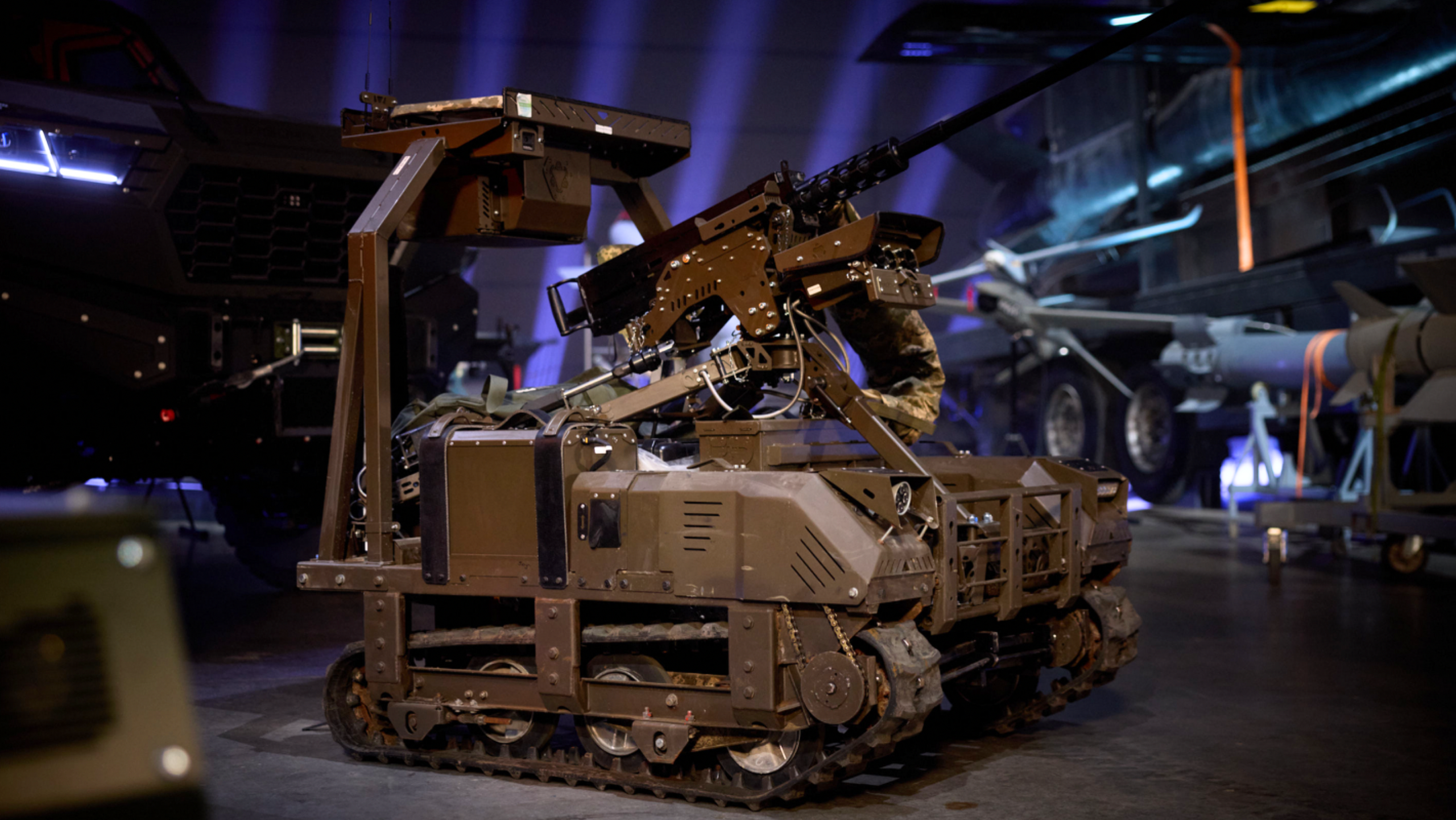

Volodymyr Zelenskyy used a series of posts on X on April 13, 2026, to outline what he described as a turning point in modern warfare, highlighting the expanding role of unmanned and robotic systems on the battlefield. Drawing from a broader address marking Ukraine’s Arms Makers’ Day, Zelenskyy pointed to recent operations and technological developments as evidence that advanced systems are increasingly reshaping combat while reducing risks to human life.
Central to his remarks was a specific battlefield operation that he characterized as unprecedented. “The future is already on the front line – and Ukraine is building it,” Zelenskyy wrote, describing the use of ground robotic systems in active combat. “For the first time in the history of this war, an enemy position was taken exclusively by unmanned platforms – ground systems and drones. The occupiers surrendered, and the operation was carried out without infantry and without losses on our side.”
The future is already on the front line – and Ukraine is building it. These are our ground robotic systems. For the first time in the history of this war, an enemy position was taken exclusively by unmanned platforms – ground systems and drones. The occupiers surrendered, and the… pic.twitter.com/qLQKfxPdiB
— Volodymyr Zelenskyy / Володимир Зеленський (@ZelenskyyUa) April 13, 2026
Zelenskyy framed the operation as part of a broader shift toward automation in high-risk combat scenarios. He listed multiple robotic systems, including Ratel, TerMIT, Ardal, Rys, Zmiy, Protector, and Volia, noting their growing role on the front lines. According to his statement, these platforms have already conducted more than 22,000 missions within a three-month period, underscoring the scale at which unmanned systems are now being deployed in active conflict zones.
He directly connected those deployments to casualty reduction, emphasizing the substitution of machines for soldiers in the most dangerous environments. “In other words, lives were saved more than 22,000 times when a robot went into the most dangerous areas instead of a warrior,” Zelenskyy said. He added, “This is about high technology protecting the highest value – human life,” framing the technological shift not simply as a military advantage but as a humanitarian one.
The remarks were part of a broader message highlighting Ukraine’s rapidly expanding defense-industrial capabilities. Zelenskyy described an ecosystem producing millions of drones annually, alongside long-range missile systems and advanced strike capabilities already in active use. He pointed to drone operations reaching distances of up to 1,750 kilometers, stating that such capabilities are not about setting records but ensuring that “justice… will find evil anywhere in the world.”
The technological transformation described by Zelenskyy aligns with broader discussions about the future of warfare, including comments made by Elon Musk in 2025. Speaking at the United States Military Academy at West Point, Musk said, “My guess is that the age of human-piloted fighter aircraft is coming to an end,” arguing that large-scale drone deployments could render human-operated systems increasingly vulnerable. He added, “If you’ve got a drone swarm coming at you, the pilot is a liability,” highlighting the strategic advantages of unmanned systems that can be produced and deployed at scale without risking human life.
ELON: THE AGE OF HUMAN-PILOTED FIGHTER AIRCRAFT IS COMING TO AN END
— Mario Nawfal (@MarioNawfal) February 6, 2025
“I'm not sure if there's a lot of [future] opportunity for fighter pilots, because if you've got a drone swarm coming at you, the pilot is a liability in the fighter plane, to be honest.
If you compare a drone… pic.twitter.com/dsEj0aBUIT
Zelenskyy’s statements present Ukraine as both a testing ground and a leading force in this shift, describing a defense sector that has rapidly evolved during wartime. He characterized the country as “among the leaders in the development of security technologies,” with battlefield experience shaping systems that are now being considered for international cooperation and export.
His conclusion tied the technological advances directly to the broader objective of ending the conflict. Each new development, he said, strengthens Ukraine’s defensive capabilities while bringing it closer to a resolution. “Every new Ukrainian development shortens the distance to peace,” Zelenskyy stated, positioning the rise of robotic and AI-driven warfare as a defining factor in both modern combat and future security strategies.


 By
By



 By
By