
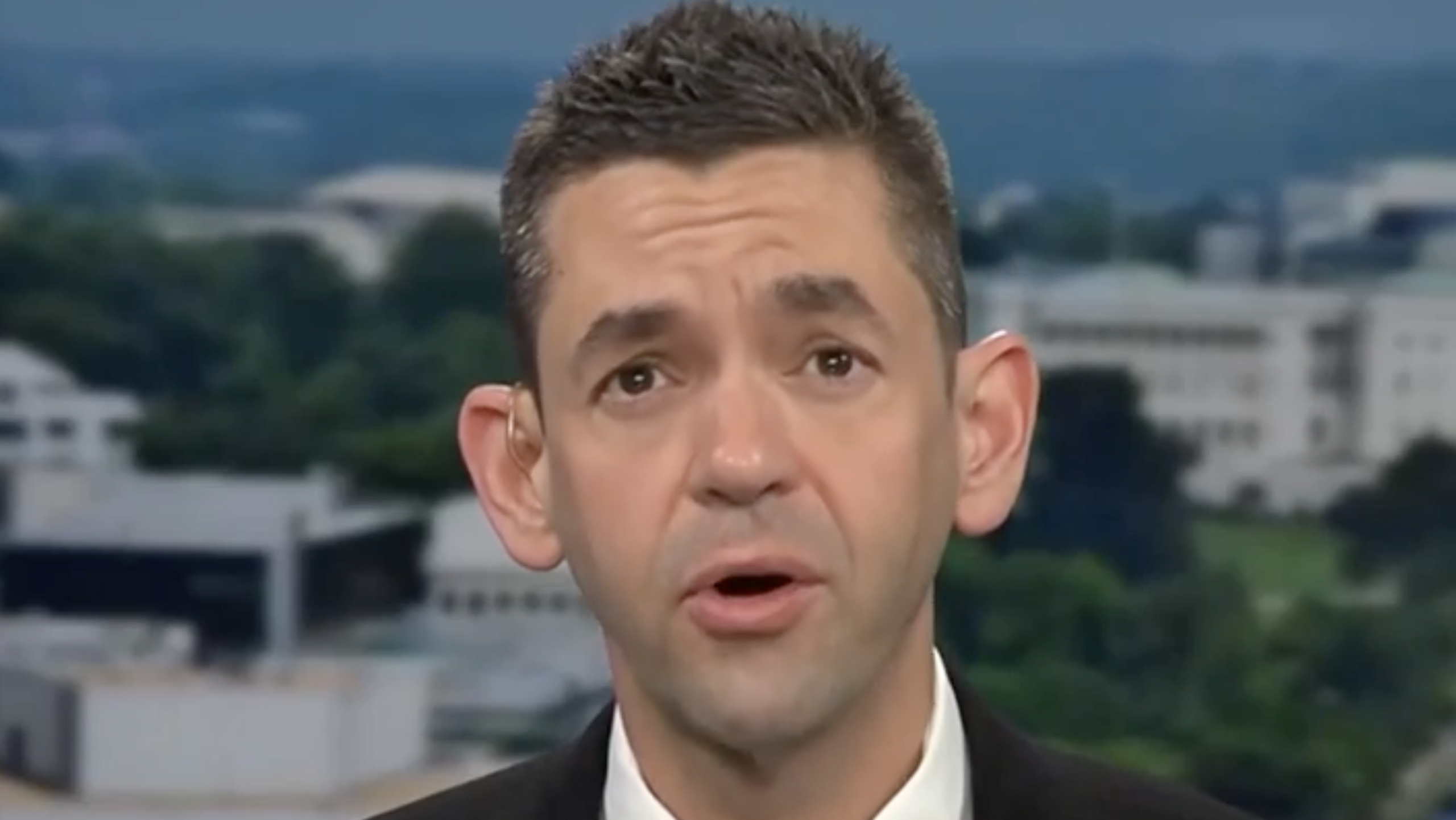

NASA Administrator Jared Isaacman said Tuesday that the United States is preparing to return to the Moon with the goal of building a permanent presence, describing the effort as part of a broader push to execute President Donald Trump’s national space policy.
“This means returning to the Moon, picking up where Apollo 17 left off. But this time when we go back, we go back to stay,” Isaacman said during an appearance on Fox & Friends. “We’re gonna build President Trump’s moon base.”
Today at Ignition, we’re aligning the NASA workforce, industry, our international and commercial partners, and the broader space-loving community on how we will execute @POTUS’ national space policy
— NASA Administrator Jared Isaacman (@NASAAdmin) March 24, 2026
✅ Return to the Moon
✅ Build a Moon base
✅ Unleash the golden age of space exploration.
✅ First interplanetary nuclear powered spacecraft
We will win the second space race.
The comments came as NASA hosted its “Ignition” event in Washington, where agency leadership outlined a series of initiatives aimed at accelerating lunar missions, expanding commercial partnerships, and advancing deep space exploration, according to a news release.
Isaacman said the strategy focuses on aligning NASA, private industry, and international partners around a unified objective that goes beyond short-term missions. The plan calls for sustained operations on the Moon, alongside investments in new technologies including a nuclear-powered spacecraft capable of traveling to Mars.
In a series of posts on X, Isaacman said NASA is shifting toward a more execution-focused approach modeled after the Apollo era, including standardized rocket systems, increased launch frequency, and long-term planning for recurring lunar missions. He added that the agency intends to support crewed landings as often as every six months as capabilities expand.
“The goal is not just to reach the Moon, but to stay,” Isaacman wrote, adding that the U.S. would “never give up the Moon again.”
To return Americans to the Moon, NASA is shifting to an iterative, execution-focused approach – just as we did during Apollo.
— NASA Administrator Jared Isaacman (@NASAAdmin) March 24, 2026
We are standardizing rocket architecture, embedding NASA expertise across industry, and increasing launch cadence to support sustained lunar operations.…
According to NASA, the lunar strategy will unfold in phases, beginning with robotic missions and infrastructure testing before advancing to semi-permanent habitats and eventually a continuous human presence. The agency said this approach is designed to transition from isolated missions to a repeatable system capable of supporting long-term activity on the lunar surface.
The initiative also includes plans to expand economic activity in low Earth orbit and invest in next-generation science missions. Among the most ambitious proposals is a nuclear-powered interplanetary spacecraft, known as Space Reactor-1 Freedom, which NASA says could launch before the end of 2028 and demonstrate new propulsion capabilities for deep space exploration.
The broader push reflects growing competition in space, as governments and private companies race to develop advanced technologies and establish a foothold beyond Earth. NASA officials described the effort as part of a “second space race,” with timelines measured in months rather than years.
While the Artemis program has already outlined plans for returning astronauts to the Moon later this decade, Isaacman’s remarks signal a more aggressive shift toward permanence, with an emphasis on infrastructure, commercial partnerships, and sustained human activity.
It remains unclear how quickly the full vision—including a permanent lunar base—can be achieved, but NASA said additional details, industry requests, and mission updates will be released in the coming months as the strategy moves forward.


 By
By



 By
By