
NASA said Tuesday it plans to deliver a new generation of “SkyFall” helicopters to Mars as part of a broader push to expand deep space exploration using nuclear-powered spacecraft.
“NASA is advancing nuclear power and propulsion in space to accomplish President Trump’s national space objectives,” the agency wrote in a post on X. “With SR-1 Freedom, launching in 2028, we will demonstrate nuclear electric propulsion and deliver SkyFall helicopters to Mars.”
NASA is advancing nuclear power and propulsion in space to accomplish President Trump’s national space objectives.
— NASA (@NASA) March 24, 2026
With SR-1 Freedom, launching in 2028, we will demonstrate nuclear electric propulsion and deliver SkyFall helicopters to Mars.
In collaboration with @Energy, these capabilities are key to future missions to Mars and beyond.
A new chapter of deep space exploration begins. 🚀
The agency said the mission will be powered by its Space Reactor-1 Freedom spacecraft, a nuclear-powered system designed to demonstrate nuclear electric propulsion in deep space. NASA described the technology as a critical step toward enabling more efficient transport of cargo and equipment across long distances in the solar system.
“In collaboration with @Energy, these capabilities are key to future missions to Mars and beyond,” NASA added in the post.
Details of the program were outlined as part of NASA’s broader “Ignition” initiative, which includes a range of efforts aimed at advancing U.S. space leadership under the current national space policy, according to a release from the agency. The plan spans lunar base development, expanded commercial partnerships, and new propulsion technologies intended to support missions deeper into space.
NASA said the SR-1 Freedom mission, expected to launch before the end of 2028, will mark the first time nuclear propulsion hardware is demonstrated in an interplanetary context. The system is designed to provide sustained, high-efficiency power, particularly in regions of space where solar energy is less effective.
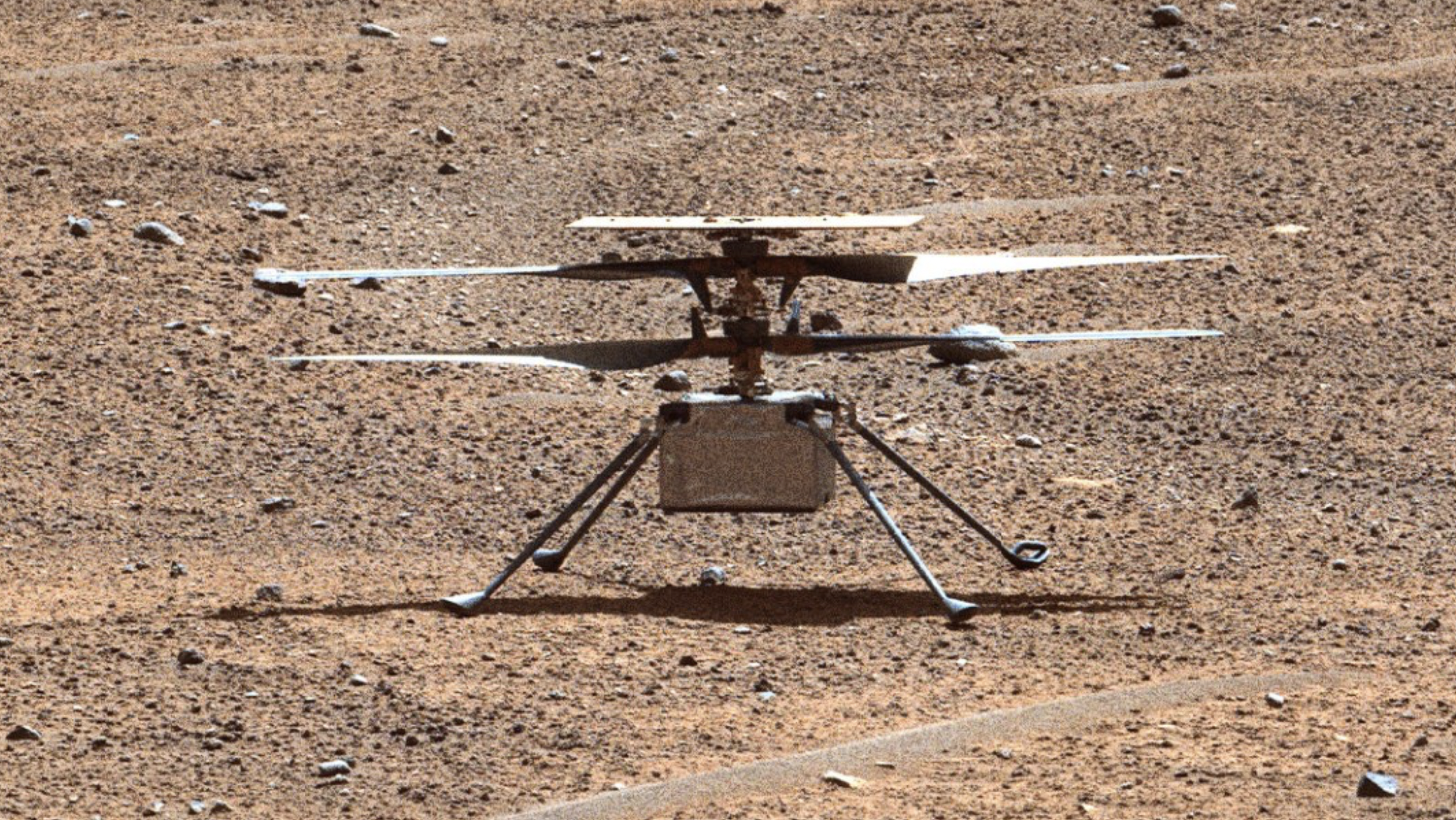
Once the spacecraft reaches Mars, it will deploy a payload of Ingenuity-class helicopters—building on the success of NASA’s original Mars helicopter, which completed 72 flights after arriving on the planet in 2021, far exceeding its initial design expectations, according to NASA.
The new SkyFall concept envisions multiple autonomous rotorcraft exploring the Martian surface simultaneously, collecting high-resolution imagery and subsurface data to help identify potential landing sites for future human missions, according to details released by AeroVironment, which has worked with NASA’s Jet Propulsion Laboratory on next-generation designs.
Unlike earlier missions that relied on complex landing platforms, the SkyFall approach could deploy helicopters directly during atmospheric descent, allowing them to fly to the surface under their own power and reducing mission cost and complexity.
NASA officials say the combination of nuclear propulsion and aerial exploration systems could play a central role in future missions, particularly as the agency works toward establishing a sustained human presence beyond Earth orbit.
The announcement comes amid a broader acceleration of NASA’s Moon and Mars strategy, which includes plans to return astronauts to the lunar surface, build a permanent Moon base, and expand robotic and human exploration across the solar system.
While timelines for many of these initiatives remain subject to technical and budgetary constraints, the agency said the development of nuclear-powered spacecraft and advanced robotic systems represents a foundational step toward long-duration missions to Mars and beyond.


 By
By



 By
By