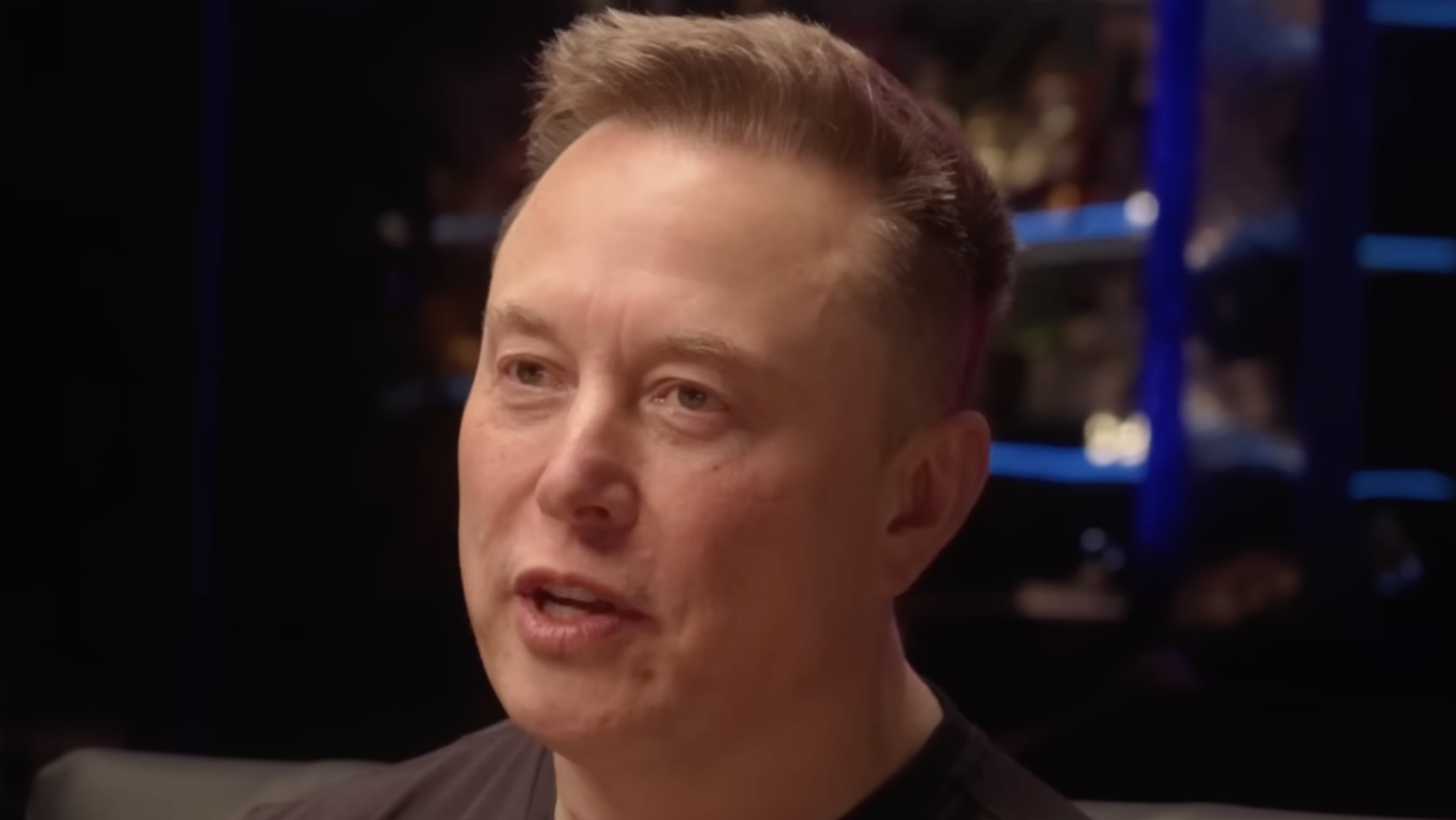

The accelerating development of artificial intelligence and robotics could fundamentally reshape how companies operate, according to billionaire entrepreneur Elon Musk. During a conversation on the Dwarkesh Podcast hosted by Dwarkesh Patel, Musk argued that corporations built entirely around artificial intelligence and robotics will eventually outperform traditional companies that rely on human labor. Musk, whose net worth stands at $836.3 billion according to Forbes and who is currently the richest person in the world, framed the shift as a natural extension of rapid advances in digital intelligence and autonomous systems.
Elon Musk explains why fully autonomous businesses will win
— Jack (@Jackkk) March 8, 2026
“Some of this is going to sound kind of doomerish, but corporations that are purely AI robotics will vastly outperform any corporations that have people in the loop”
“Like computer used to be a job that humans had and… pic.twitter.com/I62bCU8mDj
Musk suggested that the next milestone could arrive sooner than many expect, predicting that “digital human emulation” — the ability for AI systems to replicate the work of a human operating a computer — could be achieved within the near term. “I’d be surprised by the end of this year if digital human emulation has not been solved,” Musk said, describing it as the maximum capability AI can reach in the digital world before physical robots become widespread. Such systems, he explained, would effectively function as remote digital workers capable of performing tasks normally handled by humans interacting with software.
According to Musk, that digital stage represents only the beginning. Once advanced humanoid robots are deployed at scale, he believes the potential economic output could expand dramatically. Musk referred to Tesla’s humanoid robot project, Optimus, as “the infinite money glitch,” arguing that robots could eventually manufacture additional robots and rapidly expand production capacity. He described the growth potential as the result of multiple exponential trends working together, including increases in digital intelligence, improvements in AI chip performance, and advancements in electromechanical dexterity. “The usefulness of the robot is roughly those three things multiplied by each other,” Musk said, adding that robots capable of building other robots would create “a recursive multiplicative exponential.”
Musk tied that vision to the broader structure of the global economy, noting that many of the world’s most valuable companies already generate primarily digital outputs. He pointed to firms such as Nvidia, Apple, Microsoft, Meta Platforms, and Google as examples of corporations whose products are largely digital files, software, or data. In Musk’s view, the emergence of AI systems capable of performing human-level digital work could allow new companies to rapidly scale into trillion-dollar enterprises. “If you have a human emulator, you can basically create one of the most valuable companies in the world overnight, and you would have access to trillions of dollars of revenue,” he said.
Customer service was cited as an early example of how such systems might be deployed. Musk estimated that the global customer service industry alone represents close to a trillion dollars in economic activity. If AI systems can replicate the tasks of a typical office worker interacting with software tools, he suggested, companies could replace large portions of that workforce without requiring complex integrations with existing corporate systems. “If AI can simply take whatever is given to the outsourced customer service company that they already use and do customer service using the apps that they already use, then you can make tremendous headway,” Musk explained.
The broader transformation, however, would come as AI capabilities expand beyond simple tasks and move into more complex work such as engineering design, chip development, and industrial planning. Musk described a progression in which AI systems would begin by performing basic digital labor and then gradually move “up the difficulty curve,” eventually using advanced design tools and simulation systems to create new products and technologies. Over time, he suggested, the systems could reach a point where they no longer rely on existing software tools and instead design components directly.
That shift, Musk argued, would ultimately lead to a new class of corporations structured entirely around autonomous systems. “Corporations that are purely AI and robotics will vastly outperform any corporations that have people in the loop,” he said. To illustrate the concept, Musk compared it to the historical role of human “computers,” workers once employed to perform calculations before digital machines replaced them. Entire buildings of human calculators, he noted, have been replaced by a single spreadsheet running on a laptop capable of performing vastly more operations. “You can think, ‘okay, what if only some of the cells in your spreadsheet were calculated by humans?’ Actually, that would be much worse than if all of the cells in your spreadsheet were calculated by the computer,” Musk said.
While Musk acknowledged that the transition could unfold rapidly, he emphasized that the development is driven primarily by technological capability rather than economic pessimism. The emergence of fully automated AI-driven corporations, he said, is simply the logical outcome of increasingly capable digital intelligence and robotics systems. As those technologies mature, Musk believes organizations built entirely around autonomous systems will gain a decisive advantage in efficiency, productivity, and scale compared with companies that continue to rely heavily on human labor.

 By
By

 By
By