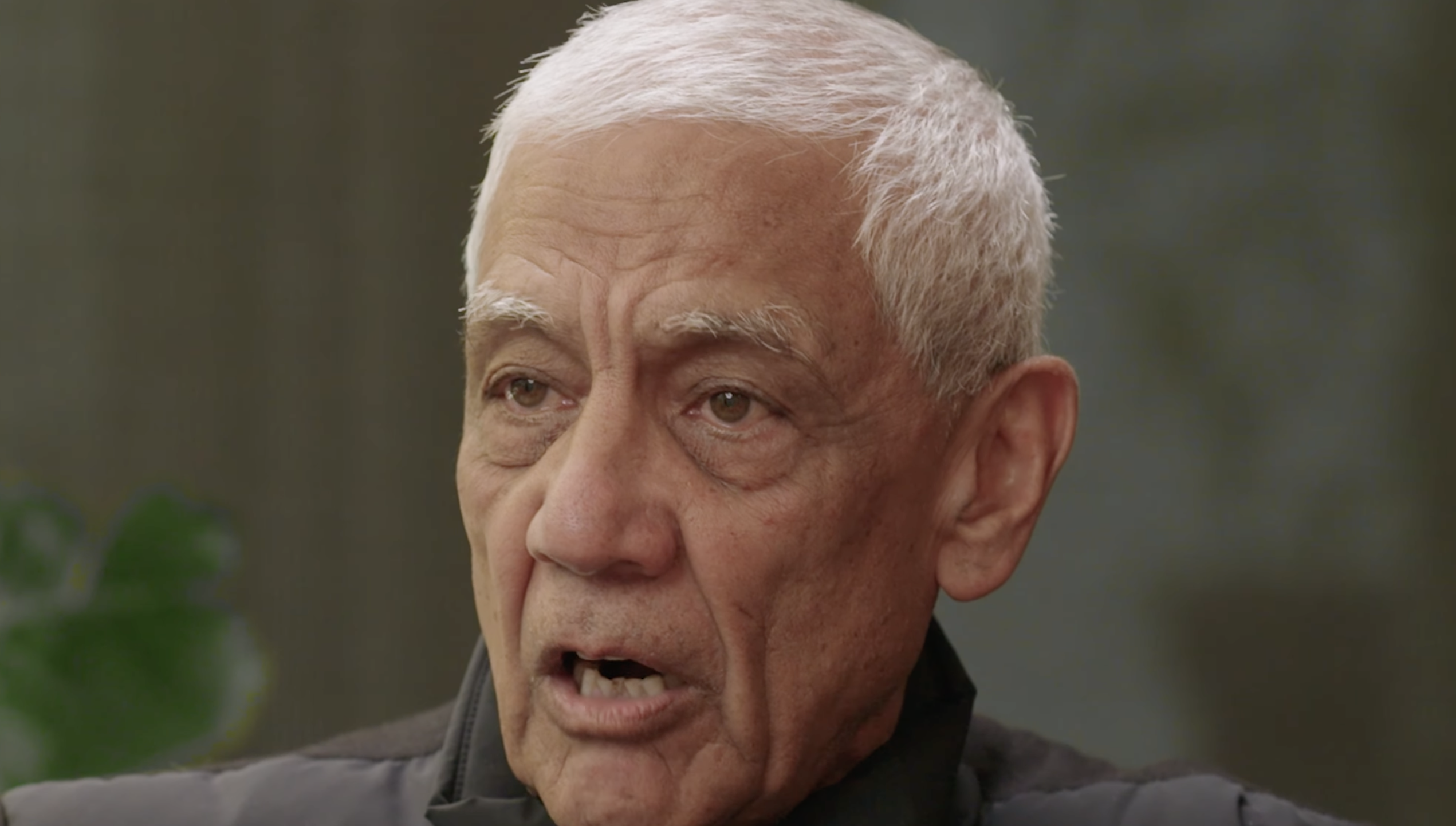

Artificial intelligence will soon be capable of performing the vast majority of today’s jobs, according to Silicon Valley billionaire and early AI investor Vinod Khosla. In an interview discussing the future of work and technology, the founder of Khosla Ventures said rapid advances in AI systems are likely to transform nearly every profession within the next decade. Khosla argued that the shift will fundamentally change the structure of the global economy, potentially making large portions of human labor unnecessary as AI becomes more capable and widely deployed.
Khosla, whose net worth is estimated at $11.9 billion by Forbes, has spent decades investing in emerging technologies and was among the earliest institutional backers of OpenAI. His venture capital firm focuses on experimental technologies including robotics, artificial intelligence, and biomedicine. Drawing on that experience, he said the pace of AI development is moving toward a future where machines perform both manual labor and highly specialized professional tasks.
By roughly 2030, AI will be capable of outperforming humans in 80% of jobs across all sectors, from blue-collar work to highly skilled professions like medicine and engineering.
— Rohan Paul (@rohanpaul_ai) March 8, 2026
"Whether you're a physician, whether you're a radiologist, whether you're an accountant, whether… pic.twitter.com/WqaWsMiMCX
“Starting in about 2030, 80% of all jobs will be capable of being done by an AI,” Khosla said during the interview. “Whether you’re a physician, whether you’re a radiologist, whether you’re an accountant, whether you’re a chip designer, whether you’re a salesperson — AI will do your job better.”
According to Khosla, the early phase of that transition will likely involve AI systems working alongside human professionals before eventually replacing many roles. He predicted a period in which workers across industries rely on multiple AI assistants to increase productivity and scale their output. “There’ll be an interim period where every professional will have four AI interns they’re training to leverage themselves,” he said, describing a model where AI tools function as highly capable digital assistants.
Khosla argued that the economic consequences of widespread automation will be enormous because labor represents a significant portion of economic output. In the United States alone, he said roughly $15 trillion of GDP is tied to labor. If AI systems take over much of that work, the result could be a dramatic shift toward a highly deflationary economy where goods and services become far cheaper to produce.
That shift, he suggested, could ultimately create a world of widespread technological abundance. With AI handling most labor and expertise, Khosla believes many services that are expensive today could become nearly free. “The abundance of goods and services will be very, very large,” he said, adding that the cost of education, healthcare knowledge, and many other services could decline dramatically as AI systems perform tasks previously handled by human professionals.
Khosla said the transition will not happen overnight and could create significant disruption between 2030 and 2040 as industries adapt to automation. During that period, governments and policymakers may face pressure to rethink taxation, income distribution, and economic policy in response to a workforce increasingly displaced by technology.
Despite those uncertainties, Khosla emphasized that the direction of technological progress is clear. In his view, the decisive factor in the coming decades will be how quickly organizations, governments, and workers adopt AI tools. “Those who use AI will clearly beat those who don’t use AI,” he said, adding that the technology’s impact will extend beyond companies to entire national economies.
Khosla’s warning reflects a broader debate unfolding across the technology sector as AI capabilities rapidly advance. With companies racing to build more powerful systems and deploy them across industries, investors and policymakers alike are increasingly grappling with the possibility that artificial intelligence could reshape not only the future of work, but the structure of the global economy itself.

 By
By


 By
By