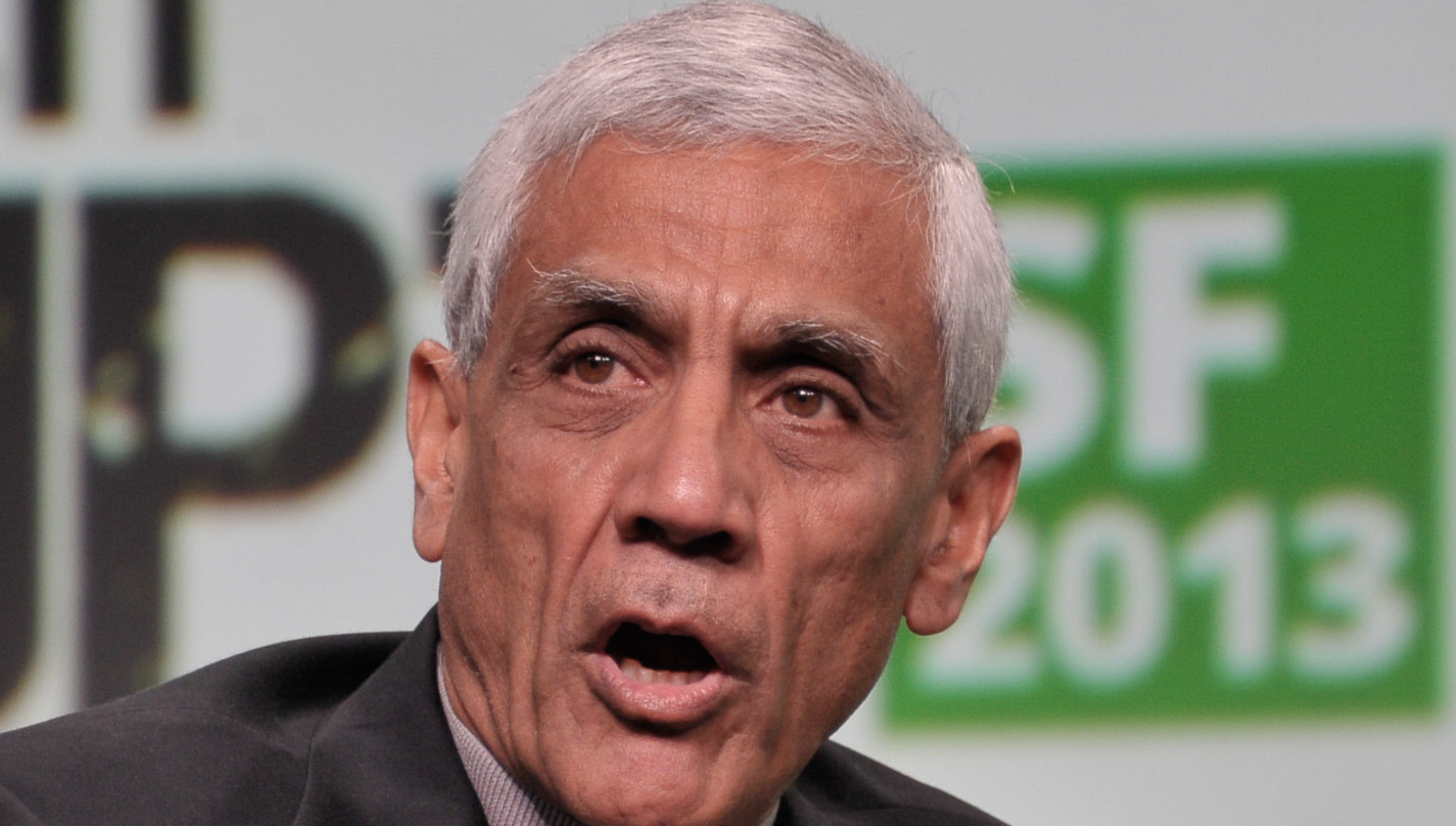

Vinod Khosla, the Silicon Valley entrepreneur and venture investor who helped found Sun Microsystems and later became an early backer of artificial intelligence companies, says the coming wave of AI development could fundamentally reshape how people live and work. In a wide-ranging interview with Fortune, Khosla argued that AI-driven abundance could eventually remove the economic pressures that define modern employment, while expanding individual freedom and opportunity. The billionaire investor, whose net worth is estimated at $11.9 billion by Forbes, said the United States already offers extraordinary opportunity compared with much of the world, but many Americans underestimate how much control they have over their own future.
Khosla has spent decades backing emerging technologies in fields ranging from robotics to biotechnology. He said the scale of technological change expected in the next 15 years could rival the transformation that occurred between the 1970s and today, when the internet, smartphones, and modern computing reshaped daily life. “To imagine the change between today and 2040 you’d have to go back and look at the change between the 70s and now,” Khosla said, noting that everyday technologies such as the internet and mobile phones did not yet exist during that earlier era.
— American Gazzete (@AmericanGazzete) March 9, 2026
According to Khosla, the rapid acceleration of artificial intelligence and robotics will likely lead to a world where knowledge and expertise are widely accessible and inexpensive. He suggested that AI systems could eventually provide many forms of expertise at little or no cost, dramatically lowering barriers to education, healthcare, and other services. “Almost all expertise globally will be free,” he said, describing a future in which AI tools deliver professional-level knowledge across industries.
Khosla argued that this shift could eventually eliminate the economic necessity behind many forms of labor. In his view, robotics and AI-powered systems will reduce the cost of physical work while automating large portions of professional expertise. The result, he said, would be a society where people increasingly pursue work because they want to rather than because they must. “The need to work will go away,” Khosla said. “People will still work on the things they want to work on, not because they need to work.”
He described that transition as a potentially positive shift in human priorities, allowing people to devote more time to creativity, family, and personal interests. Khosla argued that many individuals today are constrained by economic pressures that leave little room for those pursuits. “Most people today don’t have enough time to spend with their kids,” he said. “Most people today don’t have enough time to spend with their aging parents.”
— American Gazzete (@AmericanGazzete) March 9, 2026
At the center of his vision is the belief that artificial intelligence could redefine how society measures productivity and purpose. Khosla said the technology could ultimately reduce the dominance of purely economic motivations in daily life, opening space for individuals to pursue interests and passions that might not currently be financially viable. “AI will free us to be more human,” he said, describing a future in which creativity, values, and personal exploration play a larger role in how people define success.
— American Gazzete (@AmericanGazzete) March 9, 2026
Reflecting on his own path from India to Silicon Valley, Khosla also emphasized the role of personal initiative in shaping opportunity. He recalled arriving in the United States in the 1970s after growing up in a household that did not even have a television or a telephone. The experience, he said, reinforced how much freedom individuals can have in determining their own future. “I think most Americans don’t know how good they have it in this country, and how much they control their own fate and agency,” Khosla said.
Khosla’s views carry weight in the technology industry not only because of his long career as a founder and investor, but also because of his early bets on artificial intelligence. His venture firm was the first institutional investor in OpenAI, the company behind ChatGPT, and has backed numerous experimental technologies over the past two decades. As global competition over AI intensifies, Khosla argues that the technology’s long-term impact may reach far beyond economics, potentially reshaping how people define work, purpose, and freedom in the decades ahead.

 By
By

 By
By