

Senator Bernie Sanders addressed a large audience at an event he held titled ‘Who Controls the Future of AI: The Oligarchs or the People?’, delivering a warning about the potential risks posed by artificial intelligence and robotics. He framed the current moment as historically significant, arguing that the rapid pace of technological advancement could have far-reaching consequences for the economy, democracy, and society as a whole.
— American Gazzete (@AmericanGazzete) March 7, 2026
Sanders main urgent warning was of the potential for AI to surpass human intelligence, stating, “Super intelligent AI could become smarter than humans. But sometimes when we think of that, that’s not a very high bar. But nonetheless, could become smarter than humans, could become independent of human control, and could pose an existential threat to the human race.”
Sanders acknowledged the challenges facing the younger generation, describing the present era as “in many ways the most dangerous moment in the modern history of this country.” He praised young Americans for stepping up in the face of authoritarianism and oligarchy, drawing parallels to past movements for civil rights, labor, and social justice. Transitioning to technology, he noted, “Artificial intelligence and robotics is in the process of transforming the world. We are at the beginning of the most profound technological revolution in world history. These changes will impact our economy. They will threaten our democratic institutions. They will impact our emotional well-being and how we relate to each other as human beings. They will impact how we educate and raise our kids. They will impact foreign policy and the nature of warfare.”
— American Gazzete (@AmericanGazzete) March 7, 2026
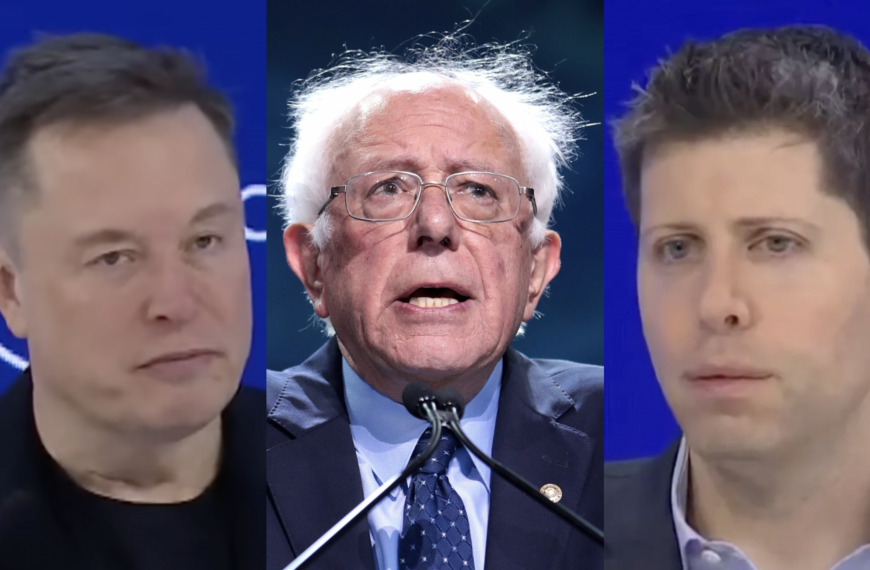
The senator criticized the concentration of power in the hands of a few tech billionaires, noting that figures such as Elon Musk, Jeff Bezos, Larry Ellison, Mark Zuckerberg, and Peter Thiel are driving the AI and robotics revolution primarily to expand their wealth and influence. He questioned whether these investments were aimed at improving the lives of ordinary Americans, saying, “Is that what Mr. Musk and Mr. Bezos are thinking about as they generate this extraordinary revolution? I know those guys. I don’t believe it. I think the answer is fairly obvious. The richest and most powerful people on earth will become even richer and more powerful.”
Highlighting statements from tech leaders, Sanders said, “Elon Musk recently said, ‘AI and robots will replace all jobs. Working will be optional.’ Bill Gates predicted that humans ‘won’t be needed for most things.’ Dario Amodai, CEO of Anthropic AI, wrote that recent breakthroughs make it clear we are only a few years away from the point when ‘AI is better than humans at essentially everything.’” Sanders stressed that these developments are already being acted upon, noting plans by Amazon to replace hundreds of thousands of workers with robots and the broader ambitions of AI companies to automate human labor.
Beyond economics, Sanders raised concerns about the social and psychological effects of AI. He discussed the growing dependence on technology for emotional support and the potential consequences of reduced human interaction.
While acknowledging potential benefits of AI, Sanders emphasized that the ultimate question is who benefits from these technologies. He said, “AI in my view, not good, a lot of good things about AI, but not bad. It is how we utilize this. … If those workers are simply thrown out on the street in order to make Mr. Musk and his friends even richer, is that a good thing? No, it is not.”
Sanders concluded by urging a measured approach to the AI revolution, calling for serious discussion and congressional oversight to protect workers, democracy, and society from unchecked technological change. He recommended slowing the expansion of data centers and carefully considering the broader implications of automation, warning that without intervention, millions of Americans could face unprecedented disruption.

 By
By


 By
By