

Anthropic has released a report examining the potential impact of artificial intelligence on the labor market, introducing a new measure of job displacement risk based on observed AI usage. The study highlights that occupations with higher exposure to AI automation, such as computer programmers and customer service representatives, are projected to experience slower growth, with workers in these roles more likely to be older, female, more educated, and higher-paid. This analysis comes amid ongoing discussions about AI’s role in reshaping employment, particularly as models like those developed by Anthropic demonstrate capabilities that could accelerate task automation in professional settings.
The report combines theoretical assessments of large language model capabilities with real-world data from Anthropic’s platforms to create a metric called observed exposure. This measure weighs tasks that AI can theoretically speed up, focusing on those showing actual automated use in work-related contexts. According to the findings, AI coverage remains far below its potential, with only a fraction of feasible tasks currently automated. For instance, in computer and math occupations, theoretical capability covers 94 percent of tasks, but observed exposure accounts for just 33 percent.
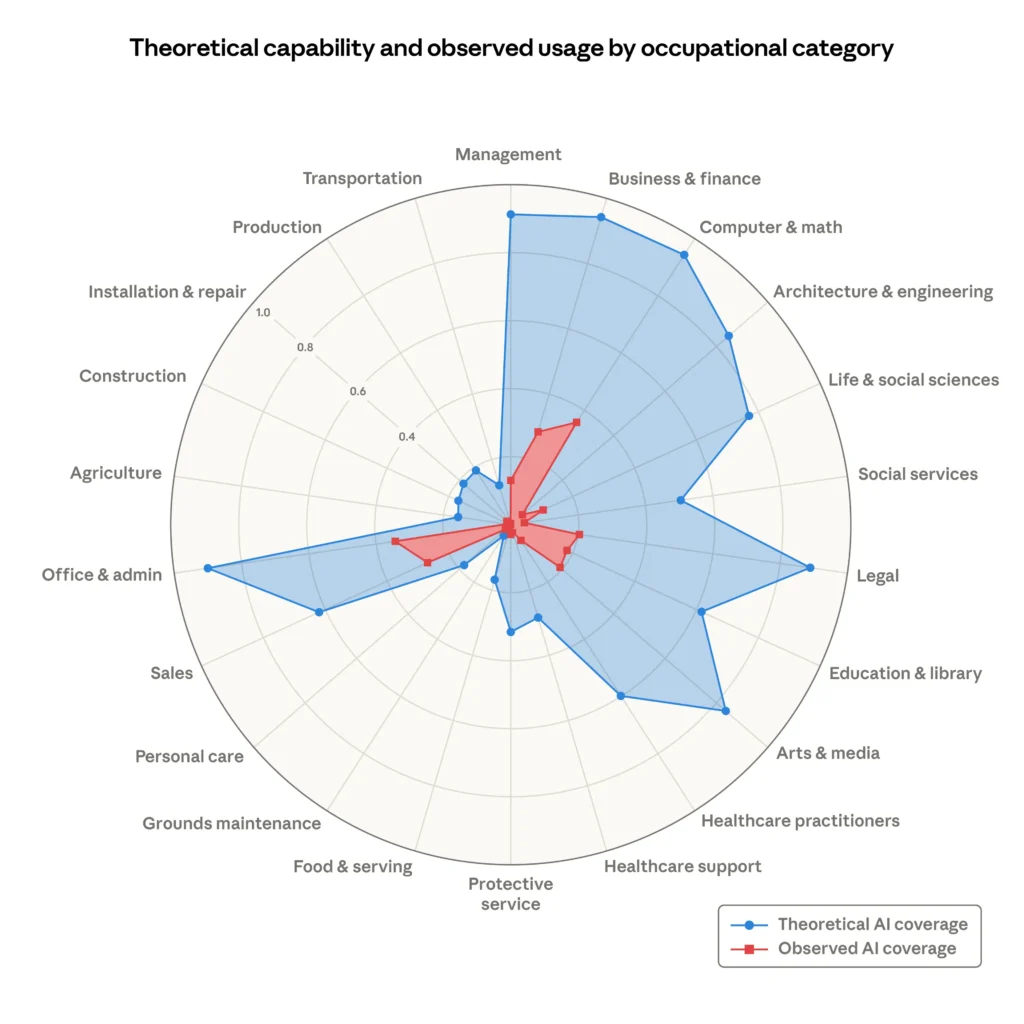
Among the most exposed occupations, computer programmers top the list with 75 percent coverage, followed by customer service representatives and data entry keyers at 67 percent. Financial analysts also rank high due to tasks like data processing that appear in automated workflows. In contrast, 30 percent of the job market shows zero exposure, including roles requiring manual labor such as bartenders, dishwashers, and lifeguards, where AI lacks the physical capabilities to intervene.
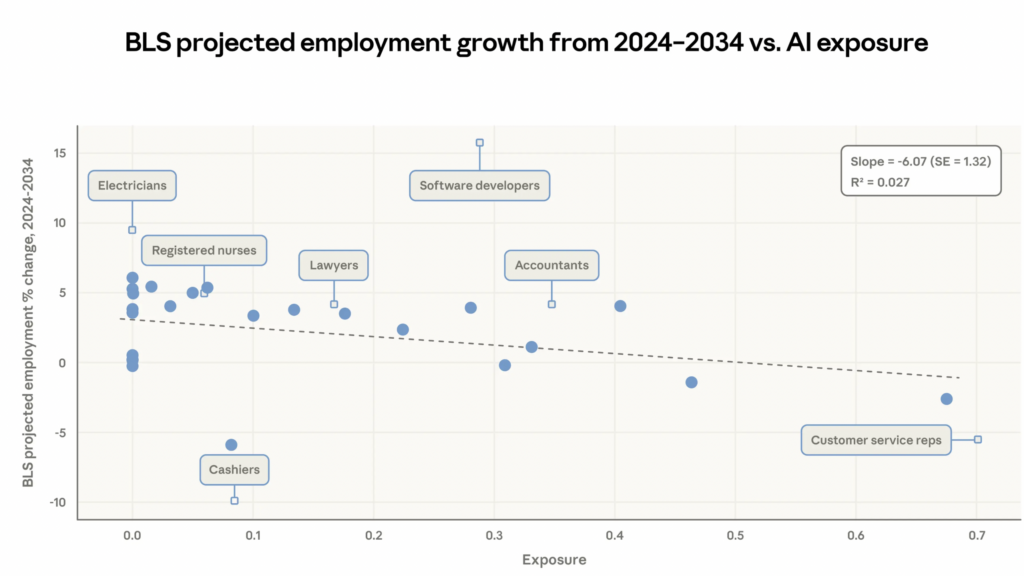
The study links higher observed exposure to weaker employment growth projections from the U.S. Bureau of Labor Statistics through 2034. A regression analysis indicates that for every 10 percentage point increase in exposure, projected growth drops by 0.6 percentage points. This correlation validates the measure, as it aligns with independent labor market forecasts, unlike purely theoretical metrics.
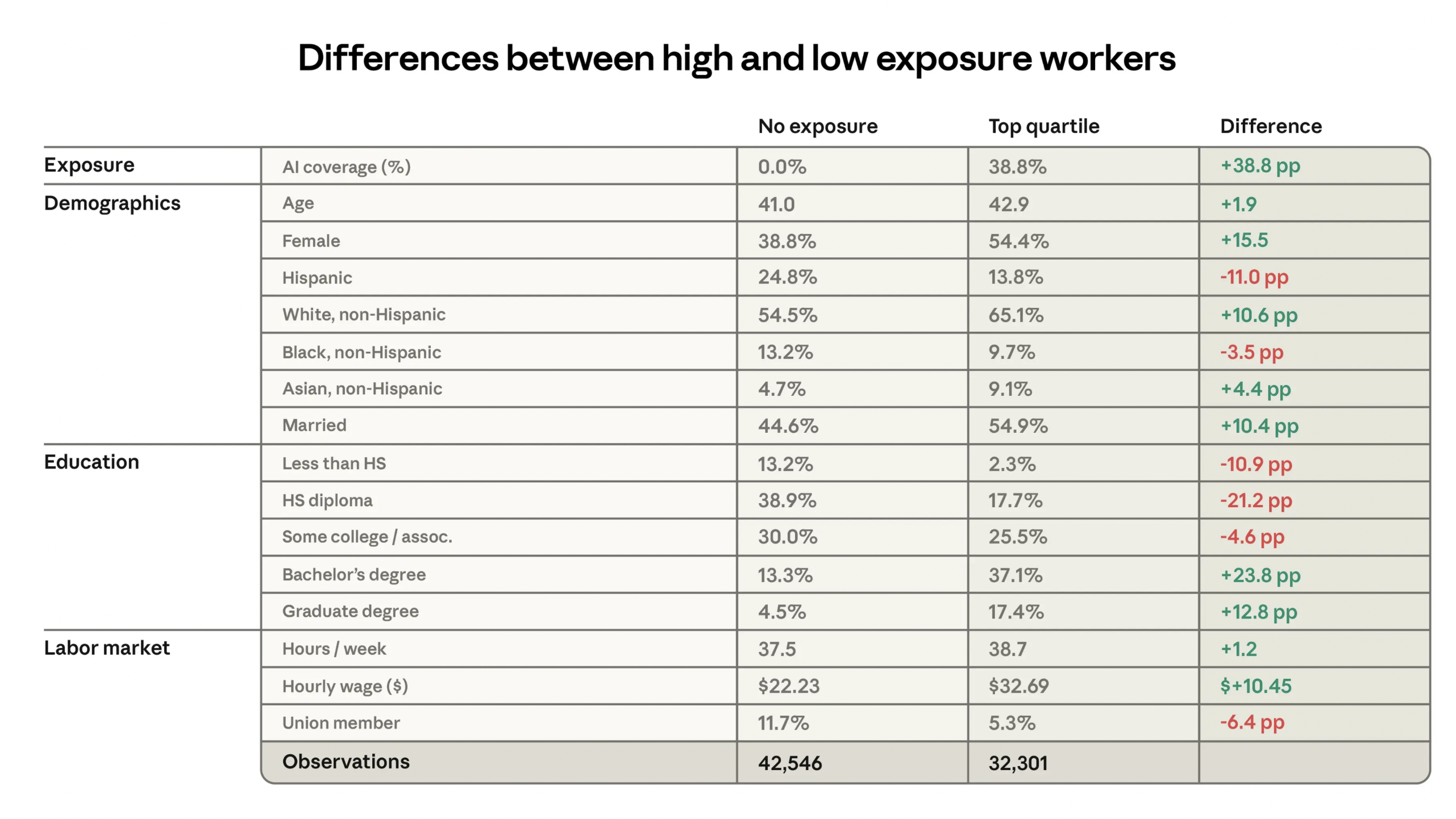
Worker demographics reveal notable differences. Those in the top quartile of exposure are 16 percentage points more likely to be female, 11 percentage points more likely to be white, and almost twice as likely to be Asian compared to unexposed groups. They also earn 47 percent more on average and hold higher education levels, with graduate degree holders comprising 17.4 percent of the exposed group versus 4.5 percent in the unexposed. College graduates face four times the exposure risk overall, positioning them as particularly vulnerable.
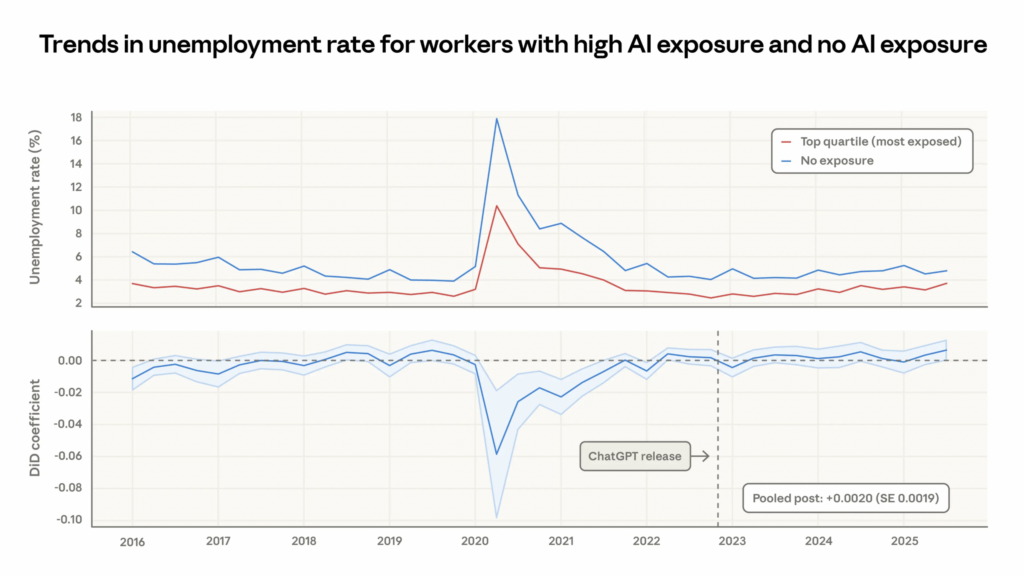
Employment trends show no systematic rise in unemployment for highly exposed workers since late 2022. However, suggestive evidence points to a slowdown in hiring, especially for younger workers aged 22 to 25. Entry-level hiring into exposed occupations has dropped 14 percent since the launch of ChatGPT, with job finding rates decreasing by about half a percentage point monthly in these roles. This shift does not appear for workers over 25, and it may reflect displaced entrants opting for other paths rather than unemployment.
The report emphasizes that AI models are already capable of automating much of this work today, but barriers like slow company adoption and regulatory constraints prevent full implementation. It describes this as an adoption gap rather than a skill gap, noting that the gap is closing rapidly. The analysis draws on real-world usage alongside theoretical intelligence, acknowledging that some low-exposure jobs, particularly in manual labor, did not meet minimum data thresholds.
Anthropic’s transparency in publishing these findings, as the company behind the Claude AI model, aims to establish a framework for ongoing monitoring of labor market changes. By identifying vulnerable occupations early, the report seeks to inform responses before widespread displacement occurs, amid expectations of significant shifts in the coming year.

 By
By



 By
By