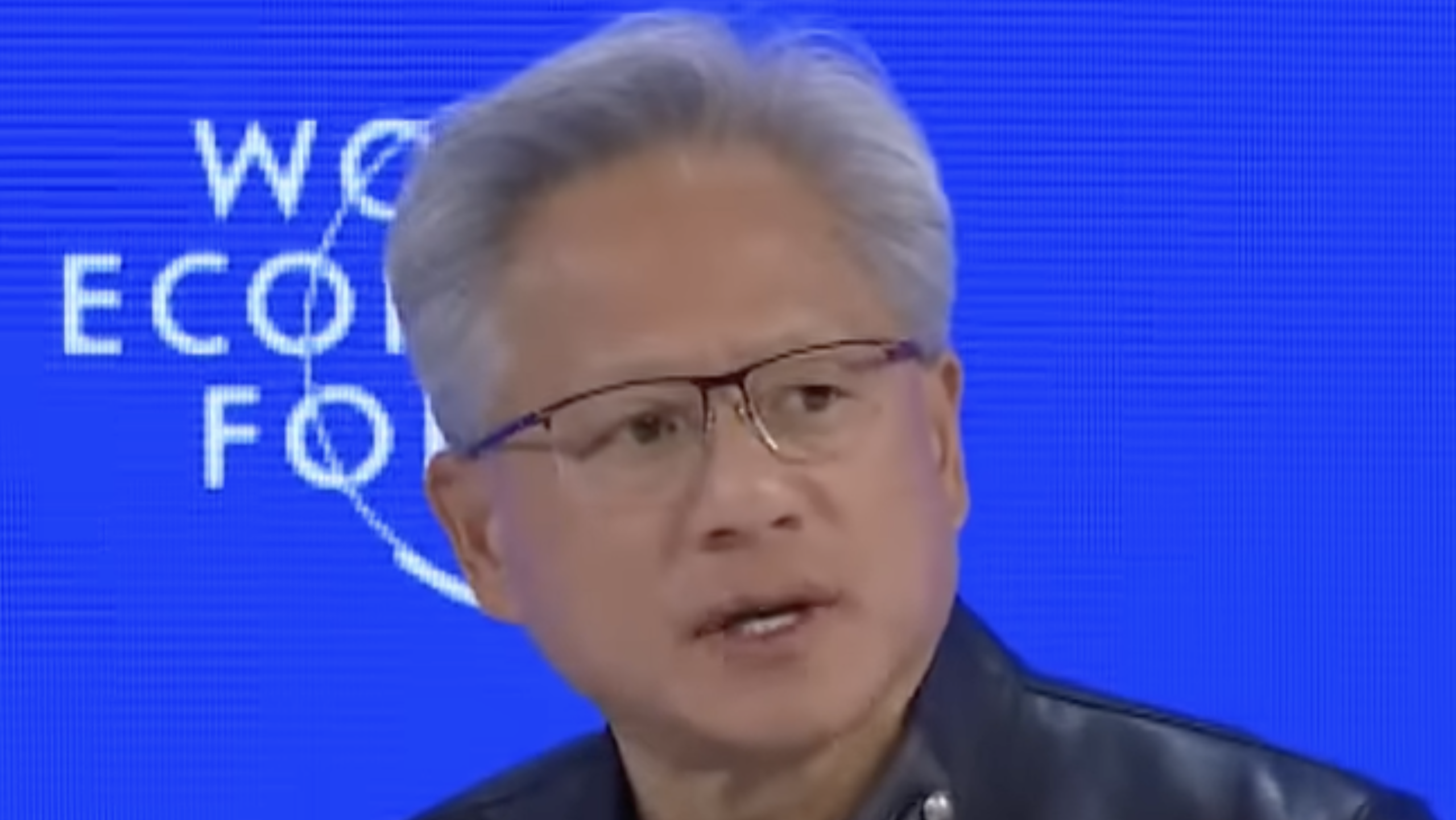

Nvidia CEO Jensen Huang indicated that the chipmaker’s recent investments in artificial intelligence companies OpenAI and Anthropic could be its last in those firms as both prepare to go public later this year. Speaking at the Morgan Stanley Technology, Media and Telecom conference on Wednesday, Huang said the opportunity to invest $100 billion in OpenAI is unlikely now that the ChatGPT creator is preparing for an initial public offering.
Huang emphasized that Nvidia’s $30 billion investment in OpenAI might be the last chance the company has to “invest in a consequential company like this.” Nvidia and OpenAI had initially announced plans for a $100 billion deal in September of last year, which would have included supplying OpenAI with data center chips. The original agreement was structured as two intertwined transactions, with Nvidia investing in non-voting shares and OpenAI using the funds to purchase Nvidia systems. At the time, OpenAI was valued at approximately $500 billion, and the arrangement was intended to support the startup’s large-scale compute needs.
🚨BREAKING: Jensen Huang just trvth nvked NVIDIA’s OpenAI investment
— NIK (@ns123abc) February 1, 2026
“We never said we were going to invest $100 billion in one round. They invited us to invest up to $100 billion”
CHECKED. pic.twitter.com/El7gwiOJgk
Huang clarified the scope of that original plan to reporters on February 1, saying, “We never said we were going to invest $100 billion in one round. They invited us to invest up to $100 billion.” Analysts had expressed concerns about the scale and structure of the deal, noting that some of Nvidia’s investment dollars could return to the company as payments for hardware purchases, a scenario that raised potential circularity issues.
OpenAI has been preparing for an IPO that could value the company as high as $1 trillion, according to reporting. Nvidia’s investment, along with $30 billion from SoftBank and $50 billion from Amazon, was part of a $110 billion funding round announced in February, signaling the intense pace of investment in artificial intelligence ahead of the startup’s expected public offering. Amazon also agreed to provide OpenAI with 2 gigawatts of computing capacity powered by its Trainium chips and will serve as the exclusive third-party cloud provider for OpenAI’s enterprise platform, Frontier.
Huang added that Nvidia’s $10 billion investment in Anthropic will likely be the last as well. The AI startup is reportedly considering a public listing this year, although it has not finalized an IPO decision. Anthropic is currently involved in a dispute with the Pentagon, which adds uncertainty to its plans.
The original $100 billion Nvidia-OpenAI deal had been designed to deploy at least 10 gigawatts of Nvidia systems for OpenAI, roughly equivalent to the power needs of more than 8 million U.S. households. Nvidia was expected to begin delivering hardware in late 2026, with the first gigawatt of computing power deployed on its Vera Rubin platform in the second half of that year. OpenAI also has ongoing plans to develop its own AI chips with Broadcom and Taiwan Semiconductor Manufacturing Co, which are not affected by the Nvidia partnership.
Industry analysts noted that while the investment deals strengthen OpenAI’s access to high-performance computing and solidify Nvidia’s position in the AI market, the large-scale nature of the funding raised questions about the circular flow of capital between investor and customer. Bernstein analyst Stacy Rasgon said, “On the one hand this helps OpenAI deliver on what are some very aspirational goals for compute infrastructure, and helps Nvidia ensure that that stuff gets built. On the other hand the ‘circular’ concerns have been raised in the past, and this will fuel them further.”
With both OpenAI and Anthropic preparing to enter the public markets, Huang suggested that Nvidia may not have another chance to make comparable investments in emerging AI companies. The shift follows the company’s reevaluation of its $100 billion deal amid doubts about the health of the AI sector and the structure of its investment strategy.

 By
By

 By
By