
U.S. and Nigerian forces killed Abu-Bilal al-Minuki, described by American officials as the second-in-command of ISIS globally, in a precision strike on his compound in the Lake Chad Basin early Saturday morning — an operation that relied on months of sustained intelligence surveillance and a newly established joint technology infrastructure built specifically to hunt high-value targets across West Africa’s most volatile terrain.
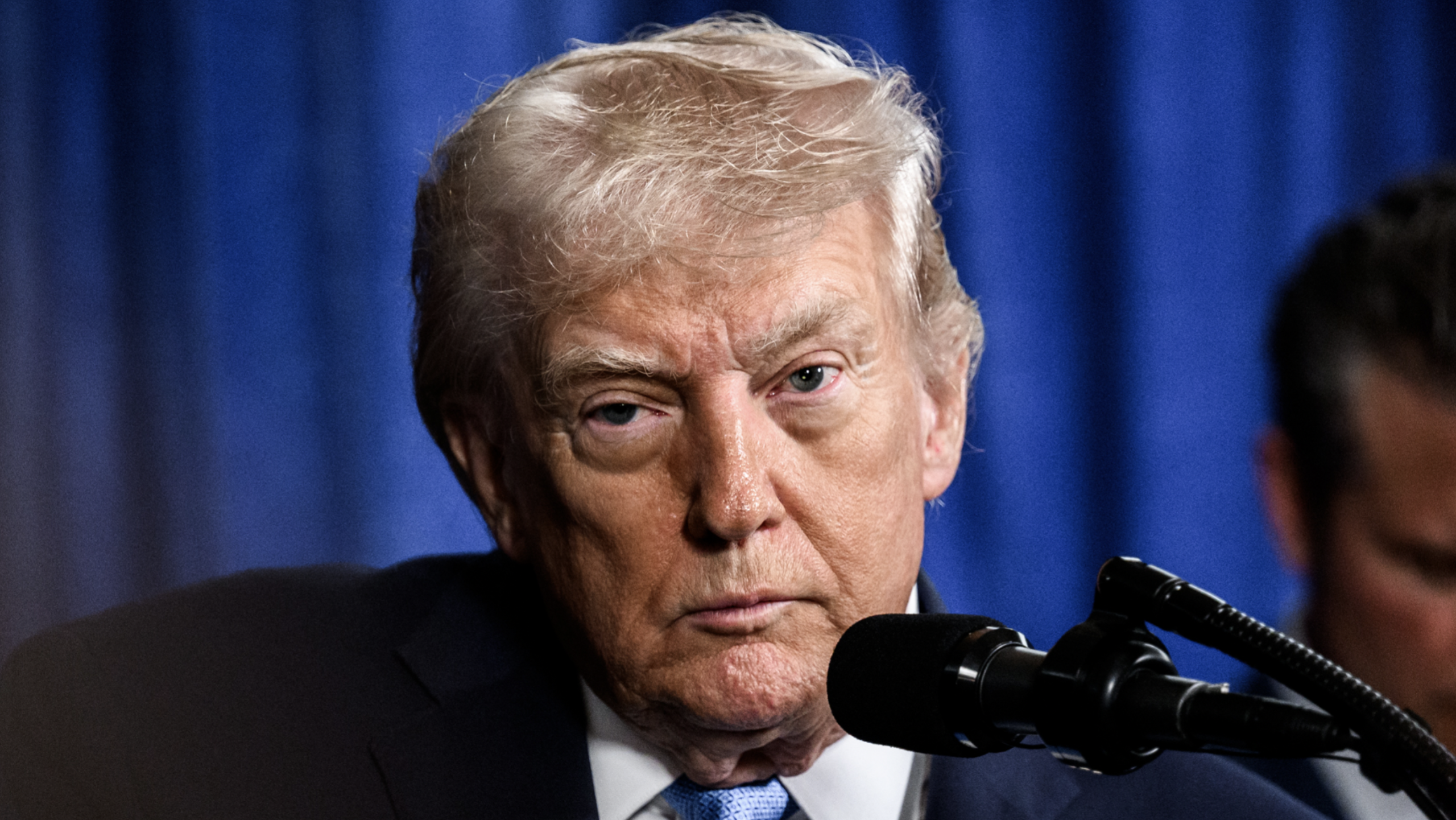
President Donald Trump announced the strike late Friday night in a post on Truth Social. “Tonight, at my direction, brave American forces and the Armed Forces of Nigeria flawlessly executed a meticulously planned and very complex mission to eliminate the most active terrorist in the world from the battlefield,” Trump wrote. “Abu-Bilal al-Minuki, second in command of ISIS globally, thought he could hide in Africa, but little did he know we had sources who kept us informed on what he was doing. He will no longer terrorize the people of Africa, or help plan operations to target Americans. With his removal, ISIS’s global operation is greatly diminished.”
U.S. Africa Command confirmed in a Saturday statement that multiple terrorists — including al-Minuki, whom AFRICOM identified as ISIS’s director of global operations — as well as other senior ISIS leaders, were killed during the operation. No U.S. service members were harmed. Nigerian President Bola Ahmed Tinubu confirmed that Nigerian and U.S. forces conducted a joint operation that dealt a significant blow to the Islamic State’s ranks, with early assessments confirming the elimination of al-Minuki — also known as Abu-Mainok — along with several of his lieutenants, during a strike on his compound in the Lake Chad Basin.
The operation was executed using a combination of human intelligence and surveillance technology that U.S. and Nigerian forces had been building and refining for months. On February 3, 2026, a small contingent of U.S. personnel arrived in Nigeria to provide what officials described as “unique capabilities,” including intelligence fusion and ISR — intelligence, surveillance, and reconnaissance. Technical specialists and advisors arrived at Bauchi Airfield in northeast Nigeria, where they began operating alongside Nigerian counterparts as part of a newly established U.S.-Nigeria intelligence fusion cell — a joint facility designed to provide real-time data to field commanders.
The U.S. military also deployed MQ-9 Reaper drones to Nigeria, with AFRICOM stating the aircraft would be used for intelligence-gathering and training. The MQ-9 drones, which cost approximately $30 million apiece, are capable of carrying out airstrikes but were initially deployed in a surveillance and advisory role. That combination of persistent aerial surveillance and the intelligence fusion cell created the targeting pipeline that ultimately located al-Minuki.
Nigeria’s Defence Headquarters confirmed that al-Minuki was positively identified through human intelligence and technical surveillance as a senior global operative within the Islamic State network, possessing direct connections to international terrorist coordination, funding, and operations across the Sahel. The DHQ also addressed questions that arose after some media outlets drew comparisons to a 2024 operation in which a militant with the same name was reported killed — clarifying that the use of identical names and aliases is common among ISWAP and Boko Haram fighters in the Lake Chad Basin, and that there was no ambiguity about the identity of the individual eliminated on May 16.
Secretary of War Pete Hegseth provided additional operational detail Saturday, describing al-Minuki’s specific function within the global ISIS structure. According to AFRICOM, al-Minuki provided strategic guidance to the ISIS global network on media and financial operations, as well as the development and manufacturing of weapons, explosives, and drones. Hegseth wrote that al-Minuki “was the senior ISIS General Directorate of Provinces Emir — the number two for ISIS globally — responsible for overseeing the planning of attacks, directing hostage-taking and managing financial operations,” adding that the elimination of al-Minuki and other ISIS personnel “makes Americans safer by further degrading ISIS’s ability to plan and carry out attacks.”
Al-Minuki, a Nigerian national, was designated a “specially designated global terrorist” by the Biden administration in 2023, according to the U.S. Federal Register. The State Department’s 2023 designation identified him as a senior ISIS official operating in the Sahel and a member of the organization’s General Directorate of Provinces — the administrative body responsible for providing financial and operational direction to ISIS affiliates globally. Though he was not considered part of ISIS’s original Iraq-Syria leadership circle, counterterrorism experts viewed him as a significant architect of the group’s African expansion strategy.
The strike was carried out in Metele, in Borno State, where the Nigerian Army conducted a precision air-land operation in close coordination with AFRICOM. The operation began at approximately 12:01 a.m. and concluded around 4 a.m. Saturday and was executed with no casualties or loss of assets on the coalition side. The region around Borno State has endured 17 years of insurgency from Boko Haram and its ISIS-affiliated splinter group, ISWAP, which has killed thousands and displaced approximately 2 million people.
That same surveillance-and-drone infrastructure that located al-Minuki is now operating inside a broader technological arms race in the region. ISWAP has deployed armed drones at least 10 times between 2024 and 2026, according to the Armed Conflict Location and Event Data Project, with the new shift being accelerated by offline artificial intelligence tools that can help drones avoid traditional detection and jamming methods. The shift to drone use by armed groups is global — ACLED reported in 2025 that 469 armed groups worldwide had deployed a drone at least once in the past five years, up from only 10 groups using the technology in 2020.
The U.S. military has been investing in counter-capabilities with the same urgency. AFRICOM’s African Lion 2026 exercise, which concluded on May 8, introduced the inaugural multinational drone academics class — bringing together military personnel from Ghana, Morocco, Nigeria, and the United States to train on small unmanned aircraft systems, with training scenarios incorporating intelligence, surveillance, and reconnaissance capabilities. Future cooperation between the U.S. and Nigeria is expected to expand to include technical training for Nigeria’s own fleet of A-29 Super Tucano aircraft to better integrate aerial data with ground maneuvers.
Nigeria–U.S. security cooperation has been moving into a more structured, technology-driven stage, with the AFRICOM engagement becoming systemic rather than episodic — with modern counterterrorism evolving through systems alignment, data-sharing protocols, ISR integration, and command harmonization. The May 16 strike is the clearest operational proof yet of what that architecture can produce.
The elimination of al-Minuki represents one of the highest-profile counterterrorism strikes of the Trump administration’s second term. The current operation also marks a strategic shift for AFRICOM following the 2024 closure of Air Base 201 in neighboring Niger — a $110 million facility that formerly hosted over 1,000 troops and served as the primary hub for regional drone surveillance before the Nigerien junta ordered a full American withdrawal. The successful strike in Borno State demonstrates that the intelligence and targeting infrastructure rebuilt after that setback — centered on the Bauchi Airfield fusion cell and MQ-9 deployment — has reached operational maturity.

 By
By

 By
By