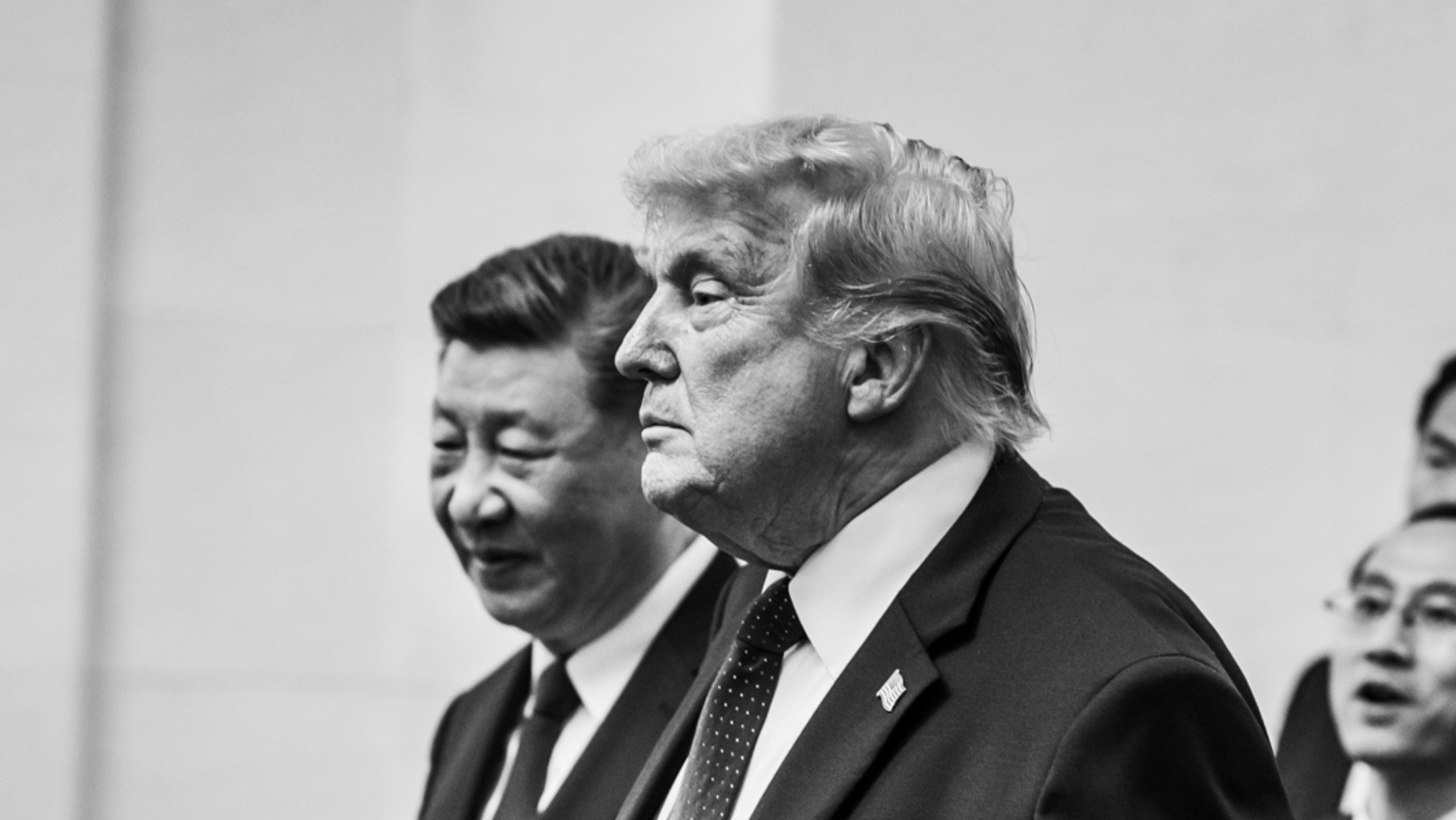

ABOARD AIR FORCE ONE, May 15, 2026 — President Donald Trump said Friday that he told Chinese President Xi Jinping during their closed-door Beijing summit that the United States conducts covert operations against China that Beijing does not know about — a remarkable public disclosure of American offensive capabilities delivered by the president himself.
“I told him, ‘We do a lot of stuff to you that you don’t know about,'” Trump said aboard Air Force One, departing China after a two-day summit.
The comment came as reporters pressed Trump on Chinese cyberattacks against U.S. critical infrastructure, including allegations that Beijing has embedded code inside American power grids, water utilities, and telecommunications networks. Rather than pressing Xi on those operations, Trump cast the exchange as mutual — and signaled that the United States has its own undisclosed reach inside Chinese systems.
Said Directly to Xi
Trump’s framing was notable not just for what he said publicly, but for what he claimed to have said privately. He was not merely acknowledging U.S. cyber capabilities in the abstract — he said he used that disclosure as a message directly to Xi Jinping during their meetings at the Great Hall of the People in Beijing.
The disclosure inverts the typical diplomatic calculus. U.S. presidents have historically avoided acknowledging offensive cyber operations even to domestic audiences, let alone boasting of undisclosed capabilities to an adversary’s head of state. Trump appeared to present the admission to Xi as a form of deterrence — or at minimum, leverage.
“You know, what they do, we do too,” Trump added, extending the argument from covert operations to espionage broadly. “We spy like hell on them too.”
Xi Pushed Back in the Room
According to Trump’s own account, Xi did not accept the framing without pushback. When Trump raised Chinese cyberattacks on U.S. infrastructure during the summit, Xi responded by citing American operations against China.
“He talked about attacks that we did in China,” Trump told reporters. The exchange, as Trump described it, was less a confrontation than a mutual acknowledgment — two nuclear powers comparing notes on their covert operations against each other.
That dynamic tracks with what U.S. officials have observed for years. China has consistently countered American accusations of hacking by pointing to U.S. operations against Chinese targets, and has escalated those counter-accusations in recent months. In April 2025, Beijing publicly named three alleged NSA hackers for the first time, offering a financial reward for their capture, NBC News reported. China’s Ministry of State Security separately accused the NSA of conducting a sustained hacking campaign against China’s National Time Service Center dating to 2022.
What the U.S. Is Known to Do
Trump’s claim that the U.S. does things to China “that you don’t know about” is consistent with a long, if rarely acknowledged, history of American offensive cyber operations. The NSA’s Tailored Access Operations unit has conducted operations against Chinese networks for decades. Documents leaked by former NSA contractor Edward Snowden in 2013 revealed a U.S. operation against Chinese telecommunications giant Huawei, aimed both at proving its ties to the People’s Liberation Army and at gaining access to Huawei equipment deployed in global telecom networks, according to the Council on Foreign Relations.
The U.S. is also widely credited as a co-developer of Stuxnet, the first publicly documented malware designed to cause physical damage to industrial hardware — deployed against Iranian nuclear centrifuges but establishing a precedent for infrastructure-targeting cyberweapons that both Washington and Beijing have since built upon.
The 2018 U.S. cybersecurity strategy, implemented during Trump’s first term, explicitly authorized offensive cyber operations as a deterrent. That posture — known as “defend forward” — involves disrupting adversary operations before they reach American networks, including operations conducted inside foreign systems.
China’s Campaign Against U.S. Infrastructure
The exchange on Air Force One unfolded against a backdrop of documented Chinese intrusions into American systems that U.S. agencies have spent years warning about. CISA’s 2026 Annual Threat Assessment identified Chinese government-linked actors Volt Typhoon and Salt Typhoon as persistent and escalating threats to U.S. critical infrastructure.
Volt Typhoon — assessed to be operated by China’s People’s Liberation Army Cyberspace Force — has maintained access inside some U.S. utility networks for five years or more, using techniques designed to be nearly undetectable, according to CISA. The group’s goal, U.S. officials assess, is to pre-position for disruptive attacks on American infrastructure in the event of a conflict over Taiwan.
In a secret December 2024 meeting in Geneva, Chinese officials made what American delegates interpreted as a tacit acknowledgment of involvement in the Volt Typhoon campaign, linking the intrusions to U.S. support for Taiwan, citing The Wall Street Journal. It was the first time Chinese officials had made such an admission to their American counterparts.
Cybersecurity firm Dragos reported earlier this year that Volt Typhoon remained active through 2025, and that some compromised sites in the U.S. and NATO countries “we will never find.”
A Summit With Few Hard Answers
Trump’s Air Force One remarks were among the most candid of his Beijing trip, but they left core questions unresolved. He did not say what specific U.S. operations he disclosed to Xi, how Xi responded to the claim, or whether the two leaders agreed to any framework for limiting cyber operations against each other’s infrastructure.
The summit produced no announced agreements on cybersecurity. It ended, according to CNN, on a cordial note with few clear breakthroughs, though China’s foreign ministry described it as “historical.” Xi accepted Trump’s invitation to visit the White House in September.
On Taiwan, Trump told reporters he made “no commitment either way,” while a pending $14 billion U.S. arms sale to the island remained unresolved. Xi had warned during the summit that mishandling Taiwan could lead to “clashes and even conflicts” between the two countries.
What is resolved, at least publicly, is that Trump told the leader of America’s foremost adversary that Washington is operating inside Chinese systems in ways Beijing has yet to discover — and said so on the record, to reporters, at 35,000 feet.

 By
By

 By
By