

President Donald Trump announced during a Fox News interview from Beijing on May 14, 2026, that China had agreed to resume buying American oil and gas, with Chinese ships set to travel to Texas, Louisiana, and Alaska to take on U.S. energy supplies — a deal Trump described as one of the most significant outcomes of his summit with President Xi Jinping.
“They’ve agreed they want to buy oil from the United States,” Trump told host Sean Hannity in the pre-recorded interview, conducted at the Four Seasons Hotel Beijing after his first day of talks with Xi. “They’re going to go to Texas. We’re gonna start sending Chinese ships to Texas, and to Louisiana, and to Alaska. And I think that was another thing that was agreed to. That’s a big thing.”
What Was Agreed — and What Wasn’t Confirmed
Trump’s announcement moved oil markets immediately. CNBC reported that oil prices jumped following the remarks, as traders assessed the potential for a revival of the U.S.-China energy trade corridor that had been effectively shut down by the trade war.
However, Beijing did not publicly confirm the arrangement. China’s foreign ministry said the two leaders had reached “a series of new consensus” during the Thursday meeting, referencing “constructive strategic stability” in the bilateral relationship — but did not explicitly list energy purchases among the topics discussed in its official readout.
U.S. Energy Secretary Chris Wright offered a more detailed picture in a separate CNBC interview from Port Arthur, Texas. “There’s a natural energy trade there,” Wright said, describing China as the world’s largest oil importer and the U.S. as the world’s largest producer. He confirmed that China would begin increasing crude imports from the U.S. Gulf Coast and eventually from Alaska as the Trump administration ramps up production there.
The Collapse That Preceded the Deal
Any revival of U.S.-China energy trade would represent a dramatic reversal of a collapse that played out over the past year. Tariffs imposed during the U.S.-China trade war halted most Chinese imports of U.S. oil and LNG, which had been worth $8.4 billion in 2024. China has not imported any U.S. crude oil since May 2025, when a 20% retaliatory import tariff made American crude uneconomical for Chinese buyers. U.S. LNG shipments to China fell 99.4% in 2025.
Chinese imports of U.S. oil had peaked at roughly 395,000 barrels per day in 2020, following the Phase 1 trade deal during Trump’s first term, accounting for just under 4% of China’s total crude imports. In 2024, before Trump’s second term began, China was still importing 193,000 barrels per day of U.S. crude, worth approximately $6 billion annually.
Why the Strait of Hormuz Changes Everything
The energy calculation shifted fundamentally in late February 2026 when the United States and Israel launched military operations against Iran, triggering a closure of the Strait of Hormuz that disrupted roughly 20% of the world’s seaborne oil trade.
China relies heavily on Persian Gulf oil and imported approximately 1.4 million barrels per day of Iranian crude in 2025, according to U.S. government data. With both the Iranian supply and the Strait transit route now disrupted, Beijing faces a structural gap in its energy imports that American suppliers are positioned to fill. Energy Secretary Wright noted that the Strait of Hormuz would “lose its importance” over time as Gulf nations build pipelines to bypass it, and that this dynamic makes a long-term U.S.-China energy relationship increasingly logical.
Trump also confirmed in the Hannity interview that Xi had expressed support for keeping the Strait open and free of tolls — and that China had agreed to help with Iran negotiations and would not supply military equipment to Tehran.
LNG and Natural Gas
When Hannity asked about liquefied natural gas specifically, Trump said a deal on LNG was also coming. “It’s not that much longer,” he said. Asked about natural gas more broadly, Trump replied: “Yeah, everything. Energy.”
Analysts have noted that any energy commitments China makes may be largely symbolic in the near term. China might agree to purchase more U.S. LNG and oil on paper while retaining flexibility to source energy from wherever it wants in practice. The 99.4% collapse in LNG imports was a deliberate policy response to trade tensions, and reversing it requires structural commitments that Beijing may not be eager to make when global buyers are competing for the same U.S. supply.


 By
By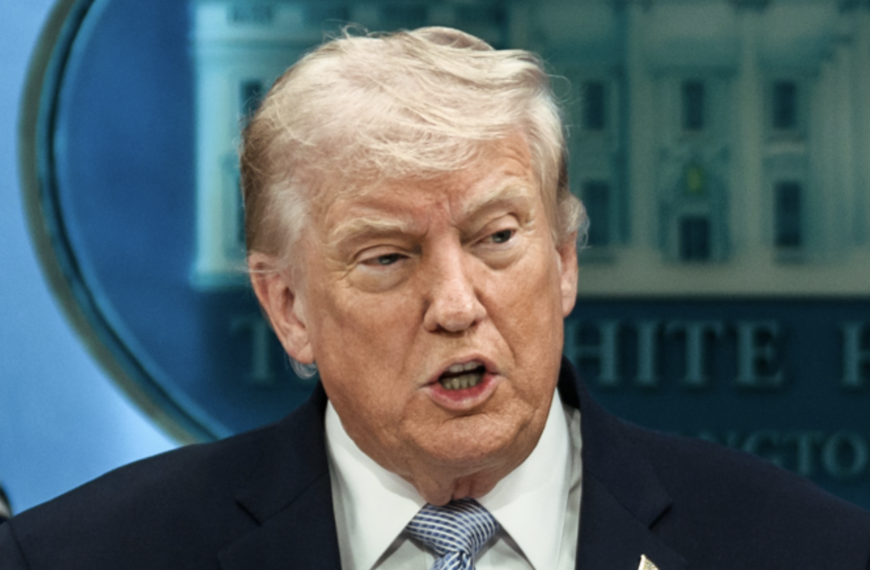

 By
By