
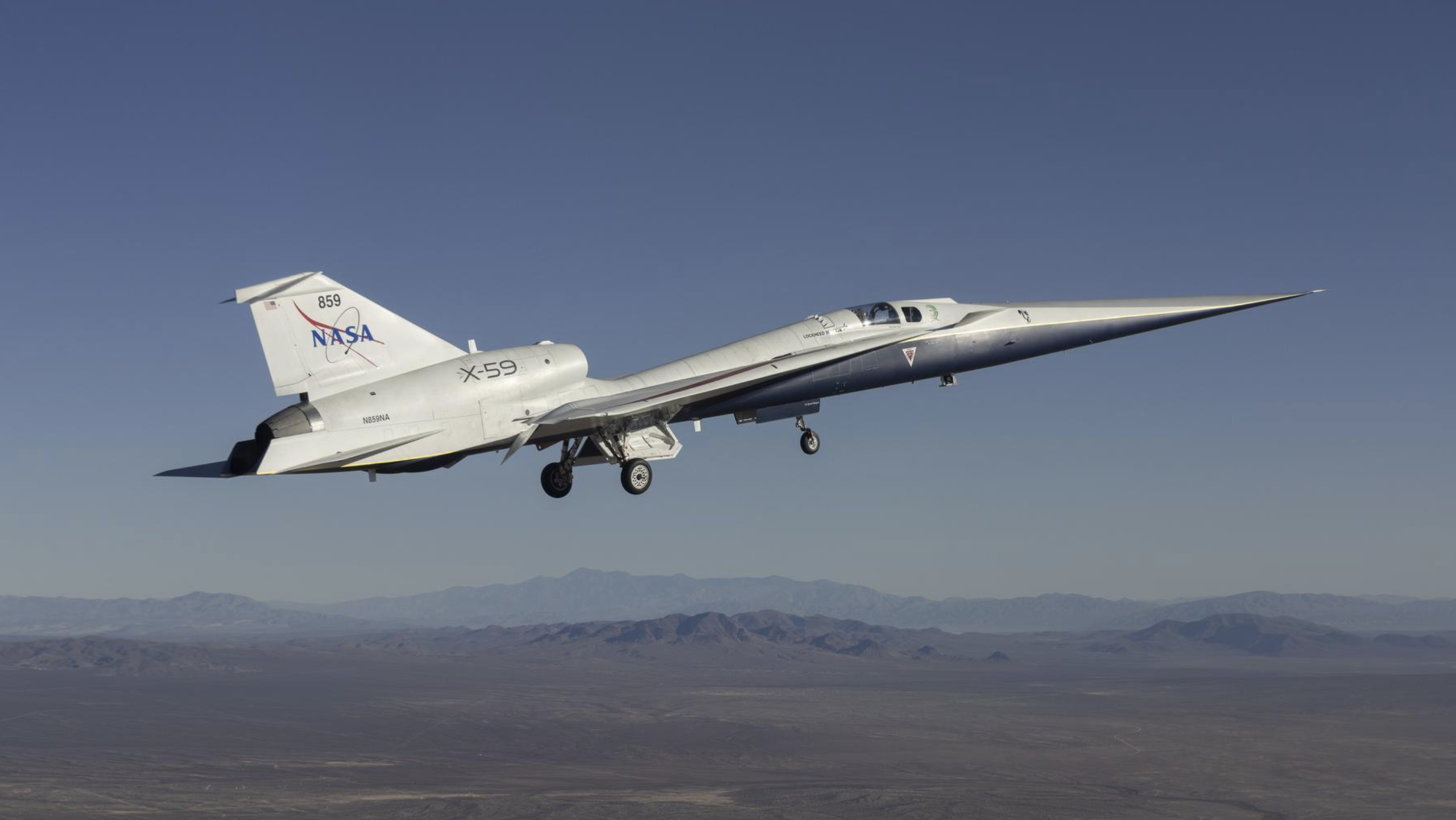

NASA’s experimental X-59 quiet supersonic jet has completed another test flight, as the agency signals it is ramping up operations and preparing for a more consistent flight testing schedule.
“And we are planning to fly X-59 again tomorrow. We are getting back into a flight test groove,” NASA Administrator Jared Isaacman said in a post on X on March 26. “Like most things at NASA, we want to execute safely, with urgency, and achieve the objectives. Because whatever comes next should be that much more impressive, ambitious, and inspiring.”
The update came as NASA confirmed the aircraft had successfully completed its third flight, marking another step forward in the agency’s efforts to bring quieter supersonic travel closer to reality.
And we are planning to fly X-59 again tomorrow. We are getting back into a flight test groove. Like most things at NASA, we want to execute safely, with urgency, and achieve the objectives. Because whatever comes next should be that much more impressive, ambitious, and inspiring https://t.co/zjRmotOW8m
— NASA Administrator Jared Isaacman (@NASAAdmin) March 27, 2026
“The X-59 successfully made its third flight… With Flight #3, the aircraft took off and landed near NASA Armstrong and flew for about an hour while its team evaluated performance,” NASA Aeronautics said, adding that more flights are expected soon.
The X-59 is a one-of-a-kind research aircraft developed as part of NASA’s Quesst mission, which aims to demonstrate the ability to fly faster than the speed of sound without producing the loud sonic booms that have historically limited supersonic travel over populated areas.
Instead of a disruptive boom, the aircraft is designed to generate a quieter “sonic thump,” which NASA plans to study by flying the jet over U.S. communities and gathering public feedback. The data will be shared with regulators to help establish new standards that could eventually allow commercial supersonic flights over land.
The aircraft first took to the skies in October 2025, marking a major milestone for the program after years of development and testing. As testing progresses, the X-59 is expected to reach speeds of around Mach 1.4, or roughly 925 mph, at altitudes of about 55,000 feet.
In the near term, NASA is focused on what it calls “envelope expansion” flight testing, gradually pushing the aircraft to fly faster and higher while evaluating performance and safety before moving into acoustic validation flights.
With multiple successful flights now completed and more scheduled, NASA appears to be entering a more active testing phase—one that could play a key role in bringing supersonic commercial travel back to the United States and beyond.


 By
By



 By
By