

Senator Bernie Sanders publicly pushed back on the role of artificial intelligence in education on March 26, 2026, directly responding to remarks from First Lady Melania Trump about the emergence of humanoid robot teachers. The exchange highlights a growing divide in how policymakers and public figures approach the rapid integration of AI into classrooms, particularly as new proposals and demonstrations bring the concept closer to reality.
In a post, Sanders rejected the idea of replacing human educators with machines, writing, “Call me a radical, but NO. We should not be replacing teachers in America with robots. We should attract the best and brightest in our country to become teachers and pay them the decent wages that they deserve.” His remarks come as he advances broader legislative efforts aimed at slowing the pace of artificial intelligence development, including a proposed federal moratorium tied to concerns about economic disruption, labor impacts, and public oversight.
Call me a radical, but NO.
— Sen. Bernie Sanders (@SenSanders) March 26, 2026
We should not be replacing teachers in America with robots.
We should attract the best and brightest in our country to become teachers and pay them the decent wages that they deserve. https://t.co/Lhv6hDmyWA
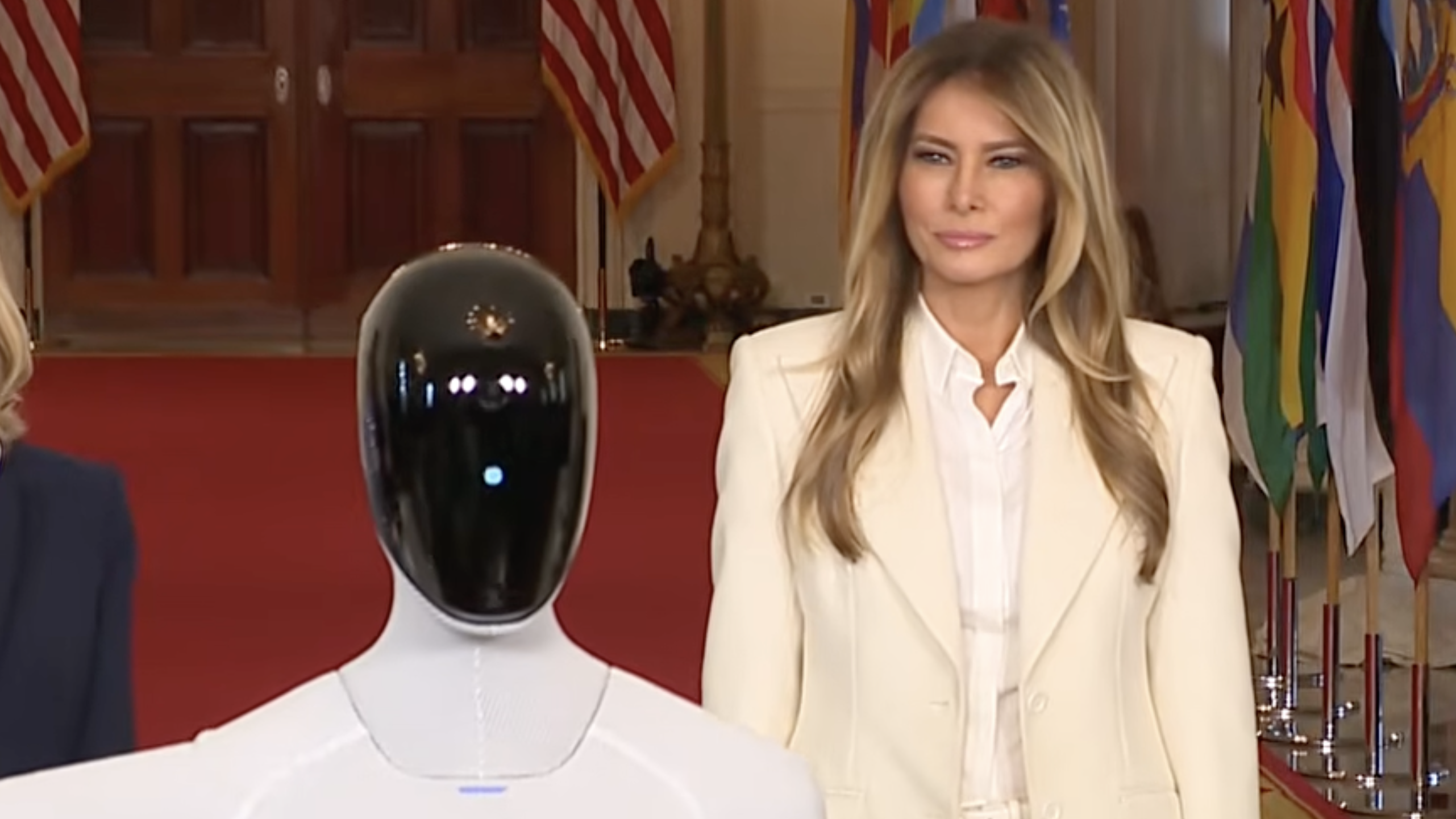
The comments were in direct response to a keynote address delivered by Melania Trump at the White House during the Fostering the Future Together Global Summit, where she outlined a vision for artificial intelligence in education that includes humanoid teaching systems. “The future of AI is ‘personified’ – it will be formed in the shape of humans. Very soon, artificial intelligence will move from our mobile phones to humanoids that deliver utility. Since our environment is designed for people, humanoid systems are uniquely suited to navigate and operate within our world. They ‘fit’ well. Imagine a humanoid educator named ‘Plato.’ Access to the classical studies is now instantaneous – literature, science, art, philosophy, mathematics, and history – Humanity’s entire corpus of information is available in the comfort of your home. Plato will provide a personalized experience, adaptive to the needs of each student. Plato is always patient, and always available. Predictably, our children will develop deeper critical thinking and independent reasoning abilities.”
Melania: The future of AI is personified. It will be formed in the shape of humans. Very soon, artificial intelligence will move from our mobile phones to humanoids that deliver utility. They fit well. Imagine a humanoid educator named Plato pic.twitter.com/6qkqZV0Ylt
— Headquarters (@HQNewsNow) March 25, 2026
Trump’s remarks were part of a broader speech to representatives from 45 countries, where she identified artificial intelligence, personalized learning, and humanoid systems as central to the future of education and economic growth. The summit also featured the introduction of an American-made humanoid robot, Figure 3, underscoring the administration’s emphasis on innovation and the role of emerging technologies in shaping both domestic policy and international collaboration in education.
Sanders’ response aligns with his newly introduced Artificial Intelligence Data Center Moratorium Act, a proposal developed alongside Representative Alexandria Ocasio-Cortez. The legislation calls for a pause on AI infrastructure expansion until federal safeguards are established, citing concerns about unchecked technological growth and its potential consequences. “AI and robotics are creating the most sweeping technological revolution in the history of humanity. The scale, scope and speed of that change is unprecedented,” Sanders said in announcing the bill, adding that “we need serious public debate and democratic oversight over this enormously consequential issue.”
The clash between Sanders and Trump reflects a broader debate unfolding across the tech and policy landscape, as governments, industry leaders, and educators grapple with how quickly artificial intelligence should be integrated into everyday life. While initiatives like the White House summit frame AI as a tool for expanding access to knowledge and personalizing education, critics argue that the long-term implications for jobs, equity, and human development remain unresolved, placing increasing attention on proposals that would slow or regulate its adoption.


 By
By



 By
By